Of Blood & God & Dirt

17 Minutes Read Time

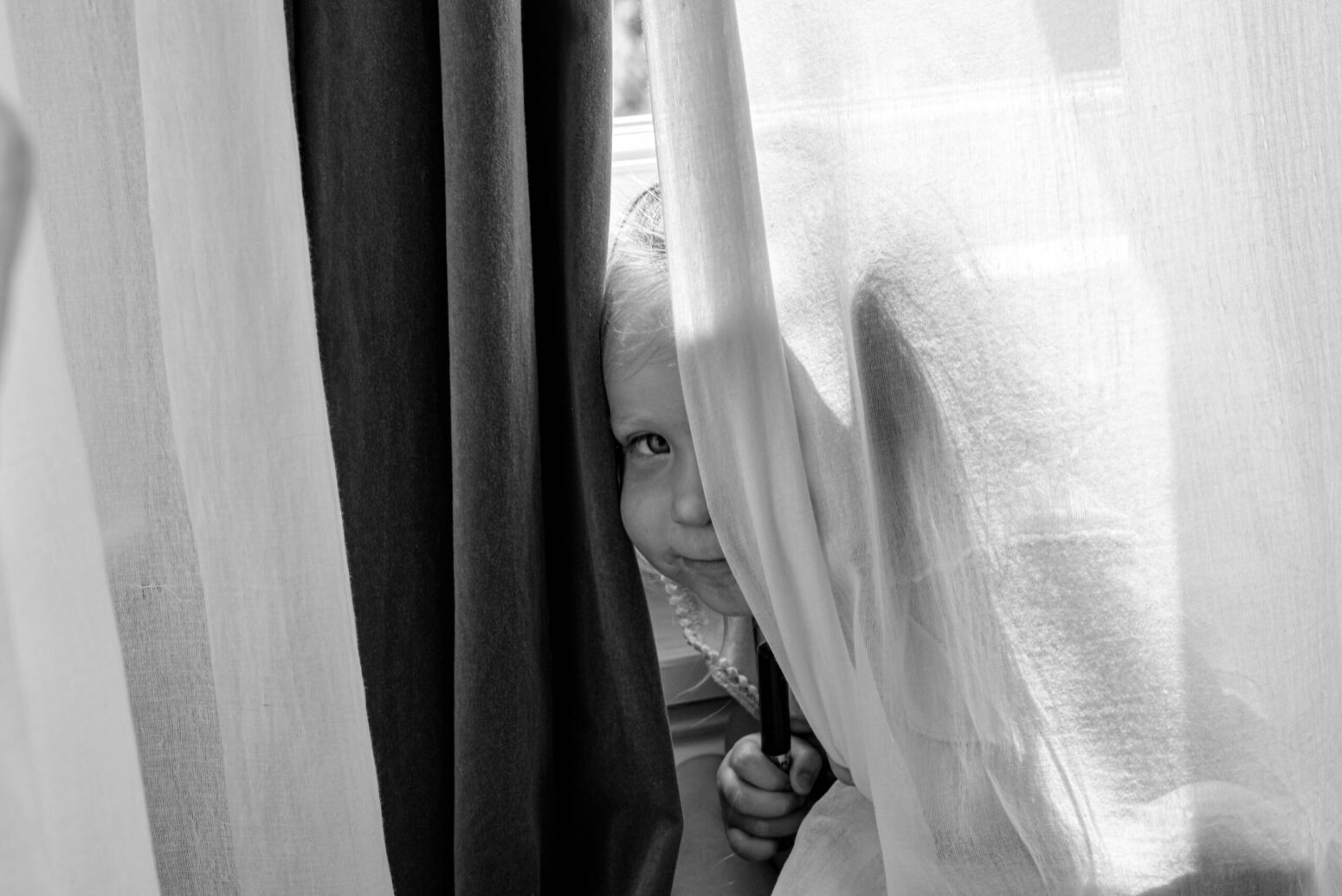
Photo by Monika Kubala on Unsplash

“You ready?” the phlebotomist asks, holding out two vials.

I nod and joke, “Sure, I’ve got enough.”

He laughs. This is his kind of humor, “Of course you do—twelve gallons’ worth inside. And as soon as I draw this blood,” he tightens the elastic tourniquet around my upper arm, “your brain sends a signal to your bone marrow to replenish, always creating more.” He slaps the pit of my elbow to make the vein rise. “How can you not believe in God?” he asks. “When the body can do all that. Who else could have created something so miraculous?”

I stay silent. He’s been doing this for fifty years in the same hospital in Little Rock, Arkansas. He has seen his share of miracles, he assures me, slipping the needle under my skin, soft and almost unnoticeable, almost. The gospel music from his desk radio bellows and cracks as the tube fills fast and red.

“Are you going to tell them she’s Jewish?” my mom asked when I told her my daughter would be attending daycare at a Lutheran church. I said that of course I would, if it came up. “What if they treat her differently because of it, treat her badly?” she followed up. Logically, I knew this was my mother’s Soviet upbringing in Ukraine talking, it being steeped in anti-Semitism, like a chamomile tea bag’s aroma of petals and cut grass with a hint of urine, spreading across the whole room, across her whole life.

Still, it did make me hesitate, and remember the children who called me dirty and were not corrected, or my own preschool teachers who threw wet rags at my head, or the neighborhood boys on Artemova Street in Dnipro who threw stones and shouted, Zhidovska devochka, until my dad grabbed them by their shirt collars and demanded they stay away from his little jew-girl if they wanted to make it home. So, in my new Southern home, where multiple people had already told me I was the first Jew they’d ever met, I decided that my child’s Jewishness was not something I needed to mention.

When I moved from Philadelphia to Little Rock, I searched for any non–religiously affiliated childcare. The one other Jew in Arkansas—perhaps there were more, but he was the only one I knew, and it felt like it was just the two of us wandering the green Bible-Belt, natural state—told me there used to be a Jewish daycare some years back, but it had since closed.

“Anything other than churches?” I asked.

“Not if you want your child to learn anything.” Education wasn’t my top concern at this point for my three-year-old daughter, who knew her alphabet and could already speak as fluently as a preschooler in two languages, Russian being her first. Still, the Lutheran Church was recommended by a liberal mom “as one of the good ones.” Plus, they served hot lunch, the teachers wore masks when COVID community spread was high, and, most importantly, the church was only seven minutes from my older son’s elementary school, so the commute was convenient.

With my daughter’s excitement as she ran away from me into the classroom, her smile at pickup, and her take-home activity sheets chronicling “water play in the garden” and “T is for turtle” and “releasing the monarch butterflies,” I was content. I felt so proud for finding a great fit for her in a new place. I paid no attention to the notes about her daily ten minutes of “Jesus Time” and Wednesdays’ extra special, extra long “Jesus Time with pastor.”

My son doesn’t believe in god. “If I can’t see it, it isn’t real,” he assures me in his seven-year-old neurodiverse, autistic wisdom. Then, he reasons, “But Mama created me, and I know Mama is real, so Mama is god.”

I cannot argue, unsure of what I believe in myself except the touch of his hand on the place where my blood was drawn. “Did it hurt?” he asks, and I shake my head. He has enough to fear already. Enough underneath his skin, clawing its way out.

He tears out my arm hair when he pulls the tape off without permission, the bloodied cotton ball falling on his baby-blue bedsheets. He apologizes, always, for the pain he causes. Calls it accident. “I didn’t mean it,” he says. He can’t see the pain but knows it’s real. Knows he made it rise to the surface.

Sometime after the fleeting Arkansas spring has turned scorching summer—an overnight phenomenon like dandelion heads bursting from their enduring yellow to short-lived white fluff—I pick up my daughter, who’s wearing her short pink dress dappled with black hearts. Her teacher walks her out to the car, as protocol requires, but instead of the usual “She had a great day!” she says, “Can I ask you a question?” It’s a strange and worrying beginning, but I say of course she can. “Does your daughter spread her legs a lot at home?”

I have to have misheard. So I clarify, repeating it back to her. But I’ve heard correctly, and she asks the question again.

“Ummm, I don’t know,” I answer. “It’s not something I pay attention to. She’s three!”

“Well, she was just doing it an awful lot today at Chapel with Pastor, and we kept telling her to close her legs, but she just wouldn’t.”

I reiterate, “She’s three, so I still don’t see the issue.”

“Well,” her teacher continues, “we didn’t want to make Pastor uncomfortable.”

“I think my toddler’s spread legs are not the worst thing he’s ever seen.” The teacher responds with a smile, “Oh yes, he has four daughters.” Clipping my daughter into her car seat, her spread legs letting Little Mermaid undies peek through, I tell her teacher that the next time she’s in a dress, I’ll be sure she’s also wearing biker shorts underneath.

Driving home, I can’t get Pastor out of my head: a man I’ve never met, staring between my daughter’s legs as she refuses to close them.

My son cannot sleep without waking throughout the night. Fear or the need to pee or a mix of both. “Zombies,” he says of one fear, knowing they aren’t real. “But death is real and I don’t want to die,” he says. “I don’t want you to die. I don’t want anyone in our family to die.”

Sometimes he shakes through fits of tears, or clings to me like I’m a rope dangling from a cliff. Sometimes when I read him a book before bed, he presses his head into my neck just hard enough to make me cough. Inhale caught in my throat, I explain, “I couldn’t breathe.”

And he asks, “How long would I have to hold your neck for you to die?” Eyes wide with terror or fascination, both perhaps. His mathematical, reason-hungry mind seeks calculation and certainty, even as he fears their reality.

Other times he’s screaming for Mama—incalculable duration and immeasurable volume, like a siren or siren song—and won’t stop even when I’m there, even when I’m already holding him. I threaten him with loss, of toys or treats or night-lights, if he gets up again. Yes, occasionally I lose my temper after the fifth or six wake-up before three a.m., still so much of the night to endure. The loss of me, though, is never a threat I utter aloud.

Sometimes I claw my fingers into my back so hard I draw blood. Sometimes I scream too, into the pillow and out of it. Sometimes the only solution is to lie beside him and count the seconds silently until I can try to leave—but he never lets me. Sometimes we let him sleep in our bed. Sometimes at the foot of it. Other times nothing works. The soft and hard, all equally ineffective. He is afraid of what he cannot see but knows is coming.

When I was younger than both my children are now, I had night terrors too. Always trapped on a ship, wooden with giant scarlet sails, floating through an ocean of stars, trying to find home. Always lost. Always waking in a sweat and screaming. So my Mama took me to a Babka, wise woman, witch, baba yaga, shaman, healer, yogi—call her what you will. I was too young for her words then, but I am old enough to understand when I remember them now.

“Dirty,” she called my aura, “gryaznaya,” in her mix of Russian and Ukrainian, maybe even some Yiddish thrown in. I was a bad person in my past life, maybe many lives, she told my mother. “She will be too good in this one. She will suffer for it.” The woman, who wore something like a black flowered shawl over her shoulders and large gold earrings and many strands of beads against her neck, explained that the dreams were where my past lives came to haunt me.

“There’s nothing you can do to change the past,” she told my mother, “but we can help her sleep.”

She instructed me to say a magical protection prayer before bed: “Jesus is on my left, Moses is on my right, Mother Mary is above,” and then other spiritual figures in front of me and behind me that I don’t remember now. “Say these words,” she told me, and I think she may have squeezed my small hands in hers. Left imprints of her rings on the backs of my palms. I imagine it was warm, the grasp, hard and tender. How my mother trusted her to touch me. How my mother still can’t believe I remember. How the dreams stopped.

I’d close my eyes, and it was all darkness and then morning. Still, until I started sleeping in the same bed as my children’s father, I’d always keep a light on somewhere in the room. Always need something outside my body to keep the dark from slipping under my shut eyelids.

In the bathtub she covers herself in white bubbles. I instruct her to wash under her arms, between her legs, helping her get behind the neck and ears. “You didn’t make me,” she says, my fingers caught in the tangles of her hair, which is stuck together with kinetic green and purple sand. “God made me, and he made you too.”

I do not argue. My whole life I’ve been unsure what I believe myself, so I haven’t taught faith to my children with any certainty. Her words are not surprising. She’s been talking about versions of god a lot lately. When I kiss her and say her cheeks taste like honey and playfully ask, “Who made you this sweet?” her response is no longer hugs or kisses, no longer the word “Mama,” once the answer to most things. She says, “Jesus,” adding, “Jesus made me sweet, not you.” My explanation of how we are Jewish and don’t believe in Jesus does not satisfy her, because “Pastor says Jesus, so I say Jesus.” How quickly another man’s words took hold over my daughter. How I missed their slow approach.

In response, I ask: “Who is god?”

“A boy,” she responds without hesitation, “who made all of us girls.”

This has me dumbstruck. I try to convince her otherwise about men and gods. “Mama and Papa made you,” I argue. “You grew inside of Mama.” But she begins to cry and slap her palms against the water, bubbles flying onto the sliding glass doors and tile. It must be terrifying to imagine growing inside another’s body, so dark and cramped, wet without escape. The truth is always terrifying. But believing we were all created by what we do not understand makes it so easy to be wholly unafraid.

I wrap her in a towel. “Eat me like a burrito,” she says. And I pretend to gobble her from the feet up through the top of her head. If I can’t be the god who made her, I become the one who tries to devour her upon request. “Don’t eat all of me,” she clarifies, so I leave her eyes behind. I leave what keeps searching for what isn’t there.

Born in Ukraine when it was still the Soviet Union, I’m not sure I believed in Moses, not sure I knew who Jesus or Mother Mary were, but I knew they were gods. Like Zeus and Hera from the Greek myths my Papa would read me before bed. They were something powerful I couldn’t see but felt might be out there somewhere, in a distant past or maybe future. I thought something greater than myself was possible.

I knew their names would do nothing for my son’s terror. So instead I substitute our names in for theirs. Holding him before bed, I tell him about my dreams, tell him how his Baba had to sit by my bed and keep her fingers on my eyelids to keep them closed. Tell him how there were magical words I learned to say before bed that made the dreams and bad thoughts stop.

“Look at my ring!” My daughter flashes a green plastic band with a shiny hand on it, stamped with a black smiley face, as she rushes toward the car at pickup time. “It’s like I’m married!” She smiles and spins the glinting band around her finger.

I don’t have time to respond before her teacher, who has come over to talk, says, “Yes, she wants to get married.” After my daughter’s buckled in, I hurry into the car and drive away without a word.

“No,” I say out loud to myself, gripping the steering wheel with the intent to break, to crack the circle and let eternity slip out. “No,” I repeat, louder, my three-year-old does not want to get married. She plays with the green plastic until it drops to the floor and she begins to cry: “No, my ring. Get it for me, Mama.” “No,” I keep repeating, keep driving, looking straight ahead as she wails for what she’s lost in the back seat. She can’t hear me, but I wail for what I feel myself losing too.

“Magic doesn’t exist,” my son reminds me. “Like god and Santa: They don’t exist.” I don’t affirm or contradict him. His school has already called and sent home notes, has already asked me to keep him home during the winter holiday season on the day Santa would visit their first-grade classroom or when a little girl’s mother would read the story of Jesus.

“We don’t want him to ruin Christmas for the other kids,” his principal said in her Southern drawl, as though she wanted me to linger on her words longer. “We even renamed it ‘Holiday Party’ for you people,” she added. And I knew she meant us nonbelievers. Us Jews. “I’ve got a menorah in my office and everything,” she reassured me.

“But our bodies are a kind of magic,” I tell my son, “the way our heart beats and carries blood throughout the body, the way our brain makes us see things when we are asleep just like in stories, where magic is possible, right?” He understands this logic so I continue: “So before going to sleep, repeat after me: Mama is on my right, Papa is on my left, Baba is above me, so I won’t have any bad dreams or thoughts.” He is reluctant but repeats the words. I tell him we, his gods—though I use the word family—are all there to protect him.

“My class is praying for me,” my daughter says as she sits on my lap, the heavy lead blanket draped over her, and her heavy body draped over me. She extends her arm over the X-ray table, the lump at her elbow protruding like a smooth burl, and the bruise around it turning a darker plum. I ignore her words and focus on rubbing her opposite arm, on staring at the red light from the machine igniting her skin as if it could hold her forearm still or keep the bones below the surface from being broken.

“Mama!” she protests, “my teacher said my class is praying for me!” I bite my lower lip, hard, have the urge to ask if knowing this makes her feel better. If her arm is throbbing less. If their prayers are making her feel safe. If they are what she is holding, their heat and certainty, instead of the body she’s leaning against.

Instead, I just say, “Okay.” The radiology technician comes back in to reposition her arm, white and extended like an angel’s wing.

“I never want anything to happen to you,” my son tells me before I leave his room.

“I know,” I reply, and want to tell him it won’t, that nothing will ever happen to me, but that is a future even I’m not sure I believe in.

“I’m here,” I tell him. A certainty I know he can hold. I leave the bright hallway light streaming into his room, along with a lava lamp, two night-lights, and three blankets, the heavy ones to make him feel like he is being held in darkness, even without my body.

The first time I came home and pronounced that we had to turn the lights off on Friday nights and could no longer eat Ukrainian salami on buttered bread with cheese, my parents pulled me right out of those classes at the Jewish Community Center. I was six years old and we had just immigrated. The early education program was free for refugee children during their first year in America, but my parents thought I was too susceptible to remain a student. The lights stayed on, and I ate my traif like a good immigrant child. Obedience to family was our way of kosher.

“Don’t eat pork today,” my mother tells me on any Jewish holiday, as though this would make a difference. She blames herself for most things. How I only sometimes believe in something like god. How I married a goy. How I am not raising my children Jewish enough. How I live too far, too south, for her to help with the kids. I blame myself too. Guilt, the closest thing we have to faith or certainty. The thing I try to hold inside—gallons and gallons’ worth—so it doesn’t pass on to my children.

Now, my daughter tells me, “You and Papa and God made me.” I hold her close enough to feel her heart inside my body, my blood multiplying in volume the way it did when I carried hers. “God made you too,” she says, already in half sleep. I am silent as her words steep the air between us. The smell of lavender and eucalyptus rising from her freshly washed hair. Her grip is tightly cuffed around my neck. My pulse, the current rushing through my jugular, keeps time against her wrist. Perhaps our rhythms align. Perhaps they make their own discordant music. Perhaps a psalm. Her head is collapsed against my chest, close enough to believe she hears my heart, feels my blood, inside her body too. Close enough to believe she is listening.

Read more from Issue 22.2.

Sun icon Moon icon Search icon Menu icon User profile icon User profile icon Bookmark icon Play icon Share icon Email icon Facebook icon Twitter icon Instagram icon Bluesky icon CR Logo Footer CR Logo Topnav Caret Right icon Caret Left icon Close icon

You don't have credit card details available. You will be redirected to update payment method page. Click OK to continue.