My mother’s village and my father’s village
14 Minutes Read Time
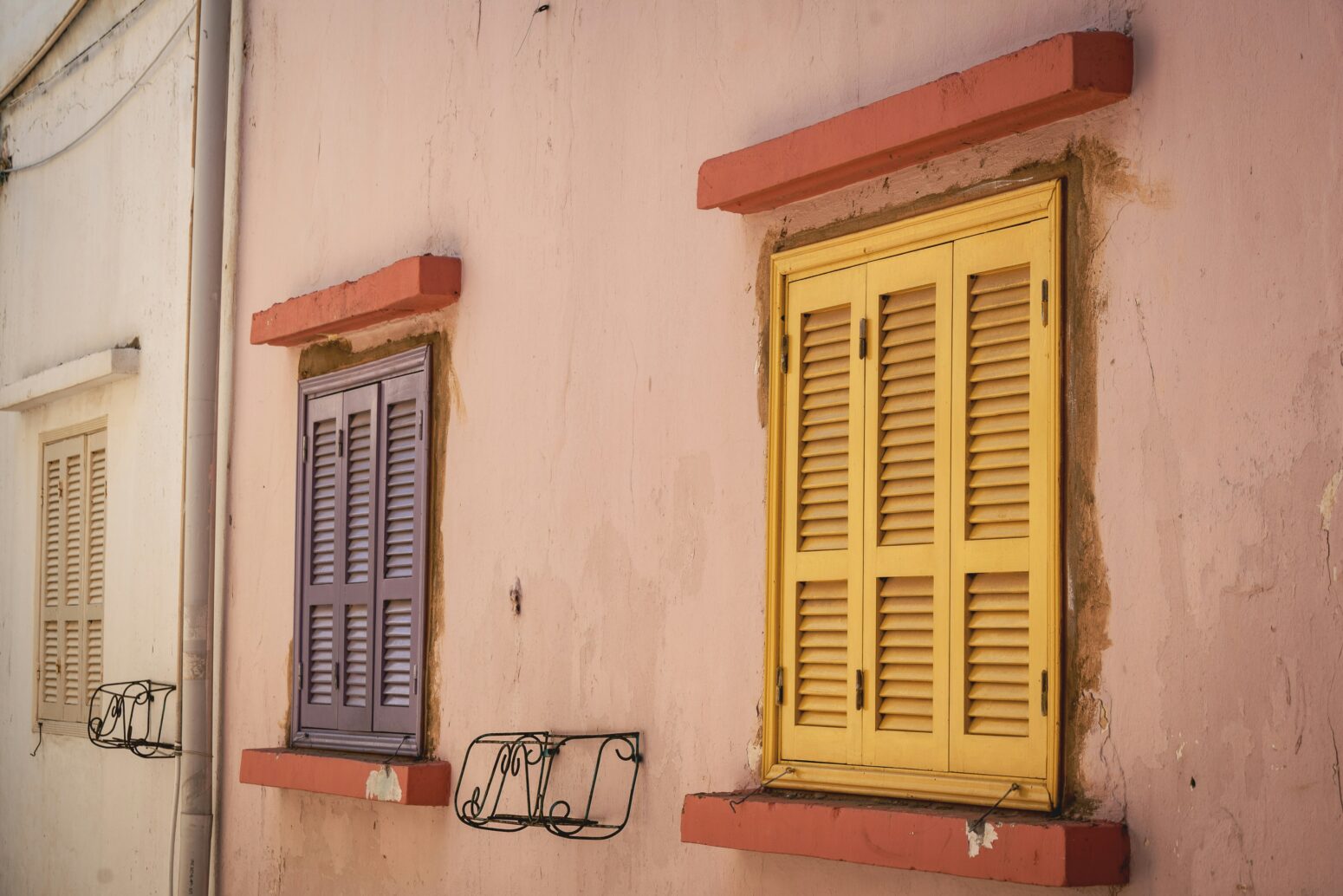
My mother’s village is about an hour’s drive south from Beirut. The route starts on the coast, the sea to the right, vast, blue, and sparkling in the sun. Beyond the army checkpoint in Sidon, smaller roads east and farther south wind through busy villages lined by short concrete buildings with storefronts on the ground level and, on top floors, half-poured concrete columns anticipating additional floors to be built by sons. The route intermittently opens onto vistas of hills and valleys dotted with red-brick houses. At an intersection of roads, shops waft smells of oranges, roasted chicken, and diesel, heralding our arrival. A turn right leads to the thoroughfare that linked my grandparents’ house to my uncle’s and, for us children, encompassed the village.
The gravel side of the road looks over stone houses that extend into the valley, and a short cement path leads down to my uncle’s house. Before he died, he would have been at the front of the house on weekends, under the hood of his car, tinkering with the engine. He had been shot multiple times in the legs on the first day of the civil war when he tried to protect a Christian friend at a checkpoint. He died thirty years later from the infected blood transfusion he had received then.
On the other side of the thoroughfare stand a few ever-changing shops. My grandparents’ house was tucked farther down and away from the road, squeezed between the house of my grandfather’s half-brother and Abou Salem’s, which was fronted by a convenience store. Abou Salem’s store was dark and deep, its concrete floors cold. Wafers, lollipops, and chewing gums were laid out on large wooden tables while glass soda bottles, triangular Bonjus pouches, and citrus popsicles sat in half-empty fridges on the expansive front porch. He was a short man with dark-rimmed glasses and sharp teeth revealed by an awkward grin. My brothers and I, francophone-schooled, referred to him as “Monsieur Abou Salem,” to the great amusement of my uncles.
Salem died during the war. A stretched-out framed photo of his face hung above the door of their living room. A few of those martyr portraits were displayed on buildings and electricity poles throughout the village, as were posters of the disappeared Shi‛a cleric Musa al-Sadr, sometimes alongside more jubilant photos of the latter’s successor and long-lived head of parliament, Nabih Berri.
We pressed between the fig tree and the parked cars to get to the front terrace of my grandparents’ house, where my grandfather had planted pomelo, orange, and quince trees, beds of roses, and shrubs of gardenia. When we fled to the village in the last years of the civil war, my grandmother set up a saj bread maker on the terrace. She sat on the floor in front of it, her thin white veil draped over her head and her embroidered abayadress, held a round cushion with one hand, and used it to drop the dough onto the oven, stretching it out by hand over the hot circular mound.
My grandfather sat on the porch, up the few stairs on which we took extended family photos. He listened to a transistor radio, the news echoed back by a yellow parrot in a cage dangling from the ceiling. His hair was slicked back with gel, and he smelled like the bottle of cologne he kept on the sink at the end of the hallway where we congregated to wash our hands. Like my uncle, he had worked at the port in Beirut. He retired to the village, tending to his beloved dog, Flash, his trees, his birds, and his chicken, which he kept on the roof.
With the cousins from Beirut, we played what we called “station,” where we erected military outposts behind rocks on a small hill behind the house, which we called “the mountain.” It was a military station that never saw any fighting. We stood guard, cutting and eating lemons covered with big dashes of salt. We also picked and ate sorrel shoots, tangy like lemons, and confected love stories between us.
When Eid coincided with summer, we paraded our new dresses, walking back and forth between my grandparents’ house and my uncle’s. Young men driving by honked and whistled, shouting “the one in the middle is prettiest” or “I like the one in red the best” when four of us were walking alongside each other, none wearing red. At other times, crossing by us on the street, they would whisper “honey,” “beauty,” “moon,” as we gazed down at our shiny shoes.
When Eid coincided with winter, lunch took place in the living room of my grandparents’ house. My uncles and mother sat around a square white marble slab on the floor and took turns pounding the pink, raw lamb with a wooden mortar. They then laid small bits of the meat and white gooey fat on pieces of thin bread, covered them with salt, mint leaves, and sprigs of scallions, and handed these morsels out to us children. The same kids always protested with a grimace while the others proudly chewed, some washing down, in later years, the raw meat with anised arak.
Singing sometimes rose up through the cigarette smoke that swirled around the tropical motifs of the wallpaper. Against the wall of the living room hung the portrait of my second-to-last uncle, who was kidnapped during the war while driving an ambulance for the Communist Party. He had a broad forehead, a defined chin, and a twinkle in his eyes. When the Assad regime fell five months ago, the family started circulating his photo again, in the hope he might emerge from one of Syria’s notorious prisons.
I remember my grandmother when she was stout, standing on top of the stairs that led down to the sink with the cologne and telling us, as we ran to it in tears to wash a wound, “May you live and have this happen to you again.” She died frail, having spent the last sixteen years of her life waiting for her disappeared son.
My cousins fled in July 2006 when Israeli bombs fell on the village, killing an entire family not far from them. They had already been renting an apartment in the southern suburbs of Beirut where those who worked in the city stayed during the week. Since my grandfather’s death, we only visit my mother’s village sporadically, often on Eid. We read the Fatiha, a hand on each family tomb, between which grow daisies in the spring. Then we go to my uncle’s house and sit on their newly enlarged front porch, sipping coffee and reminiscing about times past.
My father’s village is farther south and east from my mother’s, across the Litani river. South of Tyre, armed soldiers at a checkpoint examine car passengers and ensure that foreigners have permits to enter. The village is a valley away from the area that Israel occupied for fifteen years. Throughout that valley reverberated the sounds of episodic bombings.
My grandfather slowly built a house on a sloping tract of land. On the side of a small street, between the walls of two multilevel houses, hangs the heavy black metal gate. A gravel driveway leads to the front of the house, which is shaded by a grapevine. Between the columns sticking out from the roof sits a water tank.
It is dry in that part of the south, the arid land parched by the sun in the summer. In the winter, it is cold and often dark. The electricity comes on only a couple of hours every day. In the early hours of the evening, my grandmother heated water in a stainless-steel teapot on the stove in the large kitchen. When it boiled, she put a smaller teapot over it, filled with loose, black tea leaves and a bit of water in which they steeped, heated by the steam from the first teapot. Then she brought out the two, one on top of the other, with small, thin-waisted tea glasses, tiny spoons, and a sugar bowl, on a tray. She filled each glass to the brim half with black tea and half with hot water, added two hefty spoons of sugar, and handed it out on a saucer. In the summer we sat on plastic chairs in the cobbled entrance, in the winter on the couches in the large front room with the arched windows, the last addition to the house.
My grandfather was working as a carpenter in Palestine when he married my grandmother. She told the story of riding a donkey from her village, near my mother’s, to his on the day of her betrothal. It was a long route and her destination foreign to her. After the Nakba of 1948, my grandfather had found work in Kuwait, from which he traveled back and forth to Beirut, where the family relocated. The images I have of my grandmother, small in stature, crocheting table covers, and of my grandfather, his imposing figure, a shisha pipe in one hand and a string of prayer beads in the other, are from their apartment in the southern suburbs of Beirut. They spent part of the year in the south during the occupation. We went there only a few times. One summer, we ventured into the valley down from the house with cousins who were visiting from France. We looked at the Israeli guard posts from afar and shouted insults at them. Then we got lost in the rocky, empty stretch of land. When we returned home, it was starting to get dark and the adults were nervous.
It was not long after the Israeli forces withdrew from the south, in 2000, having been pushed back by Hezbollah fighters operating from my father’s village and others nearby, that my grandfather died. I had by then become familiar with Shiite mourning rituals: the woman clad in black recounting, at the front of the women’s congregation hall in the Hussainiyya, the murder of the imams Hassan and Hussain in Karbala. She cried and wailed, and the attendees, old and young, each harboring her own sorrows, joined in the crying and the praying. The mourning rituals for my grandfather were different. The women stood up, turned left, beat their chests, sat down, beat a knee, stood up again, in a coordinated, military cadence.
I voted for the first time around then. We drove for two hours to the village, as did my Beirut uncles and cousins, for municipal elections, joining my father’s uncles and cousins and extended families who lived in the village, at the public school where our names were listed. It was May, the month when spring blooms and when the south had been liberated four years before. I deposited my white ballot paper and joined the others in the sun-drenched playground of the school, holding out our purple thumbs in excitement. The outcome of these elections was never in doubt.
It was then, too, that my parents bought a small piece of land in a quiet part of my father’s village, where many mansions stand empty, their owners living and working in the gold trade in Africa. We have photos next to every increment of the short stone wall built first to mark out the property. Some of those are with uncles and aunts and cousins, all of us holding hands and dancing the dabkeon the roof of the first floor of the house, just a few weeks before July 2006. Much of the village was hit in that conflict, but our house was spared, as was my grandparents’. My grandmother fled to Beirut alone, in a hastily arranged taxi. A second floor of my parents’ house rose up a few months after the bombing ended. We collectively wrote an ode to the house and hung a print of it in the living room when it was finished.
Before October of 2023, when it became too dangerous to visit, my parents had stayed in the house every other weekend. Then, for fifteen months, they did not go back. They were not even sure the house was spared the attacks that started in September until a relative sent a photo of it, in the first hours of November 27, at the dawn of the ceasefire.
To get to my parents’ house, we turn left from the main thoroughfare, down the wide road lined by posters of martyrs with the yellow Hezbollah flag at their corners. Just past that stand a life-size model of men in camouflage outfits hurtling bombs at enemy soldiers and, farther up, simulated rockets pointing south. We drive into the center of the village, stopping at the grocer to buy cucumbers, tomatoes, eggs, bread, and labneh. We then head through the narrow streets toward a large, dark pond, enclosed by concrete walls. Around the pond, groups of young men and women stroll in the summer evenings, conversing, laughing, sipping lemonade, and exchanging timid glances. The men sometimes dive cheerily into the pond in their shorts and undershirts. We stop at another grocer for apples, watermelons, and clementines, and then proceed up a hill. Kids playing ball in the street stop on the side to see who is coming.
When we arrive, we open the windows to air the house. The children then run outside to pick small sour apples with my mother. The last time we were there, in the summer of 2023, my father brought a few chickens, which ran around at the back of the house. The children broke bread into little pieces and hesitantly threw it to the chickens.
Lunch starts late in the afternoon, after the littlest ones wake up from their nap. On Saturdays, it is kibbeh, raw meat mixed with bulgur and laid out in a circular shape on a plate, then cut in slices like cake, covered in olive oil, and eaten with bread, radish, and fresh mint. On Sundays, it is lamb grilled on metal skewers with pieces of fat and whole onions and tomatoes, eaten with hummus and potato fries. On Mondays, it is red mujaddara, lentils cooked with bulgur and turned dark red by the juice of chargrilled onions served on top.
Then it is time for the grandparents to nap and for the children to dig holes in the backyard, into which they drive miniature trucks. The trucks pick up stones, aged mulberries, and ants. The chimes of the ice cream van reverberate from afar, and the kids run to and from the sliding metal gate until it drives by. They sit side by side on a low platform at the front of the house, cones in hand, white and pink cream dripping onto their feet.
Visitors arrive as the sun sets and the water steams in the teapot on the stove. They sit out on the front balcony, rocked by the evening breeze, and relate news of births and deaths and marriages and divorces and graduations, of jobs found and lost, of exiles and returns. Debates about new mayors, speeches, skirmishes, and conflicts, in the village, in the south, in the country, and in the region, ensue. The cups of tea are refilled to the brim, and more fruits and sweets are brought out from the kitchen. The children run around, grabbing date-filled cookies and pieces of watermelon, excited to be asked to demonstrate the riding of a new bike or the singing of an old favorite.
As night falls and we kiss them good night under the mosquito nets, the kids tell us they do not want to leave the village. They have since been asking when we will go back.