Introducing the Poetry of Louise Dupré
7 Minutes Read Time
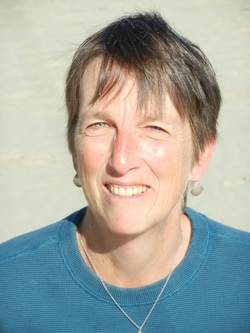
Louise Dupré was born on July 9, 1949, in Sherbrooke, Québec. At the time, Québec was in the grips of “la Grande Noirceur,” or Great Dark- ness, of the rigidly conservative Duplessis era. But Dupré’s more liberal upbringing anticipated the enormous changes that were about to take place in the province. Members of her mother’s family tended toward the literary, the politically progressive, the avant-garde—influences that helped shape Dupré’s political and artistic sensibilities, including her early passion for literature and ventures into creative writing. As a young adult in the 1970s, when she took her first job teaching in a cégep (pre-university college) in Thetford Mines, she rode the wave of Québec’s Quiet Revolution first as a union activist and then in the burgeoning women’s movement. Over the following decades, she estab- lished her reputation not only as one of Québec’s most vital young poets but also as a prose writer and feminist theorist. In the 1980s she was part of the women’s collective (with Nicole Brossard, France Théoret, Louky Bersianik, Gail Scott, and Louise Cotnoir) that published La théorie, un dimanche, a selection of seminal texts on feminist poetics.
Louise Dupré had a distinguished twenty-year career as a professor of creative writing and women’s literature at the Université du Québec à Montréal, where she made significant contributions to feminist schol- arship while at the same time establishing her reputation as a writer. One of Canada’s most highly regarded contemporary poets composing in French, she has published extensively and received numerous awards and honors, including membership in the Académie des lettres du Québec and the Royal Society of Canada. She is the author of twelve volumes of poetry, two novels (La memoria and La voie lactée), a short story collection (L’eté funambule), two plays (including the award- winning Tout comme elle), a critical monograph, and a poetic memoir (L’album multicolore, finalist for the 2015 Prix France-Québec). Many of her works have been published in English translation, and selected poems have also appeared in Dutch, Czech, Chinese, Portuguese, Span- ish, Slovenian, and Italian.
The critical reception of Dupré’s two most recent volumes of poetry highlights her status as a major figure in Québec letters. Plus haut que les flammes was the recipient in 2011 of both the Grand Prix Québecor du Festival International de la Poésie and Canada’s prestigious Governor General’s Award for poetry. In fall 2017 Dupré once again received the Governor General’s Award, this time for La main hantée. The poems translated for the current feature come from an earlier volume that is equally deserving of critical recognition. Tout près (Right up close) was published by Éditions du Noroît in 1998. This poetic sequence, composed as the twentieth century approached its end and the poet approached her fiftieth birthday, occupies its moment in a singular way: In its reflections and preoccupations, it anticipates where Dupré’s poetry will go while also maintaining its a∞liation with the work that came before. Dupré has always been attentive to the contours of loss and grief, memory and desire, human fragility and resilience, wound- edness and connectedness. A strong reflective and a≠ective current runs through all her poetic work, an intimacy that becomes both more urgent and more intent over time.
Dupré’s books of poetry also tend to share certain formal attri- butes: She writes in poetic sequences and frequently privileges the prose poem. Her earliest volumes were generally hybrid prose poems organized into narrative series. In the 1990s, as she began writing and publishing more prose, her poetic series became less narrative and she began exploring verse forms. Right up close reflects this shift: Four series of prose poems (“In the Center of the Face,” “The Day in Its Eternity,” “The Stone Hands of the Tomb Figures,” and “Poem, Liberty”)—thir- teen poems in each, one to a page—alternate with three sections titled “Windows,” each comprised of six poems written in free verse, one to a page. Each section constitutes a sequence within the larger sequence of the book as a whole. The formal symmetry and coherence of this structure suggests a meditative practice, as though the poet were striv- ing to steady her breath, center her focus, and find a stable ground from which to keep writing while, as she puts it in one of the “Windows” poems, “the world collapses before [her].”
The five prose poems featured here are the first five poems of “In the Center of the Face,” the section that opens the book. Much in this sequence would be familiar to readers of Dupré. The narrative impulse
of her earlier work is discernible, as are many recurrent themes and reference points: a Catholic childhood in pre–Quiet Revolution Qué- bec, a mute and disappearing father, a God whose existence is in ques- tion, a woman’s desire, an uncertain future. The decor is also familiar: night, city, cemetery, garden. And certain ideas are the poet’s constant companions: the need to keep watch and to survive, the question of consolation, the confrontation with one’s own mortality, “the intimate silence of words.” The starting point for the poet is an emergence from “the shame of a sordid death, always one’s own,” a death shared with “so many other souls who were not able to endure.” Stepping out of that nothingness, the poet assumes the risk of writing: “Writing begins with a betrayal.”
Louise Dupré and I have recently been reading and translating one
another’s work and, in the process, becoming familiar to each other and foreign to ourselves. As we begin to recognize some of the fundamental di≠erences between French and English poetry (or at the very least our French and English poetry)—not just between the two languages and their tendencies but also between the underlying aesthetics of what makes a poem—we have been cohabiting a new shared language of poetry. For me, one of the greatest challenges in translating Dupré is her deceptively simple poetic language. The most straightforward phrase is often the most di∞cult to translate because it seems obvious. The recurrence of certain words and phrases throughout her sequences also means that every translation choice has significant ramifications. Thus, every word or phrase I think I know in French must be encoun- tered anew and apprivoisé (made familiar and tamed) before I can try to find it in English. In addition, the poetry is extremely lyrical, and the incantatory quality produced by these sequences with their repeti- tions and refrains demands that one pay acute attention to sound and rhythm.
The formal integrity of Right up close makes an integral reading of the whole essential. But that characteristic also means that reading the opening five poems is like reading a fractal, a segment that mirrors and contains that whole. Right up close is a meditation on closeness and on writing as the essential if always inadequate vehicle for memory and mourning. It is about damage and tenderness, about living (past) one’s history and bearing the weight of one’s losses, and about the uniquely
human struggle with mortality. A refrain that appears for the first time in the eighth poem of “In the Center of the Face” and then reappears throughout the volume, punctuating each of the prose-poem sequences, is the phrase: “Poem, yes.” Writing may begin with a betrayal, but this phrase both inscribes and answers that betrayal, o≠ering a counterpoint that allows the book to close with the line: “You open wide your arms, yes, poem, liberty, tiny consolation.”
Read more from Issue 15.1.