How’s Work Going?
7 Minutes Read Time
The Factory. Hiroko Oyamada. Translated by David Boyd. New Directions, 2019. 128 pp. $13.95 (paper).
What is factory work? Is it solely labor that takes place within what is traditionally understood to be a factory? That is to say: manufacturing or machine work? Is this understanding too narrow? Is this understanding classist, defensive, an illusion? Is the university, restaurant, bookstore, bank, insurance company, grocery, hospital, or garden center where you work a factory? Is the computer you type on a factory machine?
In Hiroko Oyamada’s enigmatic debut novel, originally published in Japan in 2013, three workers engage in both familiar and unfamiliar labor within a city-like factory in an unnamed Japanese metropolis. Yoshiko Ushiyama is hired on as a contract worker to shred documents. Yoshio Furufue is recommended to the company by his university to create a new division, with him as its only member, that will green-roof every building on the labyrinthine factory grounds. Yoshiko’s brother, Ushiyama, proofreads documents for the factory that he does not understand and that often are returned to him to be proofed again in the same condition as before.
Maybe enigmatic is not exactly the right word. It’s correct in the sense that it alludes to a density, a puzzle-like quality in the book’s structure. The novel is told through a rotating first-person narration from each of the three main characters. This handling of point of view may not seem difficult on its face, but Oyamada complicates the passage of narrative time and information delivery. Very often, the first-person narrator will leap forward and backward in chronology. A character may speak to another character on a bridge, having just met him, and then in the next section be at lunch with this character, seemingly acquainted, and then be back again on the bridge in their initial meeting. This shifting of time causes the reader to rely on what is inherent in the relationships between characters and their surroundings or work.
Familiar power structures in the workplace are so deeply ingrained within readers, within humans, that that which might seem confusing is not. No more confusing than any workplace and its norms. My initial instinct as a reader was to feel I had misunderstood a cultural norm that led to my lack of certainty about relationships between characters and their positioning within scenes. But I was not misunderstanding; in fact, the book was working on me as it should.
Oyamada’s handling of narrative time, coupled with the decision to deliver dialogue between characters in unbroken paragraphs and often without attribution, can make the experience of reading at times like picking your way across a river, stepping from stone to stone. Translator David Boyd verified via email that “the English translation follows the paragraphs in the Japanese exactly.” I was thrilled to learn this. The disorientation caused by the blocks of text and the unindented dialogue transcends language and culture and reinforces what is universally disorienting in modern times: how we make a living, where we make a living, how we speak to one another while making a living, and what we are able to understand about any of it.
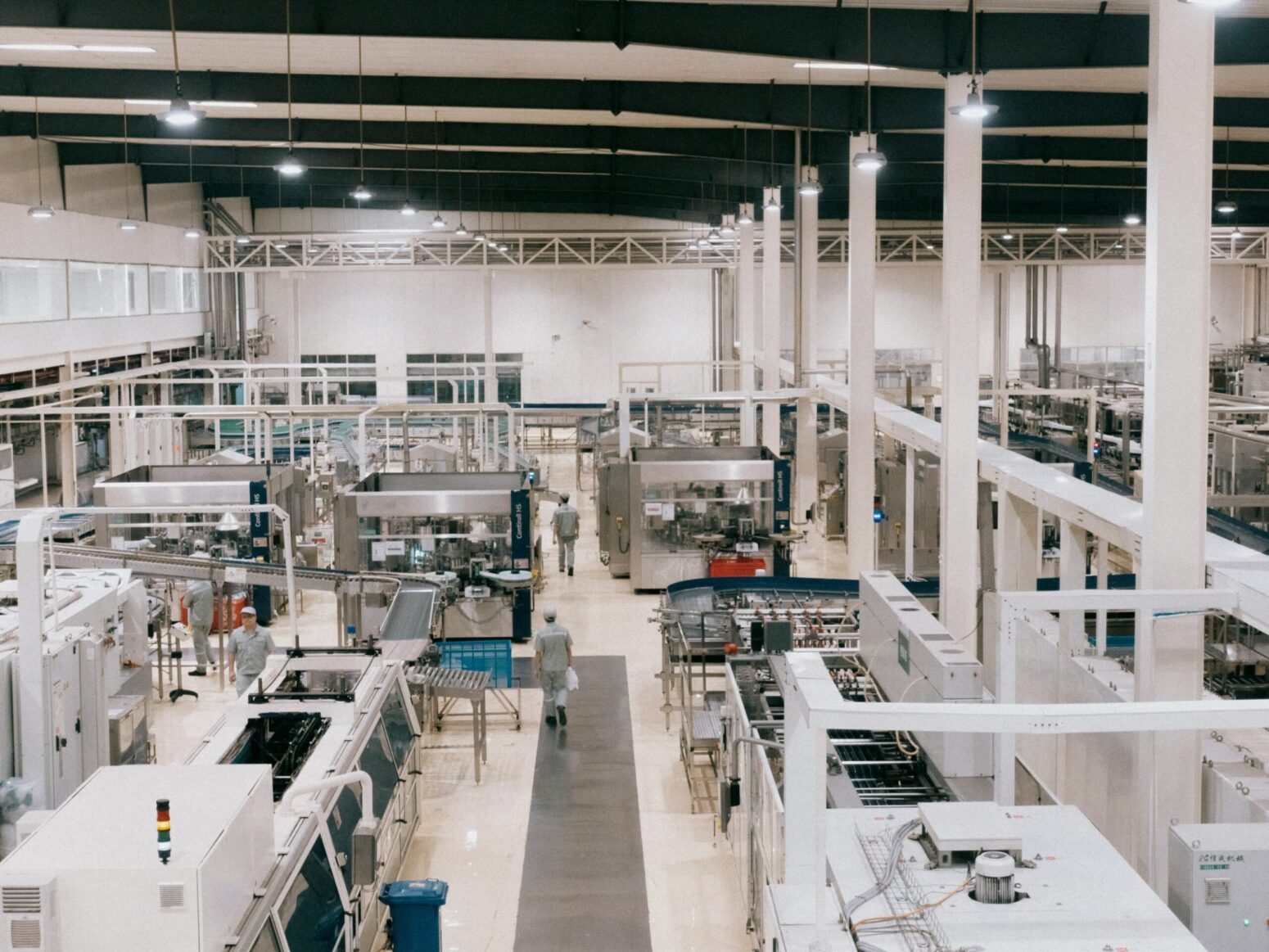
So much of modern work is clarification: Is what I think is happening actually happening? Can you confirm that for me? Can I do that? Is it okay to say that? Am I seeing this right? Oyamada manipulates our need for certainty and forward progress to her great narrative advantage. The resulting prose is striking, funny, clear, strange, and uncanny. For example, Oyamada places the reader into a modern Amazon-like factory campus (there are “nearly a hundred cafeterias”), a familiar setting, and then goes about defamiliarizing that setting to great effect. As he is introduced to the complex, Yoshio Furufue notes, “The factory was a world of its own. Only four ways in and out. North, South, East, West. Shouldn’t there be more? Next to the roads on the map were colorful circles—blue, green and orange—and according to the legend in the corner these indicated bus stops: there were several bus lines, running through the factory, all day long. Three giant buildings loomed over the rest: the factory headquarters, the museum, and the main warehouse. The rest of the map was filled with smaller buildings, all roughly the same size, too numerous to count.” There is a museum, multiple bus lines: this is not a factory in the traditional understanding but a large city, one that encompasses its workers’ lives, not solely their workdays.
All three of the first-person narrators are in turn (and in no particular order) thankful for, bewildered by, unchallenged by, and resentful of the work they are performing at the factory, and often within the same paragraph. Here Ushiyama is grateful for work he knows he is settling for: “I’m doing this work that literally anyone could do, as if nothing I’d ever done in my life even mattered. But how could I complain? Having work beats not having work.” There is a cap on what Ushiyama believes possible for himself and his life, and he is operating within these limitations he very much understands to be real.
Early in the novel, Yoshiko Ushiyama states (and is proven correct) that even a college degree isn’t enough to earn a full-time-with-benefits position at the factory: “The permanent position was too good to be true, a liberal arts degree couldn’t get you a permanent job in a place like this, and I obviously wasn’t the sort of applicant that companies would go out of their way to hire, especially not at this stage in my career. [ . . . ] All the interview manuals I’d read advised that when the interviewer is being too nice, it’s a clear sign that you’re not getting the job, or at least that the conditions won’t be the same as advertised. And that was exactly what was happening.” Yoshiko Ushiyama expected to be deceived by the job listing, expected to be offered a lesser position, and still she accepts, relents immediately. She, like every character in this book, needs to make a living, needs to earn, and the paths to earning are few, all only within the confines of the factory campus.
Oyamada wants the reader to view document shredding, editing a report of unknown origin, and being tasked with green-roofing every building on the factory’s campus all as factory work. What links each character’s labor are the limitations imposed on it, which take unique forms and account for much of the significant mystery present in the novel. (There are several other excellent mysterious threads involving a forest on the factory grounds and large coypus.)
The characters are unified in not knowing why they are doing what they are doing, yet they continue, day after day, to do just that. They are trapped and know it. This is how Yoshio Furufue explains his work life: “At the factory, I wake up, eat breakfast, walk around, maybe ride around on the bus, grab lunch at the usual cafeteria, take another walk, go back home to work on samples or plug data into my computer. Then I eat dinner, take a bath, go to sleep, and get ready to start the whole thing over again. How long can this go on?” The three central characters each need to work to make money, but they also know that this is not enough, that work alone does not make a life. Oyamada wonderfully complicates their respective searches for meaning, for comprehension, and presents the world of the novel to us in a way that is illuminating, if not also crushing. And yet, also funny.
Read more from Issue 17.1.