Goodbye to Grain Country
19 Minutes Read Time
For the life of him, my father cannot decide where he wants to be buried. He’s narrowed it down to two potential sites: McGandy Bluffs overlooking the White River, near his birthplace in southern Indiana, or Prairie Grove Cemetery, his current place of employment, just a few hours north in Fort Wayne.
“The perk about this place,” he tells me while digging a grave at Prairie Grove, “is that if I work here for a decade, they’ll give me a free plot.”
As perks go, this seems a rather strange one.
“So, it’s sort of like you’re digging your own grave every day then?” I ask.
My father ponders this, his work boot balanced on the shovel step. He directs his eyes toward the gravestones, which stretch on row after row, acre after acre.
“You know,” he says, wiping the sweat from his brow, “I guess I never thought about it like that.”
As our eyes meet, I catch a glimpse of myself in thirty years. He is me in a funhouse mirror: sixty-five years old, 5ʹ9ʺ or so, and 170 pounds. We share the same narrow nose, the same brown eyes, and soon, if tradition holds, the same receding hairline.
Since he’s not actively dying, we still speak casually about death; his musing on burial sites is merely hypothetical. Just a little light conversation to pass the time as he digs a hole for some other man.
But if you happened to cross paths with him, more than likely he’d want to talk about life instead—his, in particular, how he was born and raised in southern Indiana. It’s less a point of pride than a Pavlovian response.
You say your name, he’ll tell you that he was born and raised in southern Indiana.
Maybe he’s trying to exoticize himself, though more than likely, he’s begging your pardon in advance. I am not like you, he says without saying. I come from a different place.
Lyons, the southern Indiana town in question, has a population hovering around seven hundred. Today, it is white and rural and aging; the same was true half a century ago. It’s home to a bank, repair shops, and a Mexican restaurant (the last of which wasn’t there when my father was a boy). It has other establishments too and is the kind of place that will probably take offense at my not mentioning them.
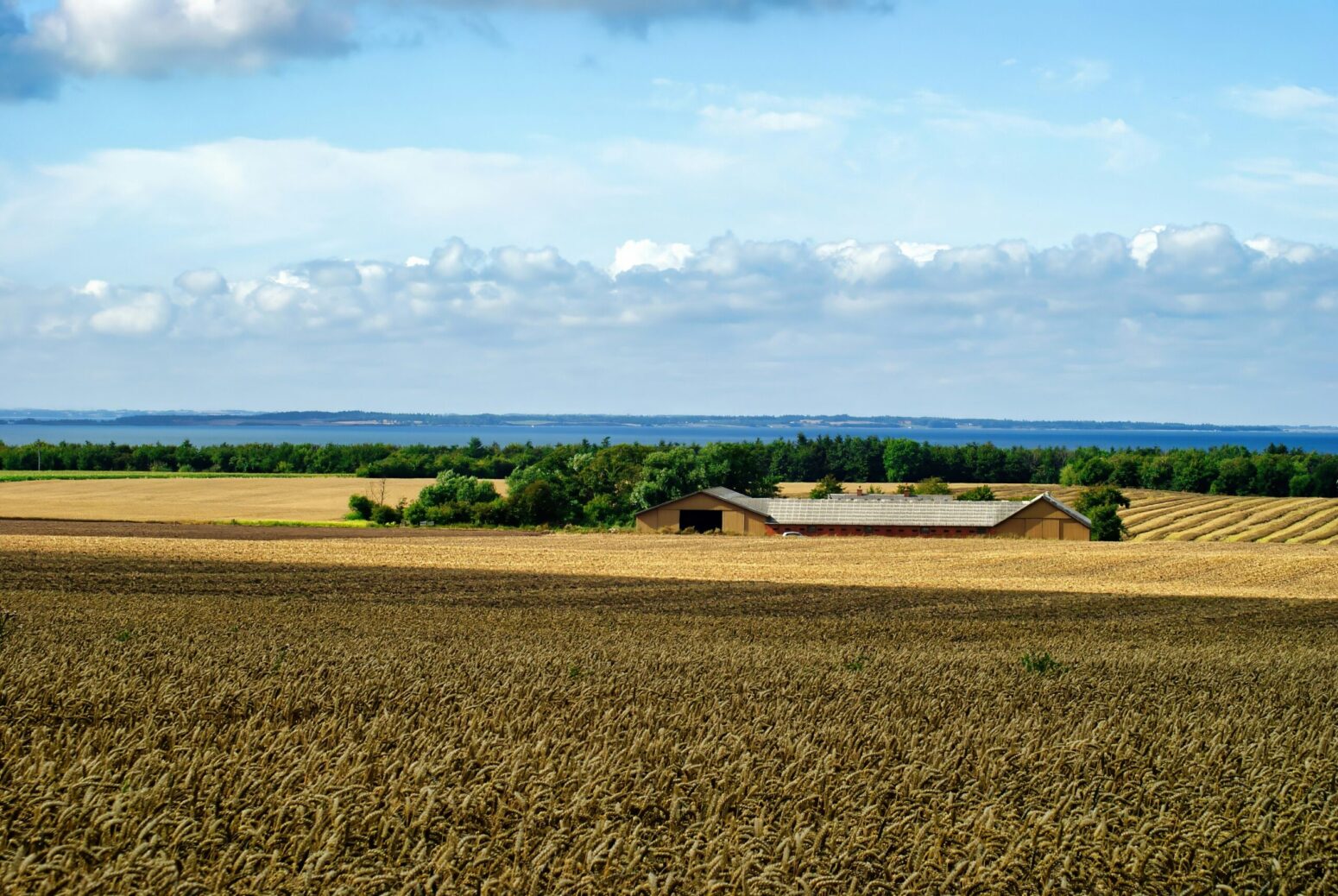
For the first twenty-five years of his life, my father lived within ten miles of that town, spending most of his time in the fields. Throughout high school, he helped his father farm seven hundred acres of rich tillable land that they called “grain country” in honor of the crops that grew best.
Typically they’d choose between growing corn or beans.
Correction: my grandfather would choose between corn or beans.
By eighteen, my father was managing five hundred of those acres on his own.
Like it or not, he did.
When I was eighteen, I could barely stumble from my dorm room to my 8:00 a.m. class, though my father would’ve been up for hours by then, guiding his tractor over the fields, painstakingly preparing the land. There was, in those days, a sturdiness to it all. The promise that if you did your job well and if the weather cooperated, you could grow enough to provide for you and your family. By the early 1980s, the explosion of agribusiness had all but broken that promise.
My father got out at the right time, harvesting his last crop in the fall of 1981, then selling the acreage and moving north with my mother. They resettled in the town of Monticello, Indiana (population: five thousand), where I was born on the shores of Lake Freeman, not far from an amusement park called Indiana Beach. For the first two years of my life we lived in the shadow of that park, surrounded by billboards featuring the park’s mascot, an anthropomorphic crow whose speech cloud squawked the park’s slogan: “There’s more than corn in Indiana!”
That crow was right. There is more than corn.
Ask my father, he’ll tell you about the beans.
After graduating from high school, my father stuck his diploma in a drawer and took his seat on the tractor. He didn’t have much of a choice. In the preceding weeks, his father, Joe, had suffered a heart attack, and since the land wouldn’t work itself, the job fell to him.
Before that, my father had briefly considered college. He wasn’t aiming for the Ivy Leagues, just a two-year program in law enforcement at the university up the road. When circumstances halted that plan, he blamed no one. Maybe, he rationalized, it was all for the best. Crops guaranteed a paycheck, after all, which was more than book learning could do.
It’s a stark contrast to my own story, in which college always seemed an eventuality, followed by graduate school, the next step. And then, if I was lucky, a professorship—the next-next step.
I was lucky. And privileged too.
My father made do with less of both luck and privilege. He didn’t “chart a course” so much as follow the course charted for him. His dreams only ever extended to the next field, which was what my grandfather preferred.
McGandy Bluffs is located somewhere between the towns of Worthington and Bloomfield in southern Indiana. My father has a hard time telling me where. They’re north of this and south of that, and if I just take a left, then a right . . .
“You know,” he says as we talk on the phone, “it’ll be easier if I just show you someday.”
“Sure, Dad,” I say. “Anytime.”
The bluffs exist not on maps but in memories. Folks like my father can still get you there. Perhaps the plat books in the Greene County Courthouse could help, but I like to think not. It’s nice to imagine some place still unaccounted for.
Mr. McGandy, for whom the land was named, wanted the same low profile for himself. In the late 1800s he lived a hermit’s life: alone in a shack somewhere near the top of those bluffs. One day, perhaps after indulging in too much moonshine (as was his practice), he lost his footing on the rock face and tumbled to his death. His body was discovered by wild pigs that, while rooting around in search of grubs, came upon a different meal.
“And that one’s true,” my father tells me, his eyes narrowing. “That one’s actually true.”
One summer evening, as my father fought his father about the future of the farm, his dad threatened to take it away.
“Good luck making it in the world without the farm to fall back on,” Joe said.
If he meant it as a threat, it was a bad one. All my father wanted was for him to take it away, to untether him from the land that had bound him. If he could get away from the farm, then he could get away from his father too—a man who knew his way around a belt and a strap and any number of items that could cause bruises to blossom on a body. Once, my father had watched his father break a two-by-four over his horse’s nose.
Upon hearing the threat, my father paused to peer out at the cornfield just ahead of him. He studied the way the heavy husks pulled at the stalks in the wind. Row after row, acre after acre, every last stalk looked the same. Sameness was what farmers wanted, sameness was proof of their success.
But by then, my father had grown weary of those endless acres. And he’d tired of finding tassels in his hair. He bent low, pressed his palm to the ground, then scooped up a handful of dirt.
“See this dirt?” he said, his voice rising. “I don’t care about this dirt. It means nothing to me.”
Then he tossed it at Joe, its spray clattering against the upper half of his overalls.
“Nothing,” my father said, gritting his teeth. “This dirt means nothing.”
In the movie version, the music would crescendo as he walked into the sunset, his shadow growing taller than the corn.
But in real life, nothing changed for another seven years. His father bullied him back to the fields every way he could. Manipulated him. Broke him down. Assured him that there was nothing worth seeing beyond the edge of their property line.
For a time, my father believed him.
What did he know of the world beyond the property line?
In 1980, shortly before leaving the farm for good, my father spoke to a therapist an hour to the east in Bloomington. She had my father sit on a blanket on her office floor, then posed a question he’d never been asked.
“Tell me,” she said, “what is it you’d like to do with your life?”
After a moment’s thought he admitted that he wanted to become an EMT.
“What’s stopping you?” she asked.
It was not a matter of “what,” but “who.” His father would never allow it. What would his relatives think? His neighbors? His friends?
In the Hollars family, there is no middle ground, he explained to her. Either you work the land, or you leave it.
Weeks later, my father—newly emboldened—at last approached his father on the farmhouse porch.
“Can I speak with you?” he asked.
After seven years of silence, my father had finally found the words he’d been searching for. He wanted to sell the farm, he explained, and strike out in search of a different life. It wasn’t personal, and it wasn’t meant to hurt anyone. It was just what he needed to do.
The moon hung high in the sky that night, and no wind slapped the farmhouse’s black shutters. The goats were fast asleep in the barn, as were the chickens in the coop. Ahead of him, the storage bins were cleaned and ready for filling, but my father was no longer willing to do that work.
My father expected rage, or worse, from the old man, but on this night, he received neither. Instead, my grandfather simply adjusted his wire-rim glasses, standing tall in his overalls. Then he filled his lip with tobacco.
“Well,” Joe said, spitting a brown stream into the ground, “you have to do what you have to do, don’t you?”
He walked back inside the farmhouse. The screen door slammed like a shot.
Just like that, my parents sold the farm, packed their bags, and waved goodbye to grain country. To my father’s surprise, his father eventually forgave him. Cut him out of the will, sure, but forgave him, more or less. Upon his death, Joe’s life savings went to his daughter, who knew better than to cross her father. My dad didn’t care. Three-quarters of a million dollars still seemed a small price to pay, even if his retreat from the farm failed to ease his anxiety.
Back when my father was a boy, he’d managed that anxiety by hopping on his horse and venturing deep into hill country twelve miles to the north. That’s where the bluffs were, after all—a perfect place to lose yourself for a while. The problem with grain country, he began to realize, was that its flatness unfurled like a future already written. If there was ever anything on the horizon, you always saw it miles in advance.
Things were different in hill country, where the giant oaks draped everything in shadow. You never knew what was around the next bend, and for my father, the not-knowing somehow calmed him.
As a teenager, he and his horse roamed those woods for days, exploring caves, and the river, and the bluffs. He pressed the boundaries of this new world before doubling back to the world that he knew.
He still felt isolated in hill country, but less so.
In a field, you always know when you’re alone, but in a forest, you only might be.
In July 1905, James Hollars, my father’s great-grandfather, got in an argument with a neighbor regarding the use of a road somewhere in southern Indiana. By then, the feud had been simmering for weeks, and when the neighbor’s nephew, Austin Harrah, attempted to cross the road allegedly on James’s property, shots were fired: two by my great- great-grandfather, one by Harrah. Reports disagree on who pulled the trigger first. In the end, it didn’t much matter.
The newspaper reported that Harrah didn’t even turn around to face his enemy. Instead, he pointed his arm backward, fired “seemingly at random,” and struck James Hollars smack-dab in the heart.
“[Hollars] fell to the ground dying instantly, breathing his last before his sons could come from the house to carry him in,” one newspaper reported.
Some folks don’t have the luxury of choosing their burial place.
Though I was born in Monticello, I wasn’t raised there for long. By the time I turned two, it was clear to my parents that the small town was nearly as isolating as the farm. During the week it resembled a sleepy retirement community, though on weekends it was anything but. Indiana Beach catered to a younger demographic, enticing an endless stream of teenagers and twentysomethings balancing coolers atop their shoulders. All weekend long the retirees and my parents retreated into their homes while the younger crowd had the run of the place: cracking fresh beers, blaring boom boxes, partying deep into the night. Such raucousness soon overpowered the soundscape they’d hoped for: the casting of lines, the rumbling of pontoons, the lapping of water against seawalls. Monticello was no place for a baby. Or for young parents either.
They moved farther north to Fort Wayne (population: 172,000). It was a difficult transition for my father. But for my sake, he assimilated. Put his dogs on leashes. Factored in travel time. Became accustomed to not knowing anyone. He asked permission before fishing in private lakes. And he just shrugged when the property owners said no. That a city of such size could prove as confining as Lyons was its own mystery, and one my father has never quite solved.
Whenever we broach the topic, he just quotes an old country-western song:
“You can take the boy out of the country,” he says, “but you can’t take the country out of the boy.”
In the summer of 1998, my father took to the sea. We all did, my family splurging on an Alaskan cruise vacation well beyond our budget. I hardly knew how to handle such luxury, and my father was equally baffled.
“How many pools,” he wondered, “does one ship need?” But soon he learned to embrace the vacation life, sampling everything that ship had to offer—shows, shuffleboard, and especially the midnight buffet.
One afternoon, while exploring the ship’s many decks, I stumbled into a karaoke bar to find my father crooning to half a dozen Hawaiian-shirted day drinkers. Dressed in similar attire, he rocked that glitzy stage, microphone in hand, belting out the song he’d been strumming and singing throughout my childhood: John Denver’s “Take Me Home, Country Roads.”
I always figured my father returned to this song because he knew the tablature by heart. Only later, while listening to its lyrics, did I realize that he was trying to tell me his story.
Though my father never attended college, in 1981 he came awful close: a nine-month EMT course held at a nearby hospital. This is the one story my father never tells, how he drove ninety minutes twice a week to complete the course, then passed the state exam.
My mother was the first to learn the news. She picked up the mail, opened the letter, and—after reading my father’s exam score—sprinted across the field, her arms flailing. From inside his tractor cab, my father had no idea what had come over her. Had they won the lottery? Had the price of grain doubled?
“A-minus,” my mother shouted, waving the letter. “You got an A- minus!”
My father leaped down from his place atop the tractor for the last time in his life.
“A-minus,” he said, studying the strange notation. “A-minus.”
A new career as an EMT awaited him, and then, one day, a new career after that. The important part is that none of those careers led him back to the farm.
He looked out at his field. Then beyond it.
Every year my father returns to southern Indiana. His parents are long dead, but a few cousins still remain. For hours each evening, they’ll sit on a back porch and comment on the crops.
How much does a bushel of corn go for these days? my father will ask. And how much for beans?
Then, he’ll ask whatever happened to this old friend or that one, and the answer will often prove devastating.
As night spills over the fields, my father and his cousins will take turns lamenting the state of the world, their lost youth, and the turn to agribusiness that has pummeled everyone.
“Well, I’ll tell you one thing,” my father will inevitably say. “It sure ain’t like it used to was.”
Today, this is my father’s idea of a joke. It wasn’t always.
Though he hasn’t planted a crop in nearly forty years, my father still knows a fair price for a bushel of beans—but he struggles to figure a tip.
Perhaps this dichotomy sheds some light on his burial-site question. And maybe what he knows (and doesn’t know) is the moral of this story: you can take the boy out of the country, but are you really sure you want to?
After all, to take the boy out of the country is to imperil the family farm. It means turning your back on the land that has served you. It means denying the natural order. You are the cause of the premature death, the blight on the fallow field.
He did it for me. To spare me the silence that only ever sounds good in the movies. And to spare us a town with no library, no museum, just grain and grain and grain. You could only ever shoot so many cans from the fenceposts. You could only ever fish so many streams.
A decade ago, over Thanksgiving dinner at the family home, I asked my father how he was enjoying his new job at the cemetery.
“It’s great,” he said, reaching for the gravy. “I love the people I work with.”
The table went silent. My mother turned toward me. “Dad,” I reminded. “You work alone.”
My dad, who has spent much of his life parroting the answers he’s heard others say, paused to consider this. Was this not the correct answer? Was this not what a man from the city might say?
“Oh yeah,” my dad said, shrugging it off, “I guess I never really thought about it.”
Late at night, while visiting my parents, I’ll often find my father foraging for graham crackers and peanut butter in the darkened kitchen just off the living room. I’ll join him there, leaning against the countertop, helping myself to a cracker or two.
We’ll idle in small talk, which soon gives way to nostalgia, which soon transports him back to life on the farm. Eventually, he’ll get around to reminding me that he wasn’t just some two-bit dirt farmer from southern Indiana, that he was a grain farmer, and that meant something back then.
“One of these days,” he tells me, “I really ought to show you the sloughs near the old farm. And the hollers where we got our last name.”
He promises to show me the bluffs too, just so I know where they are.
Whenever he says this last part, I always start to worry about his health.
I wonder: What does he know that I don’t?
The answer to that question could fill a grain bin. Despite all my years of schooling, I couldn’t tell you a fair price for a bushel of corn. Or how to tie a fly to a line. Or plant a crop. Or drive a combine. Or unbridle a near-broken-nosed horse.
But rather than reveal all that I don’t know, I listen to the lessons. Listen, once more, as he tells me about what it was like to be born and raised in Lyons. But on this night, the story extends beyond the usual tales, because he shares, too, what it was like to leave that place behind.
How he’s all but forgotten what dirt feels like beneath his boots. Not graveyard dirt—which is easy enough to recall—but the kind of dirt you use to grow things. A dirt so rich that the seeds can’t help but stretch themselves toward the sky.
“Hey,” he’ll say when he’s a few graham crackers deep, “did I ever tell you about that McGandy fella who fell from the bluffs?”
I’ll roll my eyes, preparing myself for another version of a John Denver song.
But then I’ll remember that my father left his father so that I could be here today.
How the dirt meant nothing to him, and he said so.
I reach for a graham cracker, joining him, for a moment, in no- man’s-land.
“Tell me,” I’ll say, “I’m listening.”
Read more from Issue 18.2.