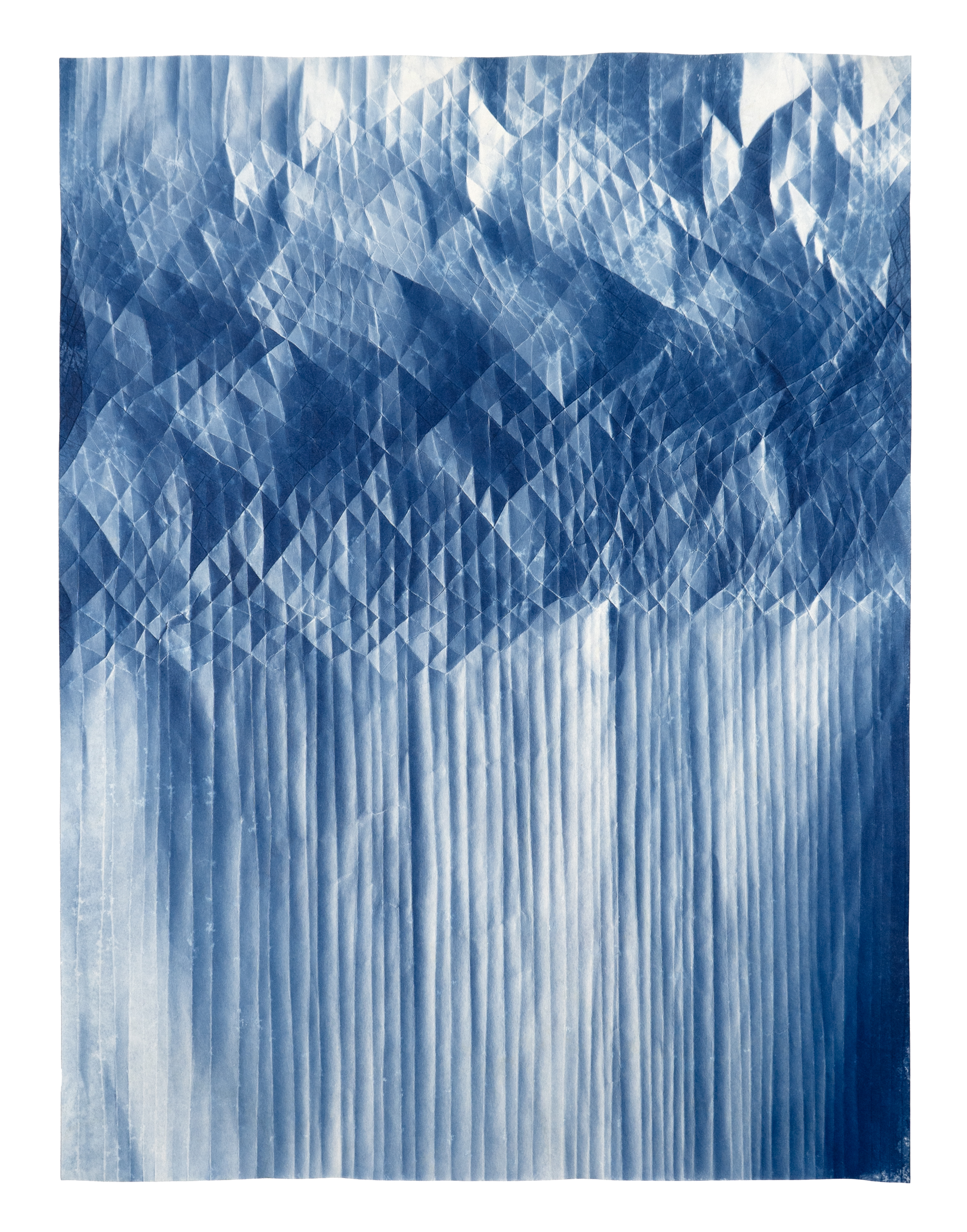
Eudora Loved Her Life
25 Minutes Read Time

Eudora loved her life. She had been sober three years and nicotine-free for two and a half. She had not quit her necessary day job. She had not stayed involved with an abusive boyfriend. She had made love to a man who became her best friend and never again her lover. Her weight was right, her clothes fit well, she had just turned forty, and the street where she lived was suddenly purple with jacaranda. On turning thirty-five she had been depressed, had felt the approach of darkness and death, much as she had at twenty-one, and that had been with a baby in her arms and a husband at her side. Now her daughter was in school at Stanford, and her former husband, a DC lobbyist for progressive causes, was filling the gap the financial-aid package left. Her own dull job paid well enough to give her the freedom to do the work that mattered to her, and she still had hope for that work to break out of its privacy and fully inhabit public space.
To celebrate her birthday, she took the day off and drove to the beach.
She found a woman there, a body in the sand. Dead, or maybe dead.
She called 911 and waited.
She was alone on the beach. She had chosen a stretch she knew to be isolated, even from runners and dog walkers, likely to be solitary on a morning like this one, overcast and cold.
She wondered whether to wait. She wondered what had happened to the woman, and sat in the sand beside her. She didn’t dare touch her. She didn’t know if her touch might bring harm, to the woman or to herself. She looked at the woman’s hair, splayed out dark and damp, her face hidden, down in the sand.
The woman’s body and clothes suggested she was young. Younger than Eudora. Her pale skin was tattooed, ornate with petals, leaves, feathers. Pierced, Eudora could see, multiple times in each ear, possibly also her face or breasts or belly, invisible in the sand, under her seaweed hair.
Eudora tried to stay present with the woman, what was left of the woman, but lost track of her now and then, first in a thought—maybe she wasn’t a woman, but a man, or someone in transition, or one who refused to be defined by anything whatsoever male or female or in between. She had found a person on the beach, a human being. That much she knew—and with all this thinking lost the body, the person herself, himself, themself, the whatever was left.
What had led her to assume this body was, had been, a woman, maybe even a girl? The round bottom in tight black jeans, the narrow waist, the delicate wrists, the bare arms—covered in birds and flowers, red and green and blue—the splayed hair.
She wanted to turn her over but resisted, allowed the curiosity to pass, to fill instead with the presence of loss, of violence and grief.
Why did she assume violence?
Again her thinking took her away. Spinning. To her garden, the lessons of summer. When you give a young tomato plant plenty of room, it grows itself. When you confine it, contain it, it grows tomatoes. How the cultivation of Solanum lycopersicum for its fruit exactly paralleled the socialization of women, throughout history and in each single life. She had done both, of course, grown herself and fruited, producing just the one, her daughter.
The thought of her daughter woke her up, brought her back to the beach, the body beside her. The bare tattooed arms, slightly rounded, looking more soft than sinewed. The hands, too, slack in the sand. The fingernails, painted black and silver. She could have been Eudora’s daughter’s age. A girl. A young woman.
Everything collapses, Eudora thought. Rots and sinks.
Another garden lesson.
She heard the police and EMTs before she saw them and stood up from the sand to wave, anxious now, as if she herself had done something wrong.
She looked down again at the body.
“I’m sorry,” she said. Out loud. To the girl. To the wind and the seagulls.
For the first time she realized the girl must have been cold, walking on the beach with those bare arms. If she had been walking. If her arms had been bare. Earlier this morning or last night, yesterday afternoon—the days and night had been cold. The sunset had been brilliant, red, orange, pink, indigo, even sometimes black. Eudora had watched it, sitting barefoot on the front steps, wearing a sweater, wrapped in a blanket.
She waved again at the approaching officers, a man and a woman. She noticed how fit they seemed. She saw that the man was black and the woman Asian, maybe Vietnamese. She had what seemed a cool, almost stony, but beautiful face, and a sadness about her, as if she had seen too many of these anonymous bodies, dead women.
The man did the talking, gentle and warm. His voice invited trust, as did his eyes, so opaque and dark a brown. The longer Eudora spoke with him, answering his questions, the more deeply in her flesh she felt his presence, her response to the heat of him and the size. He was a fire in the sand.
Meanwhile the woman checked out the cold corpse.
The EMTs had gone. The medical examiner was arriving.
They were younger than she was, all of them, the two police officers, the crime-scene people, the dead girl, visible now.
“Probable overdose,” she heard the Vietnamese officer say, maybe on a phone.
The dead woman might have been pretty once, Eudora thought. It was hard to say. Her face was bruised and scarred. She wore a silver nose ring and a stud in her lip. She was not, after all, young. Even dead, her face looked tired, as if she had been tired for a long time. Bring it on, Eudora imagined her saying, before they zipped her into a bag.
She asked the gentle officer if she could go. She told him it was her birthday. “You might have noticed,” she added. She had given him her driver’s license so he could record her information.
He gave her a smile for that.
“We’ll be in touch if we need you,” he said and returned her license. “Yes,” she said. “Of course.”
She turned to walk away, uncertain whether to go back to her car or to go on down the beach, continue her walk, her celebration. It didn’t seem fair now, her birth, her life, and her escape from the life that could have ended like this woman’s, overdosed, anonymous, half-dressed, half-buried in sand.
She had been naked on a beach, not this beach, not that long ago. Drunk and naked and having sex with a man she hardly knew. More than a girl then, too. The sun hot, the sand hot. Naked under his naked weight. Not quite naked, not entirely. But naked enough. And drunk. On alcohol but also on the sun and the heat and the flesh, her own and his, the scent of coconut oil and lavender soap and the grains of sand that clung to her skin. Drunk on his near anonymity, on his strangeness to her, his opacity and otherness. Drunk on his desire.
She had said yes to him. Her whole self—body, mind, whatever there was—they all said yes. Yes to brunch, yes to tequila, yes to the beach, yes to lying naked in the sand, yes to his hands, to his eyes, his mouth, his teeth, his tongue, yes to his body pinning hers, yes to his heart pumping, his heat surging into her. Yes to the life of him and the life of herself. Despite the cigarettes, despite the alcohol, despite the devastation. Yes to the onrush of life.
She didn’t know that man anymore. Had never, really, known him, and not at all for long. Hardly longer than that afternoon on the beach. They had not been alone. She had not cared. Other couples were there, some just sunning themselves or swimming, some as naked as she was, some clothed, some eating and drinking and laughing, others having sex. A few people even stopped to watch them. As if they were a movie. And maybe they were a movie. Maybe someone turned on a phone.
Those were the dark days. But now she allowed herself to forget the darkness. She had been alive, and she got out alive, unlike the pierced, tattooed woman cold in the sand.
For a moment she wondered whether, after all, she was not alive now anymore.
No, she didn’t wonder. The thought crossed her mind, flew quickly into her notice, that was all, like a little beach bird, off to the side of her consciousness. Not really there.
But then the thought grew louder.
“No!” she said, resisting, and glanced back up the beach to confirm that she was far enough from the police activity that none of them had heard her.
She felt like a suspect.
She wondered whether she would speak with the same handsome officer again, the young man with the caressing near-black eyes. She wondered if she spoke with him whether she would slip up, say something she shouldn’t, incriminate herself in some unknowable way, even though her life now was so cleansed of all that had sullied it before.
It was probably not safe to be walking alone on the beach.
The woman was dead. Dead when Eudora found her. Probable overdose.
What more was there to say?
“I felt guilty,” she said that evening, in a meeting. “As if I should have been the one to die. As if I had somehow killed her.”
All around her people nodded.
“It was too weird,” she went on. “It’s my birthday and there was this dead woman. It really seemed to mean something. But then I realized that was just crazy thinking. There was no real connection.”
The nodding died down. She felt the others wanting her to wrap it up, to offer some familiar slogan—there are no coincidences, stinking thinking, there but for the grace of God—
“Whatever,” she said, and stopped. She looked at all their clean and sober faces. Like her, they were alive. Like her, they all had lived in a misery they now knew they were free of, if only for this day. Even those still struggling, still fighting against recovery, still waking up to pain they had been numb to, knew they had a chance now—by sitting together in this room, got a chance to live. So why did she doubt herself suddenly, herself and them, the whole project of sobriety, just because she had found a woman dead on a beach?
She tried to say this, wanted to say something about it, in a kind of panic, as if her life too had ended, but couldn’t find the words to say what she wanted to say. She was afraid of what might come back at her—a compassionate invocation of the dead and the bullet they all so far had dodged, a passive-aggressive attack hidden in plausible deniability, words of encouragement and clubby proverbs smothering what core of wisdom she could not arrive at on her own.
She felt the bitterness in her fear and stammered and gave up trying to express herself.
“I’m sorry,” she said. “That’s all I have.”
She sat stone-faced through the rest of the meeting and left quickly when it ended.
At home she called her sponsor and tried again to say what she was thinking, feeling. After the call she remained dissatisfied. Everything was elusive. As if she had stepped into a great black cave where she could hear only distant voices, dulled, muted, carried in and out on waves. As if she lay alone there, in a cold, humid darkness. As deeply alone as she had ever been. She tried to breathe in rhythm with the whispering.
From the other side of the duplex, a round of shouting started up, her neighbor and whatever man was with her. Sometimes when the neighbor was alone, she yelled for hours into the telephone. When her little boy was with her, she yelled at him. Sometimes Eudora thought the yelling was just the woman’s ordinary level of speech—yelling and laughing and cigarette smoke seeping through their common wall for hours on end. It was hard to tell whether the shouting with whatever man was a danger, to the neighbor or her little boy, whether the neighbor herself might be a victim. The constant volume seemed to be a way of life. Eudora never heard blows or anything breaking, but she always paused, wondering whether to interfere, even to ask for silence so that she could sleep, and always decided against it, in case a request should lead to violence, against herself or the neighbor or both.
In her cave, she made an effort to melt her anger, her powerlessness, knowing that she had been as loud and dramatic not that long before. She buried her head in her pillow, mentally repeating the words of a song, over and over, or a poem or a prayer, to shut out thinking and resistance to the noise. She had work in the morning. She had her own life. And what could she do anyway? Call the police?
Once in her life, when she was very young, she had called the police. She had lived in another neighborhood then, in a tiny stucco bungalow, her daughter just a toddler, gone for the weekend to her father, when a man came in and sat at her feet, at the foot of her bed, spoke with her back and forth a few times before she woke to the realization that she wasn’t dreaming and screamed. The man ran. She hadn’t known what to do next. She had called the friends she thought most likely to be awake that late in the night, in the early morning, the friends least likely to think calling the police would be a good idea, and they told her to call the police. She flushed what drugs she had on hand and picked up the phone. A big pudgy white policeman finally arrived and took her statement, looking at her the whole time, she thought, with contempt. She had been drunk before she went to bed. The stranger had walked right in from the driveway through her unlocked kitchen door. The policeman told her to keep her doors locked, to lock her windows, there was nothing more he could do.
Her windows had no locks, so after he’d gone and before she went back to bed, she hammered nails into the frames to stop the windows from opening more than a couple of inches and the next day called her landlord but got no help.
Her neighbor now, in the duplex, years later, was young, younger than Eudora, and pale and tattooed, like the woman on the beach. She drank beer, mostly, Eudora knew from the bottles and cans she’d seen her carry out. Her name was Jay or Kay or Lacey, something like that, a name that blurred in Eudora’s mind with other similar names. The little boy’s name, though, she remembered, was Adam. He wasn’t always there with his mother, and now and then when they were saying good-bye, she heard her neighbor say, gently and with regret, “I love you, buddy,” as if she wouldn’t see him again for another long time, or didn’t know how long it would be, and Adam would say back, as if he meant it, “I love you, Mom.”
Eudora often thought she didn’t know, really, what love was. Still, she could hear something real in their voices.
In the voices the night of her birthday all she heard was rage.
The next day at work she found her hands shaking.
“Not enough sleep,” she told her work friend.
“Big celebration?”
She didn’t want to talk about it.
On the weekends, after taking care of the garden, she worked in her studio, sometimes painting, sometimes making jewelry. Her studio: the second bedroom that once had been her daughter’s, emptied now to make room for a worktable and canvas and paper and paint. She sold her jewelry on Etsy, sometimes had a good run after months of nothing.
She couldn’t read the market but made what pleased her and now and then someone else would be pleased, and now and then someone else who was pleased would turn out to be a minor influencer and ten or twenty other people would suddenly buy from her. She saved the jewelry money in a special account, from which she bought more jewelry supplies, along with paper and canvas and paint.
She had to open all the windows to work in the bedroom. She no longer lived in a tiny street-level bungalow, but because she had found the woman on the beach, opening the studio windows to circulate air brought that frightened night again to mind. The intruder had run as soon as she screamed. But the policeman had lingered, treating her like a stupid girl.
The police on the beach had been kinder. The woman had died of an overdose. There was no symmetry between these events. They were linked only by herself, and she herself was not the woman she once had been.
She tried not thinking about these things while she painted, thought instead of texture, color, balance, space, object, image, light—thought not-thinking. But the woman kept coming into view—her hair, her hands, a red and blue and green tattoo.
A few weeks later, on a Saturday, she was walking into Farmers Market when she ran straight into the Vietnamese police officer from the beach.
“Wow,” Eudora said. Coincidence spoke to her, disturbed her. There was that AA slogan.
The woman smiled, warmly, instead of just walking on. She was wearing pale summer clothes and sandals, her black hair loose and long. They were blocking foot traffic in the narrow passageway and moved together into the open. Eudora had only a moment to wonder how she had recognized the officer without her uniform before the woman asked, “Do I know you?”
“I found a dead woman on the beach,” Eudora said. “Probable overdose.”
“Yes, of course,” the policewoman said. “Well, that’s done.” Her name was Agnes. “You’re—?”
“Eudora.”
“Yes, I remember. Of course. An unusual name.”
“Yours too.”
“It was French,” Agnes said. “Pronounced in the French way. My French grandfather’s mother’s name. Family tradition. But like everything else it got anglicized.”
“And you’re a policeman,” Eudora said, not knowing what else to
say.
“Why not?” said Agnes. “Another family tradition.” “Why did she die?” Eudora asked.
“That woman?” Agnes shook her head. “Why do they kill themselves?”
When she shook her head, her hair shifted and revealed an earring that Eudora recognized as one she had made. Involuntarily she raised a hand to her own ear. “That’s my earring,” she said. Her earrings were unique: each individually painted, a miniature canvas, a tiny sculpture made of resin, stone, metal, wood.
Agnes laughed. “No wonder I knew your name. Not your name. But the name itself. It means good gift.”
Eudora could not recall how long ago she had made or sold that pair of earrings, or whether she had sent them to someone named Agnes who may or may not have had a French or a Vietnamese last name. She wasn’t ready to trust Agnes. She didn’t know why. Maybe because she was police. Or because she seemed to want something from her.
“Agnes means holy, or pure,” Agnes said. She laughed again. “Saint Agnes was a martyred virgin. Also known as Inez or Ines.”
After that they wandered in the market awhile, Eudora wondering what they were doing together, too curious to make her escape. She had a shopping list and shopping bags, but really she had no plans, not even a cat waiting at home to be fed. She should get herself a cat, she thought.
Later that night she looked through her records but could not find Agnes in them.
She often feared someone, anyone, wanting something from her. She thought it was probably one of the fears she had drunk to escape. Drinking, she had been fearless. All her adult life, until just a few years ago. But not as a child. And not now.
On Sunday she called her sponsor to tell her about Agnes, not knowing really what there was to tell, but expressing her fearfulness, her paranoia. Yes, she admitted it was paranoia. She tried to take her sponsor’s advice, tried to speak up at a meeting, tried to pray. Nothing worked. But she was home and she was sober. Next door her neighbor was playing with the little boy.
Eudora wanted to call her daughter but wanted more to wait until she was at ease. Her daughter could always tell if she’d gone off somehow, spun into some darkness, some fear. She had not even told her yet about the body on the beach, the dead woman, the encounter with the police. How then bring up Agnes, the coincidence of meeting her, as if accidentally, and Agnes wearing those muted blue-and-purple earrings that Eudora herself had made?
She tried work on a new set of earrings. She tried a new painting on paper. Nothing held her attention. She kept feeling the as if of the accident of meeting Agnes, the as if of finding the body. What was the universe trying to tell her? Agnes had asked for her telephone number. Eudora had wanted to say no but had not known how. Her phone number given to Agnes had felt like an open door, an unlocked window, and still did, because Agnes had not called.
On Monday, coming in from work, she found her neighbor sitting on the front steps, smoking, weeping. Jaycee or Lacey or whatever her name was moved aside for her to pass as she fumbled with her keys, then called to her from behind—“Wait?”
Eudora turned.
“Can you help me?”
“How?” Eudora asked.
The woman sobbed, hid in her hair, jerked her head up and drew on her cigarette.
“I don’t know,” she said. “I just think you can.” Eudora waited.
Her original neighbors in the duplex had been a young couple who grew tomatoes in the backyard and had a friendly dog and a temperamental cat and every season swept the jacaranda petals from the sidewalk after they fell, not right away, but before they began to rot and slime. Thanks to them, what once had been front lawn was now all English ivy. For years Eudora had been embarrassed whenever they met at the garbage bins or on the steps.
Now her neighbor said, “I hear you sometimes, talking on the phone maybe? You sound so calm. Like you know how to say things to people so they’ll understand.”
“Tell me your name again?” Eudora said. She should have realized that if she could hear her neighbor, her neighbor could also hear her. She had thought she was so much quieter now.
“Laney,” her neighbor said. “I never hear any yelling.”
“There’s nobody here but me.”
“That’s what I mean,” Laney said. “And you seem happy. When I see you, coming and going, from work I guess. Out in the back, growing your tomatoes or whatever. You don’t have any children?”
“A daughter in college,” Eudora said.
“See,” Laney said. “Adam—” She sobbed and took a long drag on her cigarette and sighed the smoke out. “I think there’s no hope for me.”
A string of platitudes from three years of meetings ran through Eudora’s mind, but not one of them seemed right for speaking. Instead, “I found a body,” she said. “On the beach a few weeks ago. A woman. A probable overdose. She had tattoos like you.” \
Laney nodded, as if this revelation made sense.
“You want to come up for tea or something? For coffee?” Eudora asked.
When she first got sober, the old neighbors had shared their garden with her, showed her how they tended their tomatoes, their zucchini, their lettuce and kale, and gave her a piece of it to plant for her own. In the early mornings they took turns watering from the rain barrel, and when the neighbors moved away to have their baby, the whole garden became Eudora’s, the rain barrel too.
“No,” Laney said. “Thanks, though. Sometimes I hear you cooking.”
“I drop lids,” Eudora said.
“Yeah,” Laney said. She laughed. “It always smells good,” she said.
“Take care, then,” Eudora said.
“Yes,” Laney said. “I will. Maybe I will.”
On Tuesday during her lunch break Eudora walked the few blocks to a church where she sometimes went to sit in solitude and silence. Other people also sometimes sat there in the cool darkness, spaced well apart from one another, and sometimes a caretaker or volunteer swept the red tiled floor. Eudora didn’t consider herself a believer but in the empty space itself felt a presence of the sacred, undefined. It was a classic church, made of dark wood and stone and stained glass, and the light changed depending on the seasons and the brightness of the sun. That Tuesday, sitting alone, she watched the light and shadows play across the dark lifelike figure dying on the cross. A single man abstracted to all-suffering human being. Young, old, woman, child, the color of wood, the color of tile, the color of marble, the color of sand. Light and shadow flickered across the body’s surface that was not skin and painted there, in fleeting reds, greens, blues, golds, the dead woman’s tattoos. On Wednesday after work Eudora went to a meeting and out for coffee with her friend, the man she had slept with once and never again. She told him about the dead woman, about Agnes, about the tattooed Christ. He told her about his efforts to get back into school, how hard it still was to believe in himself, sometimes even to care.
“She isn’t going to call me, is she?” Eudora said.
“Do you want her to?”
“I don’t know. I don’t like her hanging out there, unresolved.”
On Thursday the jacarandas started dropping their blooms. After work Eudora drove to the beach. She parked where she had parked the day she found the body. She sat in her car and asked herself what she was doing. A criminal, returning to the scene of the crime. She left the car and walked onto the beach by the path she had taken before. She saw no barriers or strips of yellow crime-scene tape. Just a few planks of broken walkway, patches of beach grass, endless sand. No sign anymore that a body had ever lain here, dead. Or a living being died. Up the beach along the water a man was running with a big black shaggy dog. In the other direction a couple sat side by side at the water’s edge. Waiting for sunset, maybe. Eudora too could wait for sunset. She was hungry for dinner, but her hunger could wait. She would sit in the sand, in the place where the body had been, where the tattooed woman had died, fled.
She sat there till darkness was almost complete. The sunset had been unspectacular. The man with the dog had come by on the way to leaving the beach and greeted her, polite and distant. The couple had vanished.
By Friday the sidewalk was a carpet of purple. That night Eudora called her daughter.
On Saturday she opened her studio windows and painted, not thinking, just moving in and out of color, texture, light, shadow, shape.
On Sunday she took the broom out to the street and started sweeping. Her old neighbors had left her this task along with the garden. They had taught her instead of clogging the gutter along the curb to gather the swept-up blossoms and add them to the compost bin. She was bathed in purple, from above, from below. The light was brilliant. While she was sweeping, Laney came out and sat on the steps, watching her, smoking, drinking a beer. “Hey,” she said, and waved, her arms bare, exposing the birds and flowers inked there, soaking up the sun.
“Hey,” Eudora said. She paused in her sweeping and looked up, overhead, at the purple blooming jacaranda, at the lapis-lazuli sky. She would do this day after day, for weeks on end. Even as she swept, new blossoms were falling.
Read more from Issue 16.2.
