Doctor Visit
14 Minutes Read Time
You have the tiniest little baby cataracts, the ophthalmologist tells me, and he laughs a little, because apparently cataracts, when small, are funny. I’m in the chair with the thing that looks like a 1970s TV robot hovering in front of my face, and I don’t think it’s funny because (1) all I can imagine is my eyes becoming increasingly cloudy and unusable, and (2) cataracts are in most cases a final-third-of-life thing or at least an indication you’ve stopped walking on a path and are now on the stairs, and who knows how many stairs there will be, but you’re on the stairs.
I should mention that we are fucking, the ophthalmologist and I, not in the office but as a routine. And with some brutality because I’ve never had patience for sex that is soft. Even though he’s divorced, and I’m divorced, we don’t fuck in beds. We meet. Cars on farm roads. Bathrooms of chain stores. Basements of open houses. Once a corn maze at a pumpkin patch. It’s always quick and fleeting, no lounging on comforters after, and thus a reminder about life and how it’s easier but less good to hold yourself back, to stay cloudy and beyond harm.
When I was three and at home with my sister and my mom and my dad in the middle of the country, my dad’s family drove in one of those long flat 1960s cars all the way to California. His sister and brother-in-law and the baby rode in the front and his parents and the toddler in the back. It was the first time his parents, both poor and midwestern, had been out of the state of Missouri. In Northern California they all stood on a rock formation by the ocean, and a wave bigger than the usual waves came up over the rocks and took them. The car was left at the top of the cliff, above the path to the rocks, and it was days before anyone figured out they were gone.
This is something I think about: mattering. As in: do we matter? It’s a masturbatory thought exercise that undoes itself, as in: the sheer act of thinking about mattering is enough to remind you of the futility of your actions and thus is proof you don’t in fact matter and why should mattering matter anyway. But in a practical sense, it’s easy to find that you do, in moments of immediacy, matter, like fucking in a car on a farm road when the act wouldn’t be happening in that way without your essential contribution. But then, also, it could be someone else. Someone without baby cataracts.
You can get surgery, the ophthalmologist says when I’m peeling my legs off the vinyl exam chair. There’s an actual ripping sound. When it gets worse, you can get surgery. It hurts, but then they’re gone. And maybe that sums up everything: it hurts, but then it’s gone.
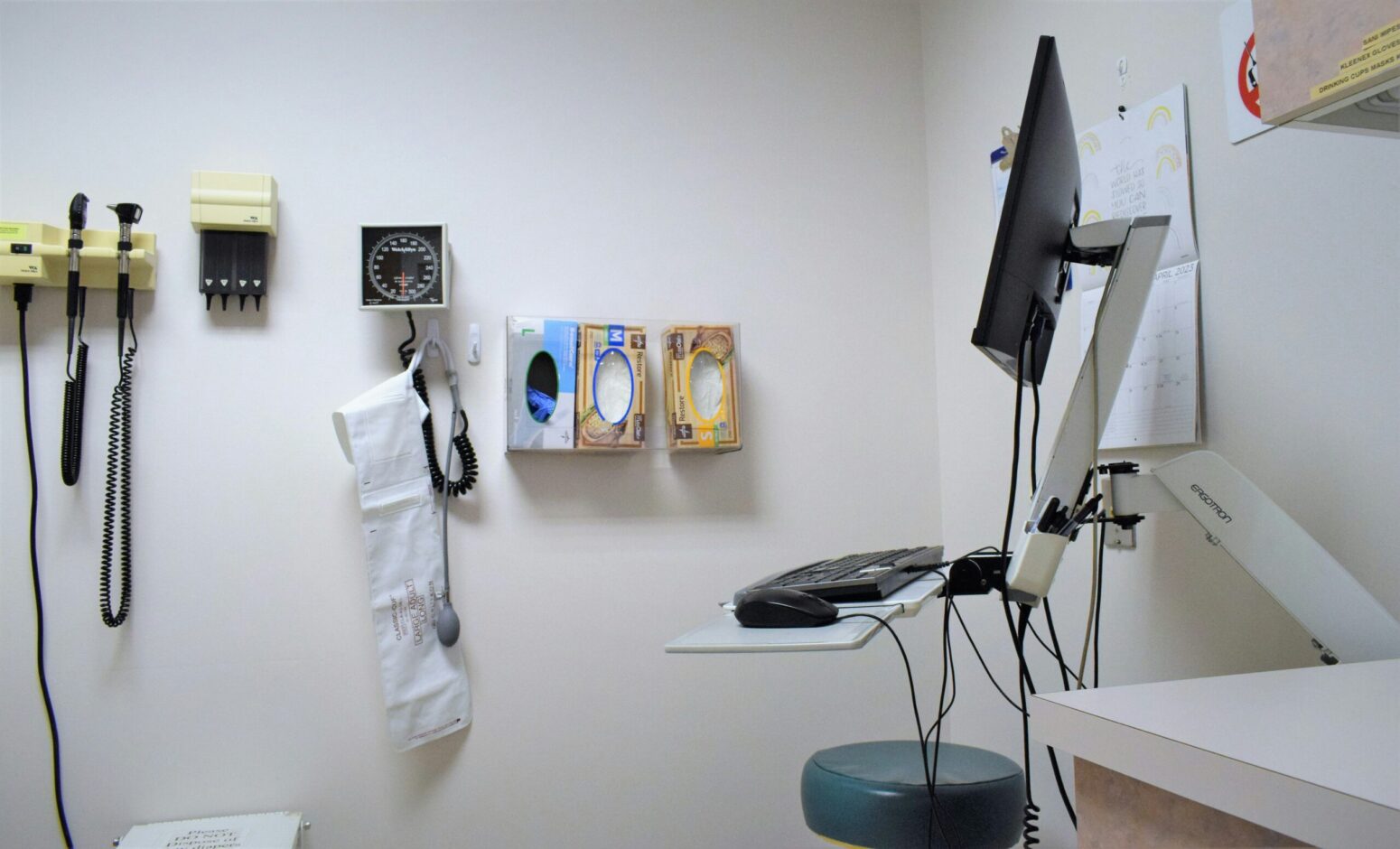
The posters that cover the walls of my dermatologist’s office tell me all the ways my face is wrong; it should appear less aware of the world and its ills so that people looking at me will not feel alarmed by the ways my face is revealing the passage of time. I don’t need to change my face, I tell the dermatologist, and it strikes me that there is little in the office: a light on a metal leg with an arm that allows it to move at any angle, a cabinet likely full of utilitarian things like cotton swabs and bandages. But, the dermatologist says, and he swings the light so it’s right in front of my nose, and I close my eyes, this area, he says and pokes at the lines on my forehead, it could be better. I open my eyes and lean away from the light and see his face, which is ruddy and wrinkled in the standard middle-aged-white-man way, but maybe it would be even more ruddy and wrinkled if he hadn’t done all the things to it the posters in his office tell me I should do. Hell, maybe he’s seventy and looks fifty, and wouldn’t that be the prize?
I should mention that we are fucking, the dermatologist and I, not in the office but as a routine. I am divorced, and he is divorced, and the sex is acrobatic and strange, and sometimes when we are on the balcony of his apartment and it’s two a.m. and my leg is up on the railing and I’m doing some kind of yoga backbend that seems improbable, but it’s working, I wonder, what is this life, because I’m deep like that, no, haha, I’m really not, I’ll be watching Love Island in his bed in ten minutes and thinking of nothing. There are no nighttime birds around here, and I wish for them on those balcony nights, a caw or a flutter. There could be owls if we hadn’t driven them away by turning their woods into rows of condos painted the colors of rainbow Goldfish to convince us that the builders of this complex were not boring and didn’t go for the uniformity of gray or beige or muddy green across the landscape.
When I was three, my dad’s family was driving home from church on Christmas Eve in one of those long low cars of the 1960s, the kind that look slightly flattened by some kind of giant junkyard compactor but that someone had saved from complete destruction at the last minute and driven off the lot. My dad wasn’t with them because he had stopped believing in church, and besides, they were a few towns away, and they didn’t talk as much as they should. His mother was wearing a tiny dark-green velvet hat, and it might have been the most scandalous thing she had ever done. His father had on his suit, the one, and a red silk tie that maybe wasn’t real silk but looked shiny and smooth, onto which his mother had embroidered a little yellow cross. His sister was losing some of her hair early, and she combed it in a certain way that looked a little off but that covered the patch at the back, and her two kids were in the car, one in the front, the other in the back, and her husband was the best driver, but he could not have anticipated the car that crossed over into their lane on a curve in the last stretch before they would have dropped my father’s parents back at their house. Cars were heavier then, which meant potential for both protection and damage, and no one wore seat belts, which meant both freedom and lack of safety. Nothing was just one thing. My father got the call on Christmas morning, and we were opening presents. My sister and I each had a few, things like sweaters and notebooks, and he dropped the wall phone so that it dangled and hit against the kitchen cabinet, and he walked out to the backyard, which was just a square of grass, and if all that sounds dramatic, then, yes, it was.
This is something I think about: upkeep, as in: slowing the roll, face serums in tiny jars, and backyard oases instead of just tallgrass and bathroom remodels and intermittent fasting and dip manicures and the best sale ever on jeans that will make your ass pop. As in: on some days it seems like I should lie on my bed and not get up at all because eventually I will be lying down and not getting up anyway, and my face will, if I’m lucky, be wrinkled as fuck because I will be one of the ones who was allowed to get very old, and so many people whom I spawned and who spawned their own people will know of me and say things like, She did xyz, and in their little word capsules I will have existed and will exist, and that is supposed to be something. But for now I pile the face cream thicker than maybe it’s intended to be over the lines on my forehead while the dermatologist says, It’s a miracle worker, trust me, and I think of him on his balcony without pants, and I want to say: Will it make me happy, will it help me sleep more than three hours at a time, will it teach me not to relive every conversation I’ve ever had over and over, convinced I’ve said and done all the wrong things, will it cure cancer and end world hunger and stop cops from killing Black boys and halt the forest fires, which apparently we could have prevented by sweeping the forest floor, or so sayeth the dumbest man alive. I walk out of the office with the white swath of expensive cream still visible on my skin.
Make me pretty. Make me better. Take me home.
My breast practically is a detachable slab of meat smashed between two walls of glass, and it doesn’t hurt as much as everyone says it does, or if they say it, maybe they’ve not experienced real pain, or maybe they are built differently and who knows anyone else’s experience of anything anyway, no matter how much empathy or how many metaphors and attempts at explanation. The waiting room is more pleasant than most because this is a waiting room for only women, and there’s the implication that women need that: floral-print fabric on the chairs, so many magazines, pastel watercolors in light-wood frames, easy music. The last one of these I had done, there was a weird shadow in the left breast that warranted a callback and a do-over, a calcification like the one in my gallbladder. Turning-to-stone twins! Two parts of my body that don’t want to be human and prefer a rockiness that feels like home. So, this time it’s not just the tech but the actual doctor in the room. We want to be extra careful, she says. Her hair is in perfect braids that hang down to her waistline, and they make a beautiful whoosh, and the beads crackle when she moves.
I should mention that we are fucking, the radiologist and I. Are you getting tired of this? Me too. The bodies, the accumulation. But at least hers is different. Her breasts are small and taut, so having them between the two glass platters would likely be painful, but I can tell she’s the kind of person who wouldn’t say a word because she’s been trained by life not to comment on pain because it’s all around her and always there. Or maybe that’s just something I want to assume about her. Here’s another assumption: that two women together are gentle and whispering niceties in each other’s ears and not hard-edged and up against the wall of the little log house she built right next to the river where no one can see us in the backyard picking radishes at two a.m., naked and licking each other’s faces and laughing.
When I was three, my dad’s family gathered in my aunt’s house for a weekend. My aunt’s 1960s car was in the driveway, and it was the baby’s first birthday, and my father’s parents, my grandparents, had driven up from Missouri to a Chicago suburb with presents they couldn’t afford wrapped so carefully in the back seat. The first night, they ate steak grilled outside and sat on iron chairs around an umbrella table while mosquitoes shredded their calves. The baby crawled across the lawn, and my uncle took careful pictures of him. People still used film, and every picture had to count. It was summer, and they stayed up late and watched fireflies, and my aunt even collected some in a jar with the toddler and sat with him on her lap, and they clapped and screamed a happy small scream together each time the glass turned yellow. The fire that started was a small electrical one in the wall of the house they’d moved into only a few months before, and it took its time filling the house with smoke while they slept but didn’t take the house down. In the end, when their bodies were scattered near windows and doors, the house was still there, intact.
This is something I think about: the way joy is temporal but can function much like a cloud over the sun. You can be in it and feel but also know it’s moving, and all my thoughts about love and life and joy and pain are sophomoric and dumb, but knowing that doesn’t save me from them.
My mom is forever trying to bring me coleslaw, but I find coleslaw, its confetti of random minced vegetables in a soupy whiteness, disgusting. My mom still shows up with it in a tiny Tupperware container. You might like it, she says, try it, you never even try it, and it is true that every time she brings it, I find it a few days later untouched in the refrigerator and scrape the contents down the disposal and run the disposal and chastise myself for not composting it and think for ten minutes about the water-treatment facility tasked with separating out all our shit from all our water. I fall down the stairs trying to greet my mother with her plastic container of coleslaw, and my leg is gashed open by the concrete step, and if the radiologist were there, she might take a bag out of her car, a bag of essential things she carries with her all the time like she is Dr. Quinn, fucking Medicine Woman, in some 1800s backcountry. But she is not there, and it’s my mom with her coleslaw, and she just says: Stand up, get a grip, snap out of it, shake it off. Does she really say this? Or does she pull me over like a baby and get blood all over her own violet-colored shirt?
My sister calls me from several states away where a wildfire has taken a whole goddamned town and almost all its people. There’s no need for anyone else in this scene, for any doctor to tell me the tricks he/she/they will perform to stave off impending death. Because my sister and I: we are soul mates. And we’ve already planned how in our old age, we’ll find an apartment with round windows like a ship and maybe we won’t even need two rooms because we’ll be in a bed Willy Wonka–style right next to each other, taking us straight back to childhood with the yellow-and-white gingham bedspread and the jungle wallpaper with all the happy cartoon lions making us think lion-ing was easy and fun and oh such a many-green-tinted lark. It wasn’t that bad, my sister says on the phone about the childhood things I’ve turned into haunted-house chambers in my mind. None of it was that bad, she says. She’s had the moles lasered off and the breast flattening and the limp that lasts for months and reminds her that, yes, fifty-three is really something. You, dear reader, perched on a rocking chair in your little 1800s cap with all your narrative expectations, you will want me to change, to have changed, to have some “Araby”-esque epiphany to save me from this 2021 life of static downward whatever. But I’m the same. I’m sorry. I cling to my sister like a life raft and keep the phone on, whatever digital madness is connecting us across a thousand miles, and like that, holding onto the past and the now and the future because really aren’t they all the same, I go to sleep.
Read more from Issue 18.2.