Death Rehearsal
14 Minutes Read Time
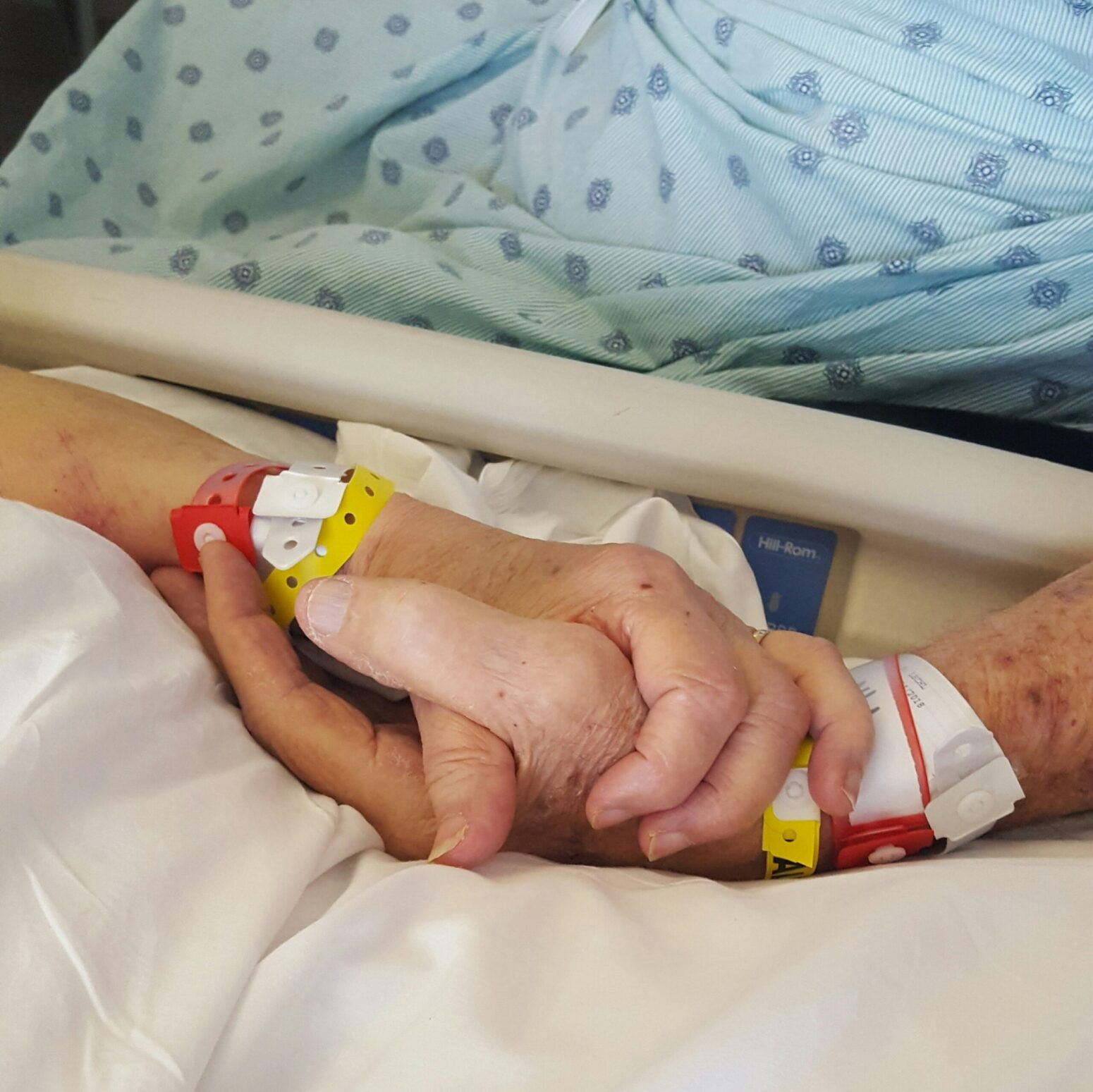
In the hospital room I imagine my mother dies in, my brothers and I don’t look at her. We don’t look at her arms and legs, winnowed down to skin over bone. We don’t look at her papery, bruised, and ravaged hands. We don’t look at her mouth, flaked and dry, devoid of sound. Our father used to call our mother a professional sick person. Illness was her way of commanding attention, which in the absence of any other proof, could be mistaken for love. We wouldn’t be in this room with her if she weren’t dying. We look at our phones. We look at the TV. We look outside.
Or maybe she doesn’t die in a hospital room. She dies suddenly with our father in a car accident, in their sleep from carbon-monoxide poisoning, or in a catastrophic elevator malfunction. Together and quick. We get a phone call from the ER doctor who pronounces them dead, the type of call I used to make to the next of kin. There’s nothing to do but bury them. Or not even that, because our father has already made arrangements for us not to be involved, not to make any decisions. They don’t want obituaries or funeral services. They don’t want to give us a chance to talk about them. To tell anyone a different story about our family than the version they’ve been selling.
Working in the ER, I never heard the voices of the people I pronounced dead. When they came to me, they were already intubated or someone was clasping a bag-valve-mask over their face, pumping air into their lungs. Their bodies were hauled from an ambulance to a hospital bed, where I slipped a metal laryngoscope down their throats, exposing their vocal cords. I aimed a plastic tube right through the opening between, silencing their voice to give them breath.
The only person my mother allows in is a chaplain. Even in her near-death state she manages to convince him that she has been wronged by all of us, that we would benefit from confession and repentance, that there’s still time for us to choose the right path. Two of my uncles (my dad’s brothers) were Catholic priests, and my father would’ve become one as well until my mother got to him, or so she says. It’s a story she likes to tell. We don’t believe it.
When I was twenty, my father took me and my future husband out to dinner and gave us life advice, ticking off each piece like a rosary bead: “Take risks, have fun, be good, and date until you’re at least forty.”
The chaplain is as earnest now as my father had been then. He tells us that forgiveness and reconciliation are within our reach. He has wisdom to impart and thinks we’re a captive audience. He has no idea who he’s dealing with, me most of all. I’m the nonbeliever, the one who never believed in confession, nor in repentance without accountability or repair.
When my mother texts me that she has two masses on her pancreas, I know that if she has cancer, she will die before my father. He’s always hoped to die first, suddenly—that much we know. Maybe because this outcome means that he wouldn’t have to be the one to usher her to the end.
“I need your help,” my father says to me. It’s the first and last time he asks for what he’s always demanded from us anyway. To fix or conceal what’s wrong.
When we were still kids and she was hospitalized in Wisconsin for a specialized surgery, the only time he wept at her bedside, my brothers and I watched his body slump, his shoulders heave, heard his animal cries. We followed the line of our mother’s IV-ed hand to his shoulder, then up to her eyes pointed at the ceiling. We stood at the edge.
We were ghosts.
Sometimes I treated patients who’d done terrible things. Some were responsible for the deaths of others. I sutured their lacerations as their victim lay dead in the trauma room next door. For a second I’d fantasize about plunging a needle into their injury before the local anesthetic took hold or pulling their broken bones a little harder to realign them. Because I’d taken the Hippocratic Oath and ultimately didn’t want to hurt them, I wouldn’t focus on the damage they’d inflicted on others and instead imagined them as children. I’d remind myself that their actions reflected addiction or mental illness or neglect and that they couldn’t have wanted such circumstances for themselves or the people they’d harmed.
“They wouldn’t have chosen this,” I said to myself over and over.
My mother always claimed she was easy to please as a child, that her family was poor but she didn’t complain about it like her younger sister did. Everybody loved my mother, clashed with her sister, she said. My mother was charming and fun. Did she learn that was the only way to get love? Maybe she held all her buried pain, disappointment, and heartbreak in reserve.
Although my mother wanted to be a dancer, her parents encouraged her to choose something practical instead, like nursing, which she did. Nothing would turn out as she’d wanted. As a kid, she’d done what she had to do. By the time she got to us, she’d never make that bargain again.
There’s a long window in the hospital room I imagine our mother dies in. Just below it is a couch that acts like a window seat, covered in the rough, generic fabric that belongs only in medical or office spaces. Near the door is the hospital’s version of a La-Z-Boy, all imitation wood and wipeable fake leather. A TV screen juts from the wall across from her bed, playing a film we can all agree on, but the volume is low. She’s not attached to a ventilator or any IVs this time. The room is an amalgam of every hospital room we’ve ever seen her in, every hospital room I’ve ever treated someone in, all resembling every hospital room in TV or film.
I think of characters in the movies dying, to locate myself in their spaces. Watch another mother die, another child rage, another father struggle to understand what he’s been missing, what he’s accountable for now that there’s only one parent left. It’s the only way I can grieve and cry.
When I ended up in the trauma room for an anaphylactic reaction, years after I’d worked there, I recoiled from doctors and nurses I once trusted. Screamed in my head that they were all going to let me die. I didn’t trust the colleagues with whom I had once taken care of others. My husband told me later that he wasn’t afraid I would die, he was afraid of me.
When my mother was a patient, she claimed the nurses—people she’d once worked with—were terrible to her. She made spitballs and threw them at their backs. I didn’t know if what she told me was true. She laughed and waited for me to laugh too.
During childhood, we were always alone with our father when she was admitted. Neighbors dropped off food, but they never entered our house. Potato salad and coleslaw, macaroni casseroles, ham covered in slices of tire-shaped pineapple we barely touched before tossing them in the trash. Our father often ate in the city before taking the train home. Our parents never asked my brothers and me how we were coping alone at home and at school. Never expressed to us empathy for the other’s circumstance—his at home, hers in the hospital. When we watched our father cry at her bedside in Wisconsin, we thought it was anger, exhaustion, or helplessness. Love never occurred to us.
As an Emergency Medicine resident, I was introduced to three rules:
Eat when you can.
Sleep when you can.
Don’t fuck with the pancreas.
Years after the peak of my mother’s hospitalizations and surgeries, I found out that at some point, somewhere, my mother had had a pancreatic duct reconstruction.
Someone had fucked with the pancreas.
And now the bill has come due.
By the time I get to her room, the nurses have cleaned her up, made her presentable, just like I knew they would. As they did every time I went to the family waiting area to tell a mother, a father, a husband, a wife, a brother, a sister, a child that their person was dead, that we had done everything we could, that we were sorry.
“Do you want to see them?” I’d ask. They’d always say yes.
Whatever humanity my patients had, whatever soul was left, I could feel slipping away the longer resuscitation attempts went on without a response. The patient’s life reentered the room later with the wails of their loved ones. Stunned faces, crumpled bodies. I had no access to anything but their pain, which I could only assume came from love.
When my mother dies, maybe I won’t be able to contain it anymore. I’ll cry. Touch her. Tell her I forgive her. I don’t know if it’s true, because instead of feeling nothing, I’ll feel everything. I’ll think of the sludge that she vomited when she was sick, that filled the same green pot she used for cooking her homemade Bolognese sauce. A vessel that held everything ugly and good about her.
She fed us from it.
Will I be alone in the hospital room when she dies? If my younger brother decides not to come, we won’t blame him. He doesn’t want to see her or our father again. I don’t either, but I’ll go anyway. Because that’s what I do. My older brother leaves to get us something to eat. That’s when she turns her head toward me and says, “Tell me you love me.” Just like she has always said to our father at random moments as a joke. His robotic I love you, Janet was the only time we ever heard him say those words. We never believed him. Extraction was the point. She wants those same words from me now. To ease her suffering, to tell her that it’s okay, but I can’t do it. I won’t.
When my mother dies, I wait for the relief I’d imagined and hoped for. Instead, I feel my pulse rise as my chest constricts. The room wavers. I don’t feel like a real person. The windows don’t open. There’s no ice water or anything else that can give my panic an exit ramp, a way out. There’s nothing to distract my body from what it needs to release.
“When I grow up, I want to be just like you, Eileen,” my mother would often tell me.
I never asked what she meant.
If she’s dead, will I wonder if I should have?
When I’m standing in the hospital room my mother dies in, I’m ten years old. I see my picture taped to the wall, the one where I’m wearing a red-and-blue gingham shirt with a white Peter Pan collar and my hair has been tamed into a bowl shape from sleeping in wire rollers. Or I’m twelve and I’ve gotten my period but there’s no one to help me except Mrs. Kay, the childless lady across the street who’s suffered multiple miscarriages. I’m seven and my mother comes home after giving birth to my younger brother and tells me that she will never have another child with my father. I’m nine and my father leads me into the room where she is surrounded by tubes and IVs and tells me, “Don’t be afraid. She’s still your mother.”
I imagine her being conscious enough to tell us how much pain we caused her, how we shunned her. We betrayed her; all she ever did was love her children. We are ungrateful and hateful. She’s done nothing wrong. She isn’t guilty, just like she once texted me from the Mass of the Resurrection. Two months later, she and my father mailed a letter to me and my brothers informing us they were breaking off contact.
She recites these beliefs like the Nicene Creed, never deviating from them—until she stops breathing. I don’t press the code button on the wall or shout for the nurses to bring the crash cart. I don’t have a stethoscope draped around my neck or a beeper clipped to my waistband. I won’t have to feel her cold skin, see her milky eyes and open mouth, or feel for a pulse in her neck, her wrist, her groin—to prove that she’s gone.
“I know it’s hard for you to have a daughter like me,” I told her many years ago when I still felt I could offer her something. A daughter who couldn’t confide in her, who never wanted to dance.
I’m thirteen or fourteen or sixteen, or what difference does it even make? There have been so many hospital rooms, far too many of her illnesses. I try to ask, discern, watch, listen―liver tumors, pancreatitis, bowel obstructions, adhesions, exploratory abdominal surgery for pain whose origin can’t be identified. I don’t know which diagnosis came first, which mattered, which was real, what caused what.
“Don’t you want to understand what happened to you?” I ask her when she refuses to request her medical records.
“No, I don’t,” she says, but what I meant to ask was, “Don’t you want to know what happened to your children?”
When I arrive at the hospital where my mother is dying, my father and brothers are sitting in the waiting room. I ask why they’re out there. My older brother says she doesn’t want anyone in her room. We’re “ungrateful” and she’s “not sorry for a goddamn thing.”
My younger brother shakes his head. He can’t believe he’s actually here.
My father can’t believe she’s banished him with the children, after all this time.
We’ve been ready for her to die our whole lives. We’re exhausted by the uncertainty. The waiting.
I turn and catch the edge of a doctor’s white coat rushing past in the hallway. In that moment I think, “I have to fix this.”
Just before she dies, she might be conscious enough to have at least part of her long-held dream―all her children by her bedside at the time of her death. We won’t give her the most important part: the three of us telling her that we love her, that she was right about everything, before we ask for her forgiveness. I told her once, “That will never happen.”
Does she believe us now?
When I think of myself as a child, I remember everything, but I’m watching myself from behind. I can never see my face. I’m nine. Her bed telescopes away from me. She’s just a form. Bags hang from metal poles. Tubes and valves hiss. Her skin is gray. She doesn’t speak, but I know it’s her in the bed. She’s alive.
Already, I am trying to believe that I could make the sickness go away. If only I were smart enough or good enough, I think, then things could be different or better . . .
Or maybe it’s all a fiction, this story between my mother and me: that it was my responsibility to save her, to save our family.
I became an ER doctor. I saw patients one time. Then pronounced them dead, admitted them, or signed discharge papers to let them go.
I was never going to cure anyone.
Read more from Issue 23.2.