Dark Matter
53 Minutes Read Time
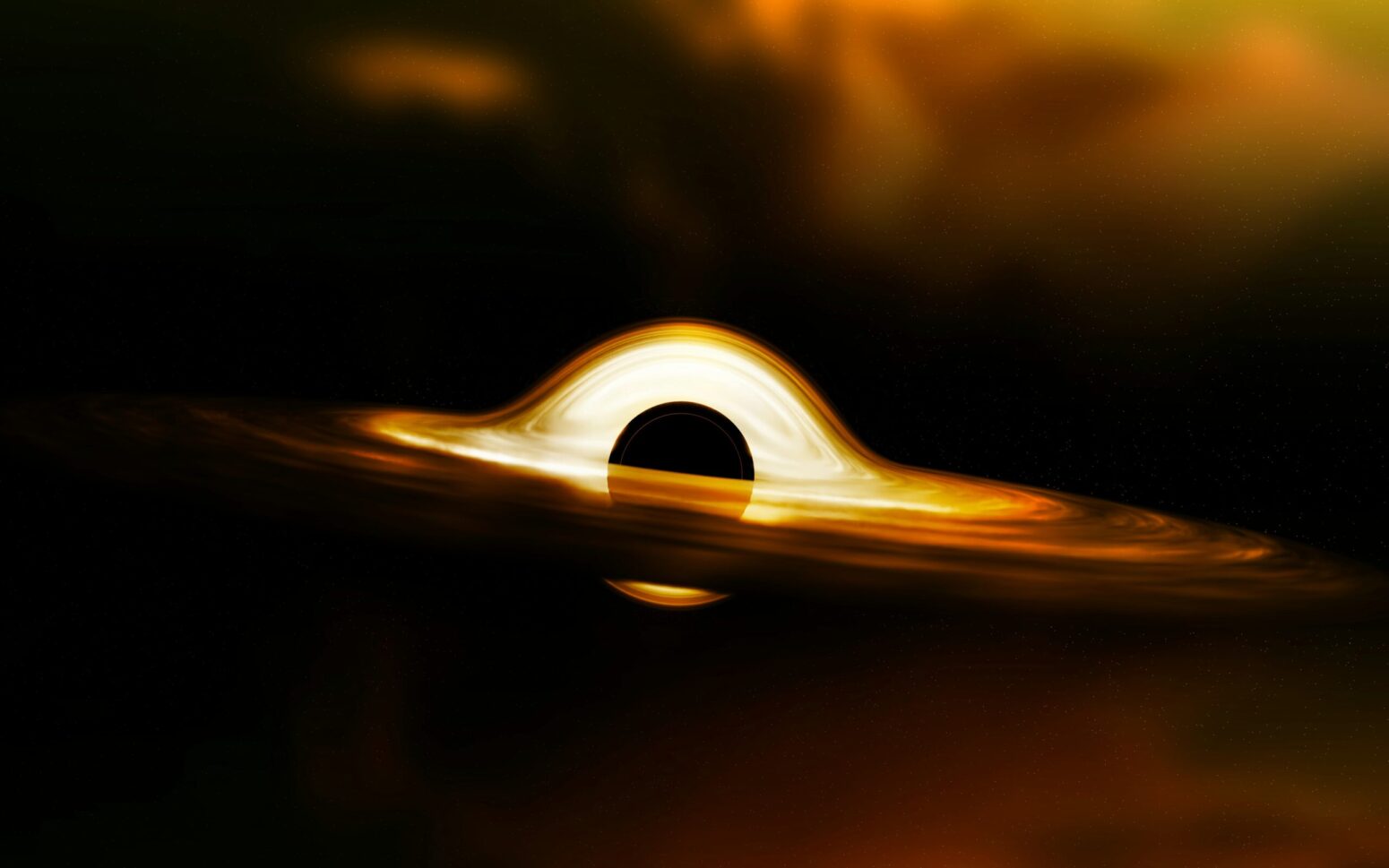
A binary star system consists of two stars that rotate around a shared center of mass, appearing to orbit each other. To the naked eye, they are indistinguishable, existing as a single point of light in the night sky. Only through a high-powered telescope can the stars be differentiated as they sear the space around them.
I never told you this, but I always felt like you were the older sibling. You were more outgoing than I; you drank and smoked and partied first, while I was scared of what could happen if I did. All I ever knew how to do was follow the rules. In reality, you are my younger brother, by three years.
In high school we were mistaken for twins by gas-station attendants and checkout clerks. Our heights were identical, and our faces bore the same flaws. Although we shared physical similarities, our personalities were diametrically opposed. You once visited my third-grade classroom when Mom was volunteering. The teacher divided the class into small groups to practice speed rounds of multiplication, addition, and subtraction for prizes: full-size candy bars. I tensed; math had never been my thing. You joined my group, sitting cross-legged on the scratchy carpet next to kids three years your senior, and answered all the questions first, shocking everyone but Mom and me. Our group earned 3 Musketeers and Milky Ways; classmates gushed over your precocity while I sat there glowing like a groupie in your light.
Binary stars are classified according to their orbits. Close binaries consist of two stars whose gravitational fields are near enough to exchange mass. Constrained by the laws of physics, most of the larger star’s volume gets transferred to the smaller star, known as the vampiric star because it appears to siphon gases from the primary star. The stars evolve in tandem, as the behavior of each depends on the characteristics of the other.
For the year we overlapped in high school—my senior year and your freshman—we ran track and cross-country. Our high school campus rests on a grassy plateau, meaning that each run began downhill and ended uphill. There weren’t many sidewalks or bike lanes, so we ran shoulder to shoulder on the roadside, shifting into single file when cars passed. Our shoes pounded out metronomic rhythms on the fat white lines and dusty gravel shoulders. During the final mile, we’d accelerate as we crested the last hill, inhaling and exhaling air like life as we eyed the finish beyond the soccer fields and baseball diamonds: the chain-link fence marking the entrance to the football stadium and the brick-red track. We didn’t admit we were racing, but we both knew we were vying for the lead, leaving the rest of the team behind and flying over the pavement until our fingers grasped the cool metal of the fence.
We truly raced just a few times. On an early spring afternoon, a warm wind sighing in from the west, the usual knot in my chest doubled in size waiting for the start because I was standing next to you. I danced through my prerace ritual, pounding fists on thighs, jumping three times, pulling knees to chest. You shook your legs out once and bent low. The starter in his red-and-yellow pullover raised a pistol to the cloudless sky. “On your marks, set,” and then the tiny puff of smoke, the shattered golden shell falling to earth as we embarked on this familiar trajectory.
You beat me only once, using suspicious tactics—cutting me off and then slowing down, speeding up and moving into lane two whenever I tried to leave you behind. Past the finish line, you said, “I couldn’t let my sister beat me,” and gestured to the crowd gathered in the bleachers as if to append your statement with “in front of all these people we know.” Neither of us realized then that high school didn’t count for much. I rolled my eyes, accepted your apology. Our relationship was like that—one of forgiveness, mutually understood motives. You always wanted to prove yourself, and I did my best to let you.
One memory stands out, though, the last time I felt the immense power and freedom that running can give us—late spring, another afternoon track meet. We were lined up for the two-mile race: eight laps around the track. We waited for the starter to speak. He raised his gun, but we never saw smoke. The PA announcer explained that lightning had been sighted in the area, that the rest of the meet was canceled.
Adrenaline still coursing through our veins, you and I sprinted through the chain-link gate and away from the track. We ran five miles through a biblically heavy rain that soaked our shirts and weighted our shoes. We ran because the warm rain slid over our faces and limbs like cosmic fingertips covered in silk. We ran because it made us feel alive, because the chances of getting struck by lightning are 500,000-to-1 and we didn’t have to get lucky to be spared.
Once the vampiric star gathers enough mass, it becomes a red giant or supergiant—a rapidly expanding star. Inside, nuclear fusion increases in speed and intensity. If the star is large enough to be classified as a supergiant, its life ends when a nuclear chain reaction causes its core to detonate. This explosion is called a supernova, a massive star’s brilliant death, emitting enough light to blind galaxies.
Once, before you entered high school and joined the team, a group of cross-country guys and I on a run stopped to search for an opening in traffic at a busy intersection opposite a Speedway and a used-car dealership. We rarely waited for the lights to change, growing impatient as our heart rates dipped out of the aerobic zone. A boy in my grade stepped into the road and directly into the path of an oncoming car. I was sure he was going to die right there in front of us, mowed down by a car going fifty miles per hour. Then, one of the older guys grabbed the back of his T-shirt and yanked his body back onto the curb as the car rushed by.
That boy’s recklessness is what I saw in you after I started college and our lives began to bifurcate. You became harder and harder to reach as you rushed headlong into danger, narrowly evading many deaths. You barely graduated—there were no college acceptances, no celebration. You were diagnosed with type 1 bipolar disorder and later with schizoaffective disorder. The latter appears in only 0.3–0.8 percent of our country’s population; you are an anomaly.
When you were manic, you’d stop taking your mood stabilizers because you felt even more invincible than the average teenager. You’d raise your voice when our parents and I didn’t want to listen to your conspiracy theories and religious doctrines—whatever ideologies you could latch onto that would make sense of the world. You’d steal our parents’ credit cards and run away to parties and drug dens, going MIA for weeks at a time. Mania would always end in near tragedy. You once crashed your car in the middle of the road that led to our parents’ house. For weeks, every time I crossed the intersection, I saw a portion of the shattered silver bumper shining like a sickle in the moonlight.
Bouts of severe depression would follow mania. You’d lie face down in bed for days, catatonic. Our parents and I had to check that you were still alive, putting a hand on your back to see if it rose and fell. I wondered under which circumstance your death would occur. Would it be brilliant, earsplitting—a fatality on the magnitude of your mania—or quiet, forgettable, a fading away.
In a close binary, if one star transfers enough of its mass, that donor star becomes a white dwarf, its core condensing, nuclear fusion slowing. The star cools, emitting progressively less light until it is nearly invisible. If the mass of this star’s remnant falls below a critical threshold, it will cease to emit light, becoming a black dwarf, a type of dark matter: an extinguished body that can be located only by tracing its influence on surrounding objects. The effect of gravity—the mutual attraction between any two bodies in space—is never invisible. The speed of stars near the edges of spiral galaxies, like our own Milky Way, rotate faster than the laws of physics dictate they should. The only way this could be possible is through the gravitational pull of dark matter—ostensible voids—at their centers.
I tried to mother you once, amid the dimming of your light. We were twenty-two and nineteen. Our parents had kicked you out for stealing their credit cards again. On a snowy January night I gathered my college roommates in the kitchen, sink overflowing with dirty dishes, refrigerator nearly bursting with expired food. I told them you needed a place to stay and asked if you could sleep on the futon in the upstairs hallway.
My relationship with my roommates was purely transactional—I did not know them well. We split rent and utilities, but I was the only one who ever cleaned the shared spaces. I could never use the kitchen because I refused to wash their dishes to make room for mine. I held mild resentment toward these four women who had been my teammates before injuries ended my competitive running career. That night, barely meeting my gaze, they said yes to my question that wasn’t really a question.
Your probation officer came to survey the premises, and gave his approval, with conditions. I’d have to drive you to his office downtown twice a week so you could piss for a drug test. I had to sit across a desk from him in the same building that housed the district court and answer questions about your character. He looked ex-military, with a buzz cut and significant biceps. He asked me several questions, but I remember one clearly because it was at the root of everything: Do you think your brother is fundamentally a good person who wants to change for the better? He phrased the question as if the answer could be simply yes or no. I said Yes, meaning, He deserves this chance.
The upstairs hallway of the shared house was drafty, so I gave you my heated blanket, tried to make you feel at home. I bought us groceries, which I stored in the old brown mini fridge our parents had used in the ’80s. I suggested you use the college gym, right across the street, because they never checked ID and working out was good for your mental health. What I didn’t tell you was that I needed you just as much as you needed me.
After I’d lost my athletic scholarship, my grades had started slipping. I started dating a woman for the first time—my manager at Wendy’s, a job I’d needed to recoup some of the scholarship money I’d lost. I was realizing that the distance between the person I actually was and the person I believed myself to be was as vast as several galaxies. You were my North Star, the only person mooring me to a self I could recognize. My primary purpose now would be caring for you, for however long this lasted.
Our parents liked the idea of you living with me because there was a bus stop right outside my house, so theoretically you could ride the bus to work once you found a job. You had just been fired from the position Dad had gotten you because you’d used a company van to scrap stolen steel beams for cash.
At the end of the second week I drove you to a local temp agency, but you wouldn’t go inside. I just can’t, you said as we sat in my car. My heater had broken for the second time that winter. Our breath shape-shifted between us. I’m not like the rest of those people in there, you said. I wish I had asked you how it felt, right then, to have a mind like yours. As if I could ever understand.
Instead, I just told you, It’s okay, drove us away and parked in the lot of the nearest shopping mall. I ran through snowdrifts and a biting wind from storefront to storefront, gathering applications. I already knew you wouldn’t complete them, but I thought you might appreciate the gesture.
Regardless of whether you found a job or not, I was happy having you live with me. We would talk late into the night, you spinning side to side in my desk chair while I sat cross-legged on my twin bed. You evangelized about the Illuminati, and I listened, because I thought maybe my listening could heal you. I told you about work and what I was writing. We listened to each other as if the nights were endless and we’d never see the sun again.
I divulged something that bound us even more inextricably than before. I told you I was dating a woman, then held my breath. Because you were the first family member I’d told, I would live or die by your reaction. I’m so happy for you, you said, and we embraced in the dim yellow glow of a bulb bearing too little wattage. I still dream of it: how strong and solid and close you were.
The shifting of stars is constant. Astrological events that appear instantly were set in motion millennia ago. The average lifespan of a star is hundreds of millions of years, but to casual observers, a star is either a sequin in the night sky or it is gone, was never even there. Hydrogen and helium—matter in its most volatile form, the elements that burn—compose over 90 percent of a star’s volume.
Shortly after you moved into the hallway, Kendra, my manager-turned-girlfriend, moved into my bedroom. You two got on like old friends, a necessity for living in such proximity. With both of you, I had everything I could want within these squalid conditions that confined us. Amid my happiness, I never forgot that addiction’s trigger is as thin as a thread.
Your girlfriend called one night, her voice thin and shaking. She told me you’d broken her car window, that you were bleeding badly and might need to be taken to the hospital. Fearing for her safety, she’d barricaded herself in her apartment and left you in the car.
Kendra and I drove through an icy rain to your girlfriend’s off-campus apartment, where we found you in the passenger seat of her used gold Lincoln. Crushed glass littered the asphalt like rock candy, wet and glistening; your face glowed electric blue from the screen of your phone. In that artificial light you looked young and old simultaneously, as if age were a fluid, pulsing, living thing. You were disturbingly composed, your voice monotone as we assessed your injuries. You’d broken the window with your elbow, and pieces of glass were embedded along your arm, the red parts viscous. The bleeding had mostly ceased, but your DNA dotted the upholstery like paint flicked from a brush.
We talked and laughed nervously as we drove you away, not wanting to acknowledge the gravity of the night’s events. Back at home, Kendra cleaned and dressed your wounds with hydrogen peroxide, Neosporin, and bandages we’d picked up at Walgreens, butterflying the worst parts. You thanked us, and that night I slept easy knowing I’d traversed space and time to snatch you from the brink.
Within days of the incident, you started drinking my roommates’ beer, asking me for energy drinks when I went grocery shopping; these were the signs of imminent mania. I did nothing to stop you because I knew nothing could. You left within days. After your departure I recalled our interactions during those weeks and wondered if you had been so kind simply because you needed me for food, for shelter. I began to wonder if you’d used me.
I was grateful I never had to ask you to leave; I came home from work one night and you were gone. I soon learned from our parents that you’d been jailed for missing drug tests and violating probation. Until my lease was up, I continued to fall asleep with the toolbox from your last job stuffed under my desk, with your shirts hanging loose from the skeleton of an unused bedframe tilted against the wall.
Those untroubled weeks, I suspect, only registered as blips on your radar, but I like to think they amounted to more than that. I want them to have mattered to you as much as they did to me. I don’t say this to exact collateral or to make you feel guilty but because I hope that time showed you who I am.
Sometimes I think all this would have been easier if we’d never been so close—if we’d never orbited the same football field on a brick-red track, if our toes had never shared the shoulders of busy roads; if we hadn’t been content living out of the same bedroom, our possessions pooling together. If we’d never really loved each other.
There was a singular reason I stopped speaking to you. I doubt you remember it, which is to say our minds tell different stories. In 2015 I moved to southern Ohio to attend graduate school. I’d been writing sporadically during the years following my undergraduate degree and was accepted from the waitlist. Everyone helped Kendra and me move into our apartment: you, relatively stable at the time after working a construction job all summer; our soon-to-be-divorced parents; and your girlfriend, the same one who’d called me that rainy night.
We went to a football game and explored the stairwells of the tall brick building where I would teach. We found my classroom, where everyone sat at desks roleplaying that you were my students. We wore the free baseball caps we’d received for attending the game, ate meals together, laughed. Although it had been so long since we’d acted like a family, part of me knew that this was the end, the last time we’d be arranged in this exact constellation, precariously bound by our shared pasts. I think we all knew the fault lines in our relationships would only widen as I stayed in Ohio and all of you returned to Michigan. We were bracing for the earthquake that would finally break us apart. We were all naive for believing this long, for hoping that things would end differently. But I don’t think there was any other way. If you knew the exact moment the world was set to implode, wouldn’t you want to die holding tight to some familiar body?
For the two years I lived in Ohio, we saw each other only once or twice. You were staying out of jail, mostly, but your mental health had deteriorated. You quit your job working construction. We didn’t ever talk on the phone or via text; that just wasn’t us. We had to be near each other to recall the magnetism of our relationship. The geographical distance blurred the outline of you the way the sun would slowly bleach a photograph.
In 2017, the year I would graduate, I arrived at my apartment after a day filled with teaching and graduate seminars to a text from you. The words were ugly and do not bear repeating; you used homophobic slurs to describe Kendra and recommended I consult the story of Sodom and Gomorrah to learn what God held in store for us. I reread the text and tried to devise a scenario in which those words didn’t come from you. Only you, though, would have known how deeply it would wound me.
Over those two years of graduate school, I’d found friends who loved me for who I was rather than what I could do for them. I began to see what was possible when I spent a greater proportion of my time and energy on myself instead of other people. We must all constantly reinvent ourselves to survive. I wonder if that’s what you were doing—trying to believe in religion, something larger than yourself, in order to forget yourself. I wanted to believe that the person who sent the text wasn’t the real you, just a mask you would inevitably shed. Our actions, though, are the fabric of our realness, the way we make ourselves tangible to others. Our actions always matter.
For days I parsed your words, waited for an apology that never arrived. Ultimately, I chose to interpret that text as permission to let go of you, to stop hoping you’d return to a version of yourself I could recognize. When you sent that text, I rationalized, you unbound us irrevocably. I convinced myself you’d done me a favor; now, I could guiltlessly wash my hands of you. I told myself that like the black dwarf, your soul had finally turned cold. I deleted the text.
The last time I saw you was on Christmas Day 2020. Kendra and I, married now, were visiting Dad’s postdivorce house: a small bungalow in an old riverside neighborhood. There wasn’t any snow, but the ground was frozen, the skies a blank, disorienting gray. We were opening gifts when Dad’s phone pinged with a notification from Ring. Despite the graininess of the camera feed, I knew it was you in a black hoodie on the porch. Your fist hammered the door. The blinds were drawn, but I held my breath, as if to prevent you from detecting my presence.
Dad rose from his recliner and pulled two twenties from his pocket. It’s Christmas, he mumbled—a desperate excuse, we all understood. I’m going to set forty dollars on the porch, he said through the locked door. Wait in the street. I told him to be careful, imagined the worst: you pulling a knife or gun, you and Dad’s skulls bloodying the concrete.
Dad opened the door as I watched through the blinds. He bent down slowly, placed the bills on the ground. You waited in the street, still as a predator. As soon as the door closed, you raced up the steps, stuffed the bills into your pocket, and pedaled away on an undersized bike you’d probably stolen from someone’s driveway. You didn’t look back.
A supernova occurs in less than two minutes, a shimmer, then a fade. A neutron star or black hole remains as the only proof, albeit dark, of the star’s existence. I am not sure to whom I’m comparing the red giant, the explosion—you or me. Since we stopped speaking, I’ve crossed the thresholds of so many milestones without you. A part of me feels guilty, as if my happiness is robbing you of a better life. I know this is called survivor’s guilt, that it isn’t true; I believe the fates of stars, our fates, are written into the fabric of the universe. Being each other’s only sibling, though, means that we share DNA. Because a part of your matter will always be with me, I’ll never stop trying to shore up the void you left.
Since that Christmas, I have yet to see you again. I keep up with you by way of your mug shots. By 2021 you’d been incarcerated over ten times, the longest a stint of three years in the state penitentiary. Larceny, and uttering and publishing—forging checks—are the most serious of your offenses.
In the first couple pictures I culled from inmate-search indexes, you are wide-eyed, as if you thought looking white and innocent would free you. In the next few, your face is lifeless and blank; then it shifts, until you’re smirking, like you wanted this. Dad tells me that you’ve gotten a stick-and-poke tattoo of a dagger on your forearm, that you volunteered for solitary confinement because you were stabbed by a prison gang. In the first photo after Christmas 2020 there are two large sores on your face—meth sores, probably.
When I check for your most recent photo, I find instead an asterisk, an explanation for why I cannot see your face. Mugshots are no longer shared online. I feel like something has been stolen from me, as if I’ve been denied my unalienable right, as your sister, to gaze upon the only face in the world that closely resembles mine. Regardless of the bond you severed, we are bound by our shared pasts, our shared matter. Without even as little information as those photographs could give, you feel less real now than ever. An asterisk. An idea.
You exist ethereally now. When I don’t know where you are—incarcerated or on the streets, homeless because you’ve been banned from the shelters for drug use—I see you everywhere. Standing on a street corner with a cardboard sign, riding a city scooter through a busy intersection, shooting baskets at a public park, in line at the grocery store. I superimpose your image on every man who looks your age. I see you in the angle of his jawline, his haircut, the shape of his shoulders, the way he moves. This response to grief is called bereavement hallucination, I learn when I google Why do I keep seeing people who resemble my dead relative? Understanding this phenomenon doesn’t make it go away.
When I could still see your face, I wished for you to remain incarcerated so you’d be contained, have somewhere to sleep even if for an indefinite number of days. Now that I can’t consult the internet to find your face, I wish for you to be released.
Wide binaries occur when the orbits of two stars keep them far enough apart to evolve independently. I imagine this will happen to us eventually. You’ve already moved millions of miles away from me, the gravity between us weakening as the distance increases.
The distances between stars in wide binaries can span solar systems, which created a dilemma for astronomers who believed binary stars originated from the same region of a nebula. How could they end up spread so far apart? Stars are birthed within molecular clouds—sprawling constellations of cosmic gas and dust. When a dense region within a molecular cloud radically condenses, collapsing into form, a star is born.
The behavior of a system containing only two entities is almost entirely predictable. A third body, though, could throw the system into chaos, ejecting one of them an unfathomable distance from its origin.
When your daughter was born in 2017, you and I were recently estranged. One of our cousins swore she looked like me, but in photos I found on Facebook, her skin still flushed baby pink, I couldn’t distinguish her facial features from those of any other newborn. Her one glaring trait was a head full of black hair, which doesn’t run in our family. I didn’t believe she was yours until the results of a paternity test confirmed it, arriving in an envelope at Dad’s house—your mailing address. You were in prison when he opened it, but you already knew because you and her mother had planned the pregnancy.
Late November 2019. You and I haven’t spoken in five years, but I’ve carried a letter from you in my backpack for eight months without reading it—the letter you gave Dad when he visited you at Jackson State Prison last year. I’ve waited so long to open your letter because I don’t want to recognize any part of you. I want you to have changed so completely I wouldn’t know you if I saw you on the street. You’ve probably written some nice things I’ll want to believe but can’t, because all you want to do is get on my good side again so I’ll contribute to your commissary fund. Still, I can’t pretend you don’t exist. You’ll always loom larger in my life than seems rational, like those disclaimers on sideview mirrors say: Objects are closer than they appear.
I decide to read the letter because I want to see you without seeing you, because this is the only way I’ll allow you to speak to me, because it might give me something to write about, because I still miss you. I’ve let these reasons accumulate like rain until now, this seemingly random moment when whatever bucket I’ve been filling has reached capacity. I excavate the folded paper from layers of gum wrappers and receipts in the zippered pouch at the front of my backpack. I unfold it, flatten it against the kitchen table, graphite shading my fingers.
The letter is not what I expect, aside from your handwriting, which hasn’t changed—still lopsided, lowercase letters short and scrunched, uppercase disproportionately tall and crooked. Most of the unruled page, front and back, consists of book reviews and recommendations. The books are categorized by genre: memoir, historical fiction, self-help. I might even read a couple of them.
The part I do not expect comes at the end, in a P.P.S.: I really want you to be a part of your niece’s life. It’s gonna take me a while to get established (some years) and even then IDK. She’s already got long legs compared to the rest of her and is already built like a runner. You sign off, Love, Dylan.
I knew nothing of Jasmine’s birth until months afterward. I have no memories of visiting the hospital to meet her, of a baby shower for your girlfriend; those events didn’t exist in this universe.
I keep the letter but try my best to forget her, to forget you, until Olivia—the mother of your child—sends me a Facebook message on Christmas Day 2019. I know nothing about her other than that after you broke up, she occasionally stayed in the freeway motel where our cousin works. Of your daughter, she writes, Jasmine is a sweet and sassy two-year-old who is so beautiful and looks just like your brother. Strong genes! I really want her to have a relationship with her family.
Although I’m wary of what Olivia might want from me—money, a babysitter—I bury those thoughts when I see the photos. Your daughter, two years old, standing outside in a pink snowsuit and a hat with puppy-dog ears. The message ends, Merry Christmas from us. And that face—that face is yours, ours. She smiles the same as you did when you were young—that cheesy, all-or-nothing grin. A specific photograph comes to mind: You’re in my bedroom at our parents’ first home, and you’re probably about Jasmine’s age. Hand in my fishbowl on the window ledge, you’re laughing hysterically as you try to catch the slippery gold gleam darting through the water.
In 2019, Jasmine is two years old. And you know that, because of a problem with my hormones, I cannot bear children or even donate an egg. Your daughter is the closest I will ever come to seeing myself in a child. Selfishly, I want that. But I want to meet her because I want to see not only myself reflected in her but you too.
Olivia struggled with substance abuse during her pregnancy and continues to, seemingly dropping off the face of the earth and reappearing every few months with a new Facebook account. I don’t hear from her again after the Christmas message.
Jasmine lives with her maternal grandmother, Maeve, who has been her legal guardian since birth. She friends me on Facebook in early 2021. Thanks to the chaos of the COVID-19 pandemic, I still haven’t met Jasmine, but I have seen updated photos of her on Maeve’s Facebook page. Although I don’t doubt she’s your daughter, I still think you’re lying about the way she likes to run until I see a photo of her sprinting on a Lake Michigan beach, footprints in the sand, black hair blown back toward the camera. Maeve’s caption reads Jasmine—my natural born runner.
My heartbeat pounds in my ears: hope.
I’m deep into work on this essay in June 2021 during a self-imposed writing retreat at our family’s tiny lakeside cabin with two friends I met in grad school—my long-distance, stand-in siblings. I think this will be an essay about possibilities, about what your life could have been if you weren’t an addict, and what my life could become if I ever meet your daughter. I’m holding a prism of the potential outcomes up to the light, taking note of how they bend reality.
The photos on Facebook tell only a partial story: Jasmine and her half-brother hugging; holiday photos in high-ceilinged rooms; birthday parties with pink-frosted cupcakes. Your daughter looks hopeful in the way only children can, expecting the world to give and give. I am reluctant to bring myself—and within my chest a crater in the shape of you—into proximity with her.
During a writing session, as boat motors hum and sun streams through open windows, Maeve messages me for the first time. She’s wondering where she should serve you the annual legal-guardianship paperwork. I tell her you’re in jail in the next county over, but that she could send the paperwork to Dad’s address. She thanks me and then sends a long message filling me in on what I’ve missed. She and her second husband are the only parents Jasmine has ever known, and they also have full custody of her half-brother, Elijah. Jasmine has seen Olivia a few times, but she’s never met you. She doesn’t even know you exist. I read certain parts of Maeve’s message over and over:
If it is hard on your family to see her, I certainly understand. I just think that the more people that love a child, the better. I’ve been waiting on your family to ask, but maybe you have been waiting for me to ask? It’s an open invitation forever.
I’ll carry the grace of that offer with me eternally. I decide that I’m going to meet Jasmine. I want to form a connection with this child whose blood I share. I know spending time with her won’t bring you back to me, and I’m not doing this just because you asked me to in your letter. The shape of this relationship will be something completely new and separate from what used to exist between you and me. Instead of you, I’ll focus on Jasmine, on giving her what she needs and learning who she is. Maeve and I agree on a date to meet the next month.
You’re still incarcerated when I drive forty minutes north to meet three-year-old Jasmine, over creeks that slice through rolling hills blanketed in aspen and cottonwood. I watch the minutes count down on my GPS, my nerves fraying with their passing. I haven’t been this anxious since toeing a starting line.
Interacting with children has never come easily for me; as an introvert, I find matching their energy to be taxing, unsustainable. Eventually, I’m bound to disappoint. Pieces of childrearing advice I’ve read recently swirl in my head as I worry about doing everything right. I know, though, especially after Maeve’s offer, that my desire to meet your daughter outweighs my self-doubt.
As the countdown hits zero, I pull into the long gravel driveway for Maeve and her husband’s house, prefab and well-kept. A big-boned yellow Lab puppy bounds up to my car, and I see Maeve and Jasmine in the garage; Maeve points, and Jasmine looks at me, covers her mouth with both hands. Her dark hair is long, half of it pulled up and cinched together with a hair tie, no doubt carefully placed there by Maeve this morning. I wave frantically. Jasmine’s eyes lock with mine for an instant, and I know this is a cosmic moment that divides life into before and after with the destabilizing force of a black hole ripping a void in the universe.
We were painting nails, Maeve says when I get out of the car, and Jasmine holds out both hands, spreading her fingers wide.
Wow, so pretty! I love the different shades of pink, I say.
On the patio I let Jasmine open the surprises I’ve brought: two pastel ponies with long manes and hairbrushes. She is polite, thanking me and exclaiming over the ponies, wanting to open both boxes at once.
I tour Jasmine’s bedroom, filled with princesses and stuffed animals. Then we walk the yard, see the swiftly flowing creek at the back of the property. There are several playsets—swings and slides—and wild grass tumbling like brushstrokes in a van Gogh painting. Jasmine initiates a game of tag as we walk back up the driveway; I hide behind the riding lawnmower, feeling foolish and letting her find me. She trusts so easily. I want to shield her from the things she’ll eventually learn about you.
At the kitchen counter, as Jasmine brushes a pony’s hair, Maeve tells me about what I’ve missed. She chooses her own outfits every morning. She’s unbelievably energetic and very smart. Maeve pauses, remembering. Olivia was always smart too—straight As until high school.
I can imagine, I say. Same with Dylan. A deep and silent understanding of shared loss quiets our conversation. We are mourners forced into communion.
Maeve continues, her tone brightening again. Jasmine is so outgoing. She’s not afraid to walk right up to adults or other kids and tell them exactly what’s on her mind. That’s one way she’s different from Olivia. Olivia would hide under the dining table when we had guests over. Was Dylan very social?
I tell her that social is an understatement.
We’re careful to mention you only when Jasmine is preoccupied with a toy or her brother. You exist as a secret. Maeve speaks of you and Olivia with refreshing calm and acceptance, even hope. I realize how much I’ve missed talking about you like this—not reduced to a convict or someone with mental illness but a person worthy of love. Still, it’s an illusion: that I could love you for only the good memories, that stars could provide light without the twin ability to burn, that I could linger in this impossible place.
And she just loves to run, Maeve says. She’ll run circles around the house until I have to tell her to stop. And you run, don’t you? She probably knows this from old Facebook photos. That was a different life. Jasmine looks up at me when she hears the word run. I return her steady gaze and say Oh, yes, I love to run when, in truth, I haven’t run at all this year. But I am still in love with the memories, the idea of it.
Our visit ends after a couple hours. I back out of the driveway feeling as though someone has poured warm honey atop my head, everything sticky-sweet in slow motion. I wish you could have seen this.
For no reason other than that lying to a child repulses me, I start running again after I meet Jasmine. My first run is two miles beneath a blinding sun. Even with atrophied muscles and stiff joints, I return to it as one would return to an ancestral home. For the first mile and a half I am buoyed by this sacred motion. By the last half mile the heat is suffocating, and the phantom pain of an old foot injury throbs. When I arrive home, I barge inside and drape my arms over the portable air conditioner until my breathing slows. I stay there for too long, holding pain and glory in the palms of my hands, struck by their complex comingling.
In late July I meet Maeve, Jasmine, and Elijah at the zoo for Princess Day, where parents and children wait in long lines for photo ops with actors dressed as Disney heroines. Jasmine is, of course, costumed as Jasmine from Aladdin in a glittery turquoise top and pants; she’s amused that everyone seems to know her name. I worry that she’s bored while we wait in line to see Tinkerbell, but she’s transfixed by the sparkly wings and platinum wig. When it’s our turn, Maeve motions for me to get in the photo, as if to ask, Why wouldn’t you? I don’t know how to stand or what to do with my hands. I end up crouching down next to Jasmine, white-knuckling my knees, while she hugs Tinkerbell.
It’s a humid eighty-five degrees as we wander, rivulets of sweat slinking down my spine. We share a cherry slush that quickly melts into syrupy juice. The gesture is endearing—sharing as if we were family rather than month-old acquaintances.
As the youngest adult in our party I feel obligated to corral the kids when they inevitably run ahead, although Maeve never asks me to. I worry that Jasmine will fall down the stairs, but Maeve assures me she is steady on her feet. I marvel that any of us reach adulthood.
The animals here are infamously laconic, with the largest—lions, bears, tortoises, and snow leopards—nearly always curled up sleeping in corners of their enclosures. The penguins are the liveliest. To cross the threshold of the penguin house is to step back in time, where the walls shine a neon azure, and cement is contoured to resemble rocky coastline. Rushes of frothing water rake the tentacles of urchins on the simulated tide pool’s sandy bottom. This building hasn’t been updated at all since Grandma took us here when we were young. It’s moments like this when time taunts me. This building, unchanged for over twenty years, makes it almost possible that seven-year-old you could be standing right next to ten-year-old me.
To travel back in time is, as far as we know, impossible. Travel to and from the past could be possible if wormholes—Einstein-Rosen bridges—existed. For these bridges to allow things to pass through, matter with negative energy would need to exist, and physicists have yet to prove its natural occurrence.
In psychology the phenomenon of time dilation is defined differently. It’s called the proportional theory of time. When we’re younger, we perceive time passing more slowly, because each interval is a greater proportion of our lived experience. Maybe that’s why I still feel so attached to you: you were in my life for twenty-six years. It’s been five years and counting since I excised you. I feel as though I’m still orbiting the center of you, a planet to your gravity, which holds the galaxy, and all its natural disasters and idiosyncrasies, in place.
The things I long for in our relationship are deemed impossible by the laws of physics. I want to return to a past before your mind cemented itself into something unrecognizable; and now, I want time to slow because each day draws you closer to a premature end. Each day pushes us farther apart: me further into life, you closer to the edge of what we know.
When we leave the penguin house, squinting like nocturnal beings, Elijah says he wants to see more animals, while Jasmine wants to see more princesses. I offer to wait in lines with Jasmine so Maeve can accompany Elijah to the rainforest bird exhibit.
Jasmine and I are in line to see Raya, a warrior princess from a movie I’ve never seen, when Jasmine asks to be held. I boost her into my arms so we’re eye to eye. She inspects my face with an intensity beyond her years, touching my small hoop earrings gently, and then my chin, her tiny hands soft and light as feathers. I want to believe there is a flicker of recognition in her eyes; perhaps she realizes, if only subconsciously, that we are made of some of the same stuff.
As we make our way back to Maeve and Elijah, Jasmine compliments other children on their costumes, and parents tell me she’s cute, probably assuming I’m her mother. I thank them, imagining our relationship could be so simple. Mom, mom! Jasmine calls out upon spotting Maeve. The entire day, the first thing she says when she sees anything notable—an animal, a princess, an infographic—is Mom. Maeve is the person she wants to tell everything to first, imbuing her name with the weight of a prayer.
On our way out, Maeve and I sit on a sun-bleached bench watching the kids run barefoot on the playground beside the parking lot. After today, I think Jasmine should be fine spending time with you on her own, Maeve says. I trust you to keep her safe.
I am relieved to have exhibited whatever behaviors indicate that I can keep a child safe. I plumb the day for evidence that would substantiate such trust. After the penguin house, when Maeve was in the bathroom, Elijah kept trying to climb the barrier to the fishpond, and Jasmine wanted to run off to find Elsa. When Maeve returned, I had one arm around Elijah so he wouldn’t fall in, and I was telling Jasmine that maybe Elsa was at home in her castle because today’s too hot for an ice queen. Occasionally I surprise myself with how instinctual certain aspects of childcare are—playfulness, imagination, forgiveness. But I fear the malleability of children: the way a sentence spoken in the wrong tone, or an unsafe action, can break them forever, the way I imagine some critical act, or an accretion of transgressions, may have broken you.
Maeve asks, Do you talk to your brother at all? You probably don’t want to, after everything…
I haven’t spoken to him in five years, I tell her, squinting against the hard white sun. I don’t tell her that we stopped speaking not because you stole from our family or abused the trust of loved ones but because you openly rejected an integral part of me. I tell her the most recent update Dad shared with me: since you were released from jail a couple weeks ago, you’ve been living in the tent city downtown. Maeve sympathizes, says she hasn’t heard from Olivia in months—the familiar disappearing act of an addict. As she buckles Jasmine into her car seat, she says, She looks a lot like you, you know. You kind of get to see what it would look like if you ever had a kid.
Yeah, I say, It’s pretty cool, while I want to scream with wonder. The similarity I’d noticed in Jasmine’s face—to you, to me—wasn’t just a result of confirmation bias; Maeve saw it too. This thread of us I’ve found in a three-year-old girl makes me want to believe in fate, in the fairy tales we’d learned not to hope were true.
As I shift my car into reverse and consider how sore my arms will be tomorrow from carrying a toddler for hours, something shimmers on my left arm. Sparkles from Jasmine’s dress have rubbed off onto my skin, where I wish I could tattoo their constellation. Instead, I shed them slowly over the day, washing the remainders off before work. Later, the spots where the glitter graced my skin itch intensely, and my nails redden the crook of my elbow.
If anyone told you, without context or background, that stars—those enduring, incandescent bodies—are birthed from dark matter and the spaces between, chances are you wouldn’t believe them. You, if I’m being specific, would tell me God created them: belief without seeing. I, on the other hand, without scientific evidence, would have to see it—the transformation of darkness into light—to believe it. After a certain age, people default to cynicism. This is how we differ from children. To children, believing is enough. I think of Jasmine gazing at the princesses as we gaze at the stars: without doubting their authenticity. And she’s right—they are real, just like you’re real. It’s our expectations that disappoint us.
Although I can no longer see your face on the county-jail websites, I don’t stop entering your name in the search bar, for I can still monitor your location—in which county you’re incarcerated—and the laundry list of charges that accompanies each new booking date. You’re in jail more often than not.
One of these times, the mug shots appear again. I’m not sure why. Perhaps you jumped counties, were incarcerated in a different jurisdiction. I am not prepared to see the bruises on your face, your hair grown into a dishwater-brown mane, to read domestic violence—third offense notice alongside the usual charges of larceny and forgery. Your unapologetic gaze pierces the camera’s lens, eyebrows furrowed accusatorially. The dark matter at your core has finally subsumed you. It’s difficult to believe what I see. I see you and I know there is no going back: this is who you are.
I learn you’re living at Dad’s house from the way he greets me when I stop to drive him to his friend’s memorial service. I enter through the back door as usual, calling out a hollow hello. Before I get an answer, Dad appears and herds me back over the threshold, our boots crunching the fallen leaves; he tells me Dylan’s here. Of course he’s let you stay with him again; he’s the same type of parent as Maeve: one who’ll never close their heart, who takes responsibility for everyone that is theirs.
Oh, I say, processing my shock at nearly coming face-to-face with you. It’s his daughter’s birthday, I tell Dad, frantic to fill the silence.
He has no idea, Dad says. He’s not happy you’re seeing her. He said to me, “She’s seeing that kid and she can’t even have a relationship with her brother?”
I flush with anger—the way you call Jasmine that kid. I don’t ask if Dad agrees with you.
We drive, discussing anything but you. The memorial is at the Casino Club, a hodgepodge of a building with white siding interrupted by sections of brick, in the middle of a parking lot behind the Wendy’s where you, Kendra, and I used to work.
The parlor is dimly lit, a shimmering cacophony of laughter and clinking glasses. Dad’s friend Rocky, a Vietnam vet who had half his body run over by a tank during the war, is the deceased. He could remove his false eyeball, hyperreal iris pointing up from his palm, and pop it back into socket with a slurping sound. We stare at sepia photos of Rocky standing in rice paddies alongside heavy artillery, at his bronze star and purple heart medals, at the American flag folded into a triangular wooden box. We speak to a handful of people we know but haven’t seen in years.
While we’re in line at the bar, Rocky’s son gives a speech, summoning Rocky’s four grandsons to his side. He tells the room that these young men were the reason Rocky held on as long as he did. Dad and I stand shoulder to shoulder, and I know as we observe the grandsons that we are thinking of you and what might have been.
Sitting in my car back at Dad’s house, after he’s gone inside but before I leave, I check Facebook. Maeve has posted a photo of Olivia, Jasmine, and Elijah celebrating Jasmine’s fourth birthday.
When Olivia is high, she wears heavy foundation, smoky eye shadow, and charcoal eyeliner thick as permanent marker. I know this from the last time Maeve let Olivia see the kids. Olivia, eyes blackened like wounds, had posted a selfie with Jasmine and Elijah smiling uncomfortably in the background. The morning after, Jasmine used up all of Maeve’s makeup trying to look like Olivia.
In today’s photograph, though, Olivia appears fresh-faced and luminous without any makeup. She and Elijah are smiling so wide their eyes are scrunched up, while Jasmine is on Olivia’s lap biting into a pink-frosted sugar cookie. Birthday cards line the table. I am furious; I hate. I am furious that Olivia is doing well enough to see the kids, because it’s only a matter of time until she’ll break their hearts again. Then I hate myself for hating her because regardless of what she’s done, she’s still somebody’s daughter, somebody’s sister, somebody’s mother. She is still somebody.
Every month since I met Jasmine, I have spent a day with her. She spends the night at my house if she wants to, which is almost every time. I am learning that to love a child is to exist as an open wound: to accept that everything that happens to them and their every action could sting like iodine and that your job as an adult is to take it unflinchingly, no matter how it hurts; to pretend that your skin isn’t also open and oozing, to insist that we’re not all just children cloaked in different skins.
Loving you, then, might not be so different from loving a child. I understand how my fondness for Jasmine could seem hypocritical, especially if you don’t remember what you said in those years-ago texts. There are differences, though, between you and a child. Children’s brains are still developing, while yours can only be manipulated by pharmaceuticals. It will not continue to develop and change; it will not heal. I recognize now that much of my hurt stems from holding onto unrealized expectations—possibilities long buried. I don’t know if I can accept the person you are now, but maybe I could learn to. This hope is a thin silver thread pulling me through the night.
Over the next week I try to understand this impulse to see you again. I read Beautiful Boy by David Sheff, a father’s account of his son’s addiction. I think about Maeve, who, after divorcing the father of her three children and remarrying, was compelled to raise her grandchildren; I think about how Dad’s taken you in again and again after swearing he wouldn’t. In wondering how we are not utterly consumed by the worst of each other, I answer my own question. To love someone unconditionally means that nothing can invalidate that love; even if they killed you, you’d die loving them. Although for years I’ve tried to deny it, this is how I feel about you.
We are not stars. The metaphor was a convenient way to rationalize the distance between us. Now, as I feel myself drawing closer to you, our reunion all but inevitable, that metaphor is falling apart. Jasmine—the third entity—rather than pushing us farther away from each other, is drawing me back into your orbit.
To resolve trauma, according to modern psychology, we must revisit and reconstruct the traumatic event until it unfolds at a pace we can comprehend and integrate into our survival heuristic. Losing you was deeply traumatic, so it follows that I should return to you. What’s stopping me except my own illusions? One morning I text Dad to let him know I am open to talking with you and that I plan on stopping by soon. He texts back, That’s very kind of you.
Hours later, I tiptoe through Dad’s kitchen. I hold my breath as I turn toward the living room, where I find you lounging in an office chair, cigarette and pot smoke heavy in the air. You’re wearing a white T-shirt and boxers, some flower from the grinder scattered across the table beside you. I scan your skin for the dagger tattoo and any other scars you’ve accumulated. You’ve gained a little weight, lost a little muscle, but it’s your eyes that strike me; they’ve retracted into their sockets like the next thing you see could blind you.
Yours is a problem of alterity; you’ve become an enigma to yourself and to anyone who’s known you. I don’t know you anymore; I must relearn how to interact with you. These thoughts melt in the instant you look up and see me. Our eyes meet. The rest of us can fall away. This moment is cinematic; my mind blasts a violin chorus—the kind that sounds like screaming, the kind that makes you want to cry. I am ready to let you into my life again.
But that’s not what happens. This does: I enter through the back door, Dad and I embrace, and we walk toward the living room, where we usually sit and talk. Really, though, I am looking for you. Where I expect you to be, there is nobody, an empty chair.
Where is he? I ask.
I sent him downstairs, Dad says, referring to the damp, unfinished area where the washer and dryer are housed. He’s just too crazy, he says, circling his index finger next to his ear, implying that a confrontation between you and me wouldn’t end well. I resent that word, crazy.
I’m angry. I had told Dad I wanted to see you—I want you to know this. I didn’t expect you to be cordial. I thought I was prepared to accept the worst of you. But when relief quickly replaces the anger, I know I wasn’t. Not yet. Maybe never.
Do you see what I’ve been doing all this time? You’ve become a rarity, and I’ve romanticized the mystery of you, tried to solve our relationship like an equation. Sometimes there is no singular reason for the way things are. Sure, the universe is governed to some extent by the laws of physics, but prevailingly, it skews chaotic. Chaos theory asserts that there are too many moving parts to confidently predict any outcome. Any metaphor, any prediction, even if upheld ninety-nine out of one hundred times, could just as easily deteriorate.
I keep running, two days a week and then three. At first the distances seem impossible—1,500 footfalls per mile. I choose out-and-back routes so that once I reach halfway, I have no choice but to cover the rest of the distance. I check my pace after I finish—minutes slower than in high school. I struggle to reconcile these two versions of myself: the one who could run a mile in five minutes and the current iteration struggling to hold an eight-minute pace. Most days, running just feels like work. There are moments of transcendence, though, the first of which occurs during an evening run on dirt roads in the middle of summer. I am awed by the light falling lazy and golden over the cottonwood and farmland, the scrape of earth beneath my feet, the miracle that I can move my body this way. In moments like this I don’t want to go faster; I want to stay right here.
It’s November, a month after our failed reunion, and I’m with Jasmine and Elijah at the mall. We’ve just seen the Clifford movie, and the kids are climbing on the playground on the giant mall’s ground floor. Sun descends in a crepuscular beam from the skylight. Every time she goes down the slide, jostled at the top by bigger kids, Jasmine looks straight at me and shouts, “Aunt Carly, look!” She wants me to see her, to never stop seeing her. Each time she says my name: a beginning. Each time, I smile, wave, acknowledge this for what it is: proof that there are myriad ways to be a sister, a mother.
The hard truth is that my life is better without you. I know exactly where you are now: in one of the county jail’s two circular brick towers that loom over the freeway. When I pass them, I think about how, from Earth, we can still see the light from stars that have died. Depending on how far away they are, the light they emitted could take years to reach us. When we look up at the smattering of stars in the night sky, how many of them are already gone? I wonder how long I’ll keep seeing your light. My whole life, probably.
Bibliography
Britannica, s.v. “Chaos Theory.” Encyclopedia Britannica, February 19, 2023. https:// www.britannica.com/science/chaos-theory.
Galison, Peter, dir. Black Holes: The Edge of All We Know. Giant Pictures/Netflix, 2021. https://www.netflix.com/title/81343342.
Gunn, Alastair. “Why Do We Think There Are Black Holes in Galaxy Centres and Not Supermassive Suns?” BBC Science Focus, March 13 2022. https://www.science focus.com/space/black-holes-in-the-centre-of-galaxies.
Irish, Muireanne, and Claire O’Callaghan. “Why Does Time Seem to Speed Up as We Get Older?” Independent, UK Edition, July 24, 2015. https://www.independent.co.uk/life-style/health-and-families/features/why-does-time-seem-to-speed-up-as-we-get-older-10414396.html.
Lea, Robert. “What Are Binary Stars?” Space.com, updated November 22, 2023. https:// www.space.com/22509-binary-stars.html.
Perry, Daryl. “Is Time Travel Possible? Why One Scientist Says We ‘Cannot Ignore the Possibility.’” USA Today, September 10, 2022. https://www.usatoday.com/story/tech/science/2022/09/10/time-travel-possible-science/7847346001.
Sadock, Benjamin James, and Virginia Alcott Sadock. Kaplan & Sadock’s Synopsis of Psychiatry. 10th ed. Philadelphia: Lippincot, Williams & Wilkins, 2007. See esp. pp. 501–502.
Sheff, David. Beautiful Boy: A Father’s Journey Through His Son’s Addiction. Boston: Houghton Mifflin, 2008.
Tillman, Nola Taylor. “Double Star Systems May Be Hiding a Third Companion.” Space.com, December 5, 2012. https://www.space.com/18777-binary-triple-star-systems.html.
van der Kolk, Bessel. The Body Keeps the Score: Brain, Mind, and Body in the Healing of Trauma. New York: Viking Penguin, 2014.
Zuckerman, Catherine. “Everything You Wanted to Know about Stars.” National Geographic, March 20, 2019. https://www.nationalgeographic.com/science/article/stars.
Read more from Issue 21.2.