Candy, Candy, Candy
39 Minutes Read Time
One dark and stormy night in a city known as Baltimore, a pro named Candy was holed up in a studio apartment, hiding from her pimp. Upton had lost his left eye in a knife fight at age fifteen, and Candy presumed that she loved him. But Upton loved only Candy’s income, and though she’d put the chain on the door and wedged a ladder-back dining chair beneath the knob, he broke through, splintering the slab of veneer-covered Douglas fir like an enraged minotaur. Cowering in a corner, Candy begged for mercy, but Upton seized her copper ponytail, dragged her into the bathroom.
“This place,” growled Upton, who was a stickler for neatness, “is a pigsty.”
He tore down the shower curtain and spread it over grimy blue-and-white floor tiles. He positioned Candy face up on the clear plastic sheet, reached inside the trench coat he always wore—even to bed, as Candy knew too well—and produced a pristine hacksaw, on whose handle Candy spied the white glint of a price tag.
“Upton,” she stammered, thinking of the newborn daughter she’d left on the steps of the Cathedral of Mary Our Queen twenty-four years earlier, the schoolyard where she’d been rope-skipping champion of the first grade, the borrowed racerback one-piece in which she’d nearly been swept out to sea while visiting the shore with a friend’s family at age twelve. “Baby, you don’t want to do this,” she said, “not with your record!”
The pimp hesitated only briefly, then he belted Candy across the jaw. As she lay flat on her back, out cold, Upton carefully sawed off her right arm above the elbow and her left leg below the knee. Afterward, he washed and dried his instrument at the sink, then he straightened Candy’s lilac nightshirt and left her for dead.
Three days later when Candy woke, her first thought was of a cat she’d met once, beneath a house under construction. She’d been balancing on a two-by-four when she heard the animal’s yowls and slithered under the framing boards to investigate. The cat, little more than a kitten herself, was an enormously pregnant tortoiseshell, her amber eyes radiating terror and disbelief. Candy stripped off the hot pink sweatshirt she wore as a dress since it came below her knees and made a pallet for the tortie, who licked the skin of Candy’s arms madly, desperately. Candy curled her body around the cat, who smelled like dust rising off a desert highway. She stroked her furry back until the kittens started coming. After four slick, multihued bodies slid wetly from the cat’s back end, the tiny mother calmed considerably. She began grooming her children, all but the smallest, whom Candy soon realized wasn’t moving.
When Candy showed up at the back door wearing only tennis shoes and Wonder Woman underpants, cradling a dead black kitten and asking for a shoebox, her grandmother hit her with her favorite weapon—her dead husband’s belt—and sent her to the bedroom Candy shared with her twin cousins.
Lying atop a sheet of clear plastic on her bathroom floor, Candy now opened her eyes, blinked in the glare of the lights Upton had left burning. She cast her gaze downward, anticipating unimaginable gore. Her severed limbs lay where the pimp had dropped them, and dried blood caked the plastic beneath her. Realizing, to her bewilderment, that she felt no pain—that she felt good, better than she’d felt in years—Candy sat up. She lifted the stump of her right arm and saw that the wound was completely scabbed over. In addition, a pinkish twig—no bigger than a cigarette butt—protruded from the scab’s center. Candy lifted her left leg and found the same thing going on down there.
“What the fuck?” She strained forward to examine her emancipated arm. The limb looked rosy, healthy—healthier than it had looked when attached to Candy’s body. Peering closely, she noticed a person-shaped figure about two inches long, like a child’s toy or a voodoo doll, sprouting from the arm’s ragged edge. Candy brushed it with a fingertip, and the figure squirmed, began to cry so softly Candy had to strain to hear it.
“Shh,” she soothed the little thing. “There now.”
On the day Upton hacked off Candy’s limbs, two years had passed since the last recorded live human birth. According to authorities who worked for the WHO and the NIH and the CDC, global sperm production had been declining for a century, and the scientific establishment initially suspected that environmental contaminants, alcohol and drug use, endocrine-disrupting compounds, steadily rising atmospheric temperatures, poor diet, overwhelming stress, or a combination of the above had driven human sperm counts down to zero. Upon examining one hundred healthy men between the ages of eighteen and forty-eight, however, doctors were confounded to find that this was not the case. A subsequent look at one hundred women of child-bearing age revealed this shocking and entirely unexpected reality: None of their ovaries contained a single egg.
Even the ovaries of women aged sixteen to eighteen, which should have contained nearly a half million ova, were found to be completely, terrifyingly empty. With no precedent, the medical establishment scrambled to come up with plausible hypotheses about what was transpiring within the bodies of human females. Subsets of the world’s population began developing their own theories, which were mainly mystical or romantic in nature.
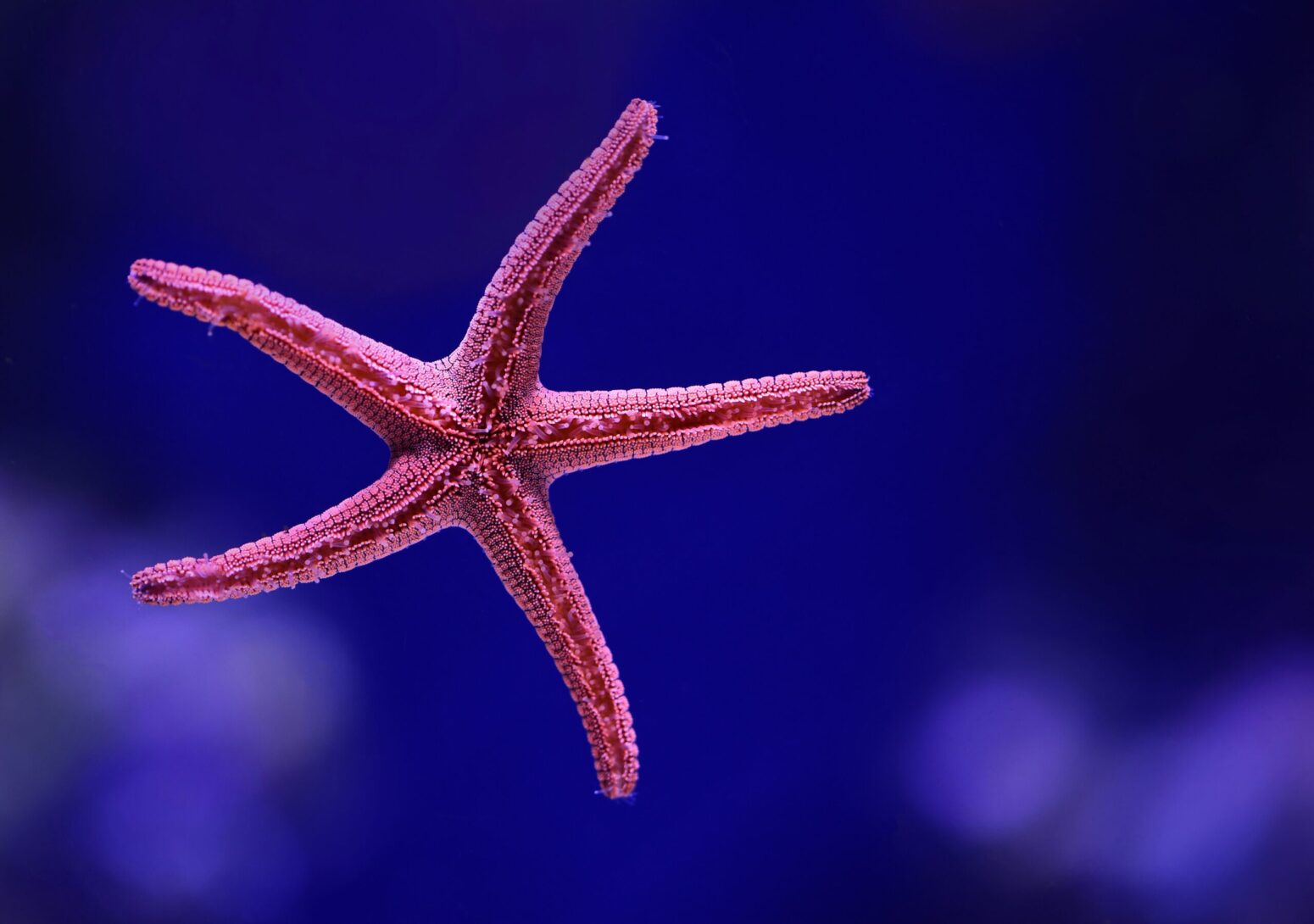
According to scientists from the NIH and the CDC, what Candy had undergone was a form of asexual reproduction called fragmentation, in which a brand-new organism grows from a detached piece of its parent. Reproducing via fragmentation is common to lichens; various worms, both aquatic and terrestrial; and select species of starfish.
“Starfish?” Candy shook her head. “How is this possible?”
She sat in a vast examination room in metropolitan Atlanta, inside the high-rise that housed the CDC. Candy wore only a thin paper gown, and she perched, shivering, on a chilly metal table. She faced five doctors wearing full hazmat suits complete with globular helmets, which made Candy think of Buzz Aldrin and Neil Armstrong bouncing across the moon. Three of the scientists worked for the CDC and two for the NIH, this Candy knew, but the suits made it tough to tell them apart.
“It’s not possible,” said Dr. Spires, the tallest of the doctors, opening wide his arms, “but here we are.”
Candy glanced to her left, then her right, where two women who could have been her twins sat in their own paper gowns, smiling helpfully, looking from Candy to the doctors and back. “So you’re saying these are my . . . children?”
Dr. Spires nodded. “Fragmentation produces offspring that are essentially exact copies—clones, if you will—of the parent. So yes, technically speaking, you’re their mother.”
Candy and her look-alikes had been living at the CDC for six weeks. Since they’d arrived—airlifted from the Baltimore rathole where they’d been discovered by Candy’s landlord, who’d stopped in to collect the rent—Candy’s right arm and left leg had fully regenerated. Her limp, pronounced three weeks earlier, was now nearly imperceptible, and unless one noted how much lighter in color the new limbs were, one would never guess they weren’t original to Candy’s body. If not for a slight sense of structural weakness, as though the point of regeneration were a sort of fault line, Candy might have been able to forget herself.
“I don’t get it.” Rubbing her goose-pimpled upper arms, Candy looked from one to the other of her doubles, who both steadily returned her gaze. “What’s wrong with me?”
“As far as we can tell,” said Dr. Grimes, whose voice went up at the end of every sentence, as though she were eternally asking a question, “absolutely nothing?”
“Nothing?”
“Candy,” said Dr. Chang, who was nearly as wide as they were tall, “you’re a perfectly healthy thirty-nine-year-old woman.”
“But haven’t I just, what, spontaneously regenerated?”
“Correct?” said Dr. Grimes.
“Christ.” Candy dropped her head into her hands. “I’m so fucking confused.”
“Some organisms,” said Dr. Chang, “can reproduce sexually or asexually, depending on circumstances. In the last fifty years, scientists have found the ability to reproduce asexually in an increasing number of species. Mainly when no mates are available.”
“The zebra shark,” said Dr. Grimes, “for instance?”
“And even some vertebrates,” said Dr. Spires, “like the Komodo dragon.”
“Of course,” said Dr. Chang, “that sort of reproduction generally occurs through parthenogenesis.”
“Parthenogenesis?” said Candy.
“When an unfertilized egg,” said Dr. Grimes, “develops into a new individual? Several species of birds and amphibians reproduce that way?”
“But I’m not a bird,” said Candy, “or an amphibian.”
“No,” said Dr. Spires, “but we believe you’re a new kind of person.”
Candy blinked rapidly.
“A fire-new evolutionary step,” said Dr. Grimes, her voice atremble, “for the human race?”
Candy studied her duplicates, whom the doctors had named Beta and Gamma. Though they were mature, fully grown copies of Candy, her children were in reality only six weeks old. In the room they shared, Candy had watched Beta and Gamma grow in giant incubators, from the size of ear plugs to almost her own dimensions, a process that both alarmed and delighted Candy. She would never forget the first time Beta smiled at her, which might have been gas, nor would she forget the first time Gamma squeezed her ring finger. The three of them went everywhere together, movements that were, admittedly, limited by the doctors who ran their lives, and now that Beta and Gamma were nearly five foot nine—Candy’s own height—her feelings for them deepened daily.
“Are there others like me?” Candy asked the doctors. “Like us?”
“Not that we know of,” said Dr. Grimes, “but it’s possible?”
During her first three weeks of confinement at the CDC, Candy had nearly lost her mind. Once she’d come through withdrawals from nicotine, alcohol, methamphetamine, and heroin, however, a sense of calm clarity—entirely unfamiliar—descended on Candy. She was a prisoner, sure, but was imprisonment really so bad? For the first time in her life, Candy had everything she could possibly want. A well-appointed, comfortable living space; a soft bed; well-made, sturdy clothes; fresh, professionally cooked meals; access to a private gym; and round-the-clock health care. And perhaps most critically, Candy wasn’t expected to have sex with anyone. No fellating foul-smelling johns in cars parked on the outskirts of cemeteries; no dirty-talking sad, aging men who couldn’t sustain erections; no being crushed or strangled by creatures who despised her, primarily, for being unfathomable—a puzzle they could never solve.
The doctors gave Candy her own laptop and cell phone as well as unfettered access to the CDC’s library, which occupied the entire thirteenth floor. Though she hadn’t read a whole book since junior high school, Candy took out a variety of volumes on the animal kingdom and reproduction. She read about Mendel, Watson and Crick, DNA, and evolution. She read about the Pleistocene, the Mesozoic, dinosaurs, and the fossil record. She read about infections caused by both bacteria and viruses. But much of the time, Candy found herself reading about starfish.
“Asexual reproduction in starfish,” Candy read aloud to Beta and Gamma, from a book titled Our Friends in the Briny Deep, “occurs in one of two ways. In fission, the central disc breaks in two and each half regenerates its missing parts. In autotomy, one arm is shed with part of the disc attached, which continues to live independently. This ‘comet’ will eventually grow a new set of arms—a process known as fragmentation. Almost all starfish can regrow their limbs, but only select species can procreate via fragmentation.”
Neither Beta nor Gamma proved to be capable of sexual reproduction. They were capable of procreation via fragmentation, however, a fact the doctors verified nine months after Candy, Beta, and Gamma had come to the CDC, by surgically removing Beta’s right leg and Gamma’s left arm.
“I guess this means,” Candy said to Dr. Spires, clad as always in his hazmat suit, as the two of them stood staring down at a pair of Candys growing from Beta’s leg and Gamma’s arm, in separate incubators, “there will be two more of us.”
“Right,” said the doctor. “We’ll call these Delta and Epsilon.”
“How sweet,” Candy said, forgetting, for the first time in her adult life, to disguise the bitterness in her voice.
“Candy.” Dr. Spires took her shoulders, gently, with blue-gloved hands. He shifted her to face his globular helmet. “Candy.”
Behind his face shield, Dr. Spires wore a thin mustache. Candy studied his eyes, trying to determine if they were green or blue. Or was that gray?
“I know you’re had it rough,” he said.
“You do?”
“I’ve read Dr. Patel’s notes.”
Dr. Patel was the therapist Candy had been seeing twice a week since she arrived at the CDC. “What the fuck?” she said. “What about doctor-patient confidentiality?”
“You’re worried about confidentiality? When the future of humankind is at stake?”
“Well, yes.”
“Born to an adolescent addict. Kicked out by your abusive grandmother at fifteen. You turned to sex work to survive, Candy, got hooked on drugs, caught in a vicious cycle. You gave up your only daughter and clung to a man who abused you.”
“Christ,” Candy said. “You have read Dr. Patel’s notes.”
“But that’s all over now.” The doctor’s fingers dug into Candy’s upper arms so forcefully the bruises would linger for three weeks. “Don’t you see? You are no longer a victim. You’ve been transfigured.”
“Into what?”
“A mother.”
Eighteen months after Candy, Beta, and Gamma came to live in the CDC high-rise, there were nine new Candys, each grown from an amputated limb of one of her forebears. The doctors now referred to the extra Candys by number—Beta was called Two, Gamma was known as Three, and so on. The Candys shared the thirty-second floor of the CDC building, where a suite of rooms, including a glass-enclosed solarium, had been constructed expressly for them.
Like Candy, her children loved chocolate-covered strawberries, brightly hued tracksuits, cat videos on the internet, and romantic movies. One afternoon while the Candys were sprawled around the common room watching Pretty Woman on a sixty-five-inch OLED television, Dr. Spires appeared and asked Candy to accompany him to the solarium.
As they strolled through the sunny space that enabled Candy and her offspring to pretend they were outdoors, Candy imagined Dr. Spires unlatching his globular helmet, removing it, and, in slow motion, shaking out his dark hair. She imagined running a fingertip over his mustache. Unlike the somber sky that stretched over the port city of Baltimore, with its mills and shipyards, Atlanta’s atmosphere struck Candy as eternally cloudless and blue. The company that designed the solarium had stocked the space with enormous potted plants and flowering bushes—birds-of-paradise, cat palms, fiddle-leaf figs, elephant ears, money trees, bamboo palms, shady ladies, rubber trees, Chinese fan palms, and snake plants among them. They’d even brought in songbirds who flitted from tree to bush and whose droppings were scrubbed away daily by the CDC’s predominantly undocumented Central American cleaning staff.
Dr. Spires paused before one of the green benches that lined the solarium’s walkway and indicated that Candy should sit. He settled beside her—so close that his shoulder brushed hers.
“As you know,” he said, “we’d like to wait until we better understand your circumstances from an evolutionary standpoint before we make you and the other Candys a matter of public record. But it’s come to our attention that someone on the outside has intimate knowledge of your situation.”
Candy tried, and failed, to push aside comprehension. “Shit,” she said. “Upton.”
Dr. Spires nodded. “Apparently your former landlord told Upton Stokes that you survived his vicious attack and were brought here. Mr. Stokes has been calling our switchboard daily for three months, demanding to speak to you. Our people have tried putting him off, but yesterday he showed up downstairs. Mr. Stokes has pitched a tent on the sidewalk in front of this building, and he refuses to leave until he’s seen you.”
Candy’s head felt light. “I can’t.”
The doctor faced Candy. “We don’t want to traumatize you further,” he said, his voice thick with honey, “but we need you to meet with Mr. Stokes. Explain that the news of your abilities will touch off a political powder keg. That we need time to introduce the larger world to the conceptive possibilities you and the other Candys represent.”
“Upton wouldn’t care about any of that.”
“What would he care about?”
“Money.”
Dr. Spires shook his head. “We offered him ten thousand dollars to go away, but he turned us down.”
“I’m sorry?”
“Mr. Stokes also turned down twenty-five thousand dollars.”
“You’re sure this is Upton Stokes?”
“It’s him,” said Dr. Spires, “and he is quite determined to see you.”
“But Dr. Spires,” Candy said, “you know what happened the last time.”
“We can protect you.” He extended a blue-gloved hand, lifted Candy’s chin with a crooked finger. Through his plastic visor, the doctor gazed directly, purposefully, into her eyes. “Mr. Stokes will be escorted in and out of the building and searched by security men, who’ll be posted outside the room where you meet. Mr. Stokes has already agreed to these conditions.”
Candy nodded. “Okay.”
Dr. Spires smiled. “You’re a good sport. How’s tomorrow?”
“Fine,” Candy said, “though I don’t imagine I’ll sleep much tonight.”
At 1:45 the following afternoon, Candy sat in the large common room of the suite she shared with Candys Two through Ten, watching Titanic, a movie that, until now, had never failed to put her at ease. She hadn’t slept a wink the night before, however, and no matter how many videos of cats walking runways in frilly, sequined costumes she watched, Candy could not quell her longing for a shot of bourbon or vodka, a line of coke or meth, a syringe filled with morphine or heroin—any organic or synthetic compound that might enable her to dissociate from her waking life. It had come to Candy’s attention that Two through Ten sensed what she was feeling, and they now sat bolt upright, chewing on their cuticles, jiggling their feet, and leaping up, periodically, to peer behind doors and beneath tables, as though searching for an intruder.
“It’s okay,” Candy kept saying. “Dr. Spires won’t let anything happen to us.”
When Dr. Spires, Dr. Chang, and two security guards came to collect Candy, her anxious children flung themselves at her, clinging to her waist, her legs. The guards peeled them away, hauled them off, but as soon as two Candys were dislodged, two more moved in to take their places.
“Is there any reason,” Dr. Chang asked ten minutes later, as the security men stood doubled over, panting heavily, hands on knees, sweat staining the backs and underarms of their khaki uniforms, “why the others shouldn’t accompany her?”
Candy looked down at her doubles. All nine smiled up at her helpfully. “Is it a good idea,” she asked, “to let Upton see them?”
Dr. Spires shrugged. “I don’t see why not.”
In a conference room on the fifth floor of the CDC high-rise, Candy found Upton seated in a high-backed executive office chair at one end of a gleaming twelve-foot red-oak table. As she led her offspring into the room, Candy recalled the first time she’d laid eyes on Upton Stokes. He was standing chest to chest with another pimp, hollering his head off, in front of an abandoned Dairy Queen. Candy’s grandmother had recently thrown her out, and she’d spent three consecutive nights in a scraggly patch of woods between two freeways. She would never forget how it felt to wake up drenched in dew. At the time, Upton had a thick head of black hair, and to Candy, he looked eight feet tall. He wore a purple eyepatch and a trench coat, and as Candy watched him bitch-slap his rival, then jump atop a rickety wooden table to roar in triumph, she became convinced the pimp had something she needed.
“Candy? Jesus, is it you?”
But the Upton who said this in the CDC conference room wasn’t the same Upton who’d prevailed at that Dairy Queen. He wasn’t even the same Upton who, twenty-four years later, had flung Candy down on a shower curtain and hacked off two of her limbs. The pimp in the conference room wore Upton’s eyepatch and his trench coat, yes, but he cowered in his office chair, and his right eye—his only eye—was filled with something like fear.
“It’s me.” Candy settled in the high-backed chair opposite him as her look-alikes flanked her, taking their own chairs. Each Candy folded her hands before her and trained her gaze on Upton Stokes. “In the flesh,” Candy said, “no thanks to you.”
Upton indicated Two through Ten. “Who the fuck are they?”
“My children.”
“Children? They the same size as you!”
“Two and Three,” said Candy, indicating the Candys to her left and right, “grew from the limbs you cut off. It’s a means of reproduction, one that, up to now, has been seen only in worms, lichen, and starfish.”
“Starfish,” Upton said, stroking his chin thoughtfully. “Is that a fake leg?”
Candy rolled the right sleeve of her tracksuit up above the bicep, held out her arm for inspection. She bent it at the elbow, straightened it. “They grew back,” she said. “Regenerated.”
Upton shook his head. “How the fuck?”
She shrugged. “Even the doctors here don’t understand it, not really.”
“Candy,” Upton said, “are they experimenting on you?”
She was about to say no, but she hesitated. She looked at Two through Ten, who strained forward, their fingers clutching at the leather arms of their chairs as though preparing, at any moment, to leap up. No longer smiling, her doubles looked from Candy to Upton and back. Dr. Spires and the others were experimenting on them, she supposed, but what difference did it make to someone like Upton? Or someone like Candy?
“The doctors believe,” Candy said, “that I’m a step in a new evolutionary direction. My ability to replicate could solve the Conception Crisis.”
A smile crept onto Upton’s lips. “Can you leave the building?” he asked. “Can you come and go as you please?”
“I don’t want to. We have it good here—better than I ever had it with you.”
“Candy, Candy, Candy.” Upton folded his hands on the gleaming tabletop, straightened his spine, nodded knowingly, and Candy recognized the man who’d jumped on the table at the abandoned Dairy Queen, the Upton who’d plucked the hacksaw from the depths of his trench coat and belted her across the jaw. “What you think’s gonna happen,” he asked, “when these doctors are done with your ass? Once they’ve run their tests, stolen your secrets, figured out what they wanna know about your body chemistry, your DNA? You think they’ll let you hide out here forever, girl? You and your freakish litter?”
Before she could respond, Candys Two through Ten sprang to their feet, sending nine executive chairs careening into conference room walls. Four, Six, Eight, and Ten bounded like wolves, or jaguars, down the lustrous length of the red-oak table, pounced on Upton Stokes, yanked him from his seat. The four Candys spun him, dumped him face up on the glossy tabletop. Four and Six pinned down Upton’s legs while Eight and Ten immobilized his arms, and Candy watched him struggle, watched him grunt and swear. But her offspring were far stronger than the man she’d allowed to abuse and control her for better than two decades.
“Upton,” she said, rising to her feet, “why did you cut me?”
“You said you was leaving,” he gasped. “You know I can’t afford to let a bitch leave!”
She interlaced her fingers, rounded the table until she loomed over him. “Dr. Spires said they offered you twenty-five thousand dollars to go away.”
Upton nodded. “That’s right.”
Candy shook her head. “Why didn’t you take it?”
“Because you’re my bitch.” Tears were wandering down Upton’s cheeks and dangling from his chin. In all the years she’d known him, Candy had never seen the pimp cry, and she noted, with interest tender and fierce, that Upton’s tears leaked from both eyes—even the one he’d lost at fifteen. “We been together twenty-four goddamn years,” he said, “and ain’t no one—no CDC doctors, no ungodly scientists, no US government—gonna run a game on one of my bitches but me.”
Four, Six, Eight, and Ten looked at Candy. Smiled helpfully. Candy’s doubles then lifted Upton up, off the glimmering tabletop, by his four limbs. They held him aloft—suspending him briefly in space and time—before facing the conference room’s corners and pulling with all their might, tearing the pimp into quarters.
“Figure 2 illustrates the broken arm of a starfish regenerating a new starfish.” Candy held up the CDC library’s copy of Our Friends in the Briny Deep, presented the color illustration to the other nine Candys, who studied the image closely. “Oyster farmers have been known,” Candy continued, “to attempt to kill the starfish eating their cultivated beds by bisecting the animals and tossing them back into the sea. But starfish are voracious predators, and their fractions can each regenerate a new half, resulting in twice as many starfish to devour the farmers’ stock.”
Candy closed the book, pushed it forward. She sat at a round table in the library, surrounded by her look-alikes. “Two,” she said, turning to the Candy on her left, “tell us about one of your strongest memories.”
Two smiled helpfully and, without hesitation, recounted Candy’s own memory of the young tortoiseshell cat giving birth beneath the house under construction, using the very words and phrases Candy herself would have used to convey the experience. When Two finished, Candy asked Three the same question, and Three described Candy’s memory of waking, drenched in dew, on a bedraggled patch of woodland between two freeways. She described approaching an abandoned Dairy Queen restaurant, watching Upton Stokes bitch-slap another pimp. When asked for one of her strongest memories, Four related Candy’s memory of sitting in the Baltimore City Health Center three months later on an exam table covered in cracked blue vinyl and learning from a nurse practitioner that she was pregnant. Five then recounted Candy’s own detailed, harrowing recollection of giving birth alone eight months later, on a torn, water-stained mattress in a boarded-up house. Six described Candy’s memory of scooping amniotic fluid from her daughter’s mouth, of wiping vernix and blood from her skin with an undershirt, of wrapping her tightly in a green flannel button-up she’d stolen from a john, of trying to feed her newborn and discovering that her small breasts were empty. Seven recalled finding a crumpled fast-food receipt and the stub of a pencil on the floor of the condemned house. Eight described flattening out the grease-stained receipt, using the pencil to scribble the words Please help me, my Mother is lost, and affixing the note to her swaddled newborn with a rusted safety pin. Nine told the story of toting the infant, in the still of night, fifteen blocks to the Cathedral of Mary Our Queen. And Ten relayed Candy’s own agonizing memory of placing the defenseless bundle before the cathedral’s arched doors. Hiding behind an American holly across the street until the sky began to pink. Watching a priest with a mustache open the door, scoop up her daughter.
Please help me, my Mother is lost.
By the time Ten finished speaking, Candy was sobbing with savage abandon, as were the rest of the Candys, Two through Ten.
Insomnia had been a problem for Candy since childhood, and now that she was sober, the issue resurfaced with a vengeance. But when she woke in the night on the thirty-second floor of the CDC, she was comforted by the closeness of her children—by the even, syncopated sound of their breath. The Candys slept in the same room, in ten single beds, and two days after Four, Six, Eight, and Ten had torn Upton Stokes asunder, Candy woke with a start around midnight. She had no one to call or text; she used the cell phone the doctors had given her only to watch videos, and on this night, she found a PBS video on starfish. She learned that starfish have no brain; the hundreds of tiny feet that coat their undersides can, instead, smell food and sense danger. If enough of the animal’s feet start pulling hard in one direction, the rest will go along, and once it picks up enough speed, a starfish can gallop.
Two weeks later, Candy and her children were running on treadmills in the gym, watching Three Men and a Baby on three enormous wall-mounted televisions. When her regenerated leg was new, Candy hadn’t been able to run a quarter mile without collapsing; now, she ran a seven-minute mile, seven miles a day. Candy flipped to CNN and was confronted with a photo of herself taken a decade earlier on New Year’s Eve, in which she wore a plastic tiara and both her eyes were closed.
“We now turn,” said the tanned, silver-haired anchor sitting to the photograph’s right, “to the Global Conception Crisis, and the startling news that the woman pictured here, a Ms. Candice Knowles of Baltimore, may hold the key to humankind’s future.”
Candy jumped to the outside edges of her treadmill, and Two through Ten followed suit. They stood panting, blotting their faces with fresh towels of Turkish cotton. The old photo of Candy was replaced by a series of images of all ten Candys, taken within the CDC high-rise without their knowledge or consent. There was a shot of the Candys lounging on couches and chairs in the common room of their suite, and a photo of them sitting in a circle on the floor of the CDC library, giving one another back rubs. There was a photo of all ten Candys standing in the sunny solarium, heads thrown back, eyes shut, and an action shot of the Candys running on treadmills, as they were doing now.
“These images,” said the anchor, “were captured inside the CDC headquarters here in Atlanta, about ten miles from where I’m sitting. According to an anonymous email sent to CNN, The New York Times, Fox News, the Associated Press, and Reuters, one of these women is Candice Knowles; the other nine are her asexual offspring. The unnamed source alleges that Ms. Knowles’s first two children grew from her severed arm and leg—limbs that were removed from her body with a hacksaw and that have now, miraculously, regenerated.”
“This may sound like science fiction,” the anchor continued, “but according to the source, Candice Knowles’s ability to procreate asexually is chillingly real. They say Ms. Knowles has been detained at the CDC for about eighteen months, and since the photos hit social media platforms last week, public interest in the fate of Candice Knowles has skyrocketed. Even as we speak, thousands of people are converging on Atlanta, congregating outside the building that houses the CDC, and demanding to see Ms. Knowles—or Candy, as social media influencers have dubbed her—and her children.”
The photo of the Candys running on treadmills was replaced by a live shot that swept over a sea of people encircling the CDC high-rise. They held up signs that read “Free Candice Knowles!” and “We Want Candy!” and “What Else Aren’t They Telling Us?” and “Conception by Any Means Necessary!” and “Hack Me to Pieces—I Want a Child!” Others brandished a variety of handsaws—panel and ripsaws, dovetail and coping saws, fret and bow and Japanese pull saws. Two women who both looked about nineteen bore an enormous two-man crosscut saw—the sort that can take down a giant sequoia. Above the heads of the crowd, the Georgia sky blazed blindingly, cloudlessly blue.
“Yesterday,” the silver-haired anchor continued, “CNN received two separate reports—one from Brooklyn, one from Oakland—of women sawing off their own legs in a desperate attempt to procreate. Both victims have been hospitalized and are in stable condition. We’ve reached out to the US Department of Health and Human Services for comment on why the federal government has been hiding Candice Knowles from the American public for a year and a half, but so far, we’ve received no response.”
Candy found Doctors Spires, Grimes, and Chang in a laboratory on the twenty-first floor. The doctors, still wearing hazmat suits, surrounded a steel table that supported a giant cage. Within the enclosure, a long-haired calico cat lay on her left side, washing her face and purring like a swamp boat while nine kittens fought hungrily over eight nipples, pressing tiny, relentless paws into their mother’s white, orange, and black fur. The doctors each held a tablet and stylus.
“Candy?” said Dr. Spires, resting his tablet atop the cats’ cage. “Where are the others?”
“In our suite,” Candy said, “watching Dirty Dancing.”
“What’s wrong?” asked Dr. Chang.
“Are you aware,” Candy said, “that this building is surrounded by an army of people waving hand-lettered signs and a variety of handsaws? People who believe we can help them have babies?”
“Of course?” said Dr. Grimes. “We’re well aware of the situation outside the building?”
“Then you must also know,” Candy said, “that young women are out there hacking off their own limbs. That even as we speak, people are mutilating themselves because of me.”
“This is precisely,” said Dr. Spires, “why we endeavored to keep you a secret for as long as possible. It was inevitable, of course, that the story would leak, but those poor, misguided ladies out there are fooling themselves. The likelihood of another woman’s body regenerating the way yours does is slim to none.”
Candy advanced on the doctor. “How do you know?”
Behind his plastic face shield, Dr. Spires smiled. The expression did not animate his eyes, which Candy realized were gray—the murky, threatening hue of a coastal thundercloud.
“Jesus Christ, Candy,” he said, his voice stripped of honey. “How the fuck do you think?”
Candy took a step back. “No.”
“I think it’s time,” he said, “to drop the act.”
“What act?”
“All this pretext,” said Dr. Spires, “of innocence. Of helplessness.”
Candy shook her head. “I don’t know what you mean.”
“Come.” Dr. Spires crossed to the steel security door, shoved it open. Doctors Grimes and Chang returned to studying their feline detainees. “There’s something I’ve been dying to show you.”
In the building’s sub-subbasement, Dr. Spires led Candy through a ward filled with fifty single beds. Each held the limbless torso and head of a woman between the ages of eighteen and forty-eight. Two nurses moved among the beds, pushing wheeled silver carts stocked with thermoses. They allowed each dismembered woman to sip from a thermos through a bendy straw for a time before moving on to the next. This ward led into another vast room that contained round tables covered with colored paper and pencils, scissors and glitter and glue. More mutilated women—some missing both arms, some an arm and a leg, some both legs—sat in wheelchairs pushed up to the tables or parked in front of one of a half dozen wall-mounted televisions.
Candy halted in the room’s center, spun in a slow circle. “Mother of god,” she said. “How long has this been going on?”
“Nearly as long as you’ve been upstairs.”
“This was never about children. Never about saving the human race.”
Dr. Spires shrugged. “Only tangentially. Our main concern has always been self-defense.”
“Self-defense?”
“Oh yes,” he said. “One of your clones achieves full size, and full strength, in six weeks. In two years, we can amass the largest standing army the world has ever seen. No more recruiting, no more conscription, no more registering for the selective service, no more families mourning the loss of their beloved sons. Thanks to you, the government can now generate replacement soldiers as rapidly as any adversary can kill them. And you know how freakishly strong Two through Ten are—how merciless. You saw what they did to Mr. Stokes.”
“He tried to warn me,” Candy said, shaking her head. “Upton said you were running a game on me.”
The doctor smiled. “Mr. Stokes was smarter than he looked.”
“Did you know what we would do to him? Before you sent us in that room?”
“Not for certain, but we had a hunch,” said Dr. Spires. “You’ve learned so much since you came to us, Candy, but you’ve yet to grasp that preservation and procreation are, at base, the same phenomenon.”
“You lied to me,” Candy said. “I’m an aberration, and Two through Ten aren’t my children. They’re just copies of me. I was never a mother.”
“Not true. Come, I’ve one more thing to show you.”
Dr. Spires led Candy through a set of silver doors and down a long white hallway. The corridor ended in a room that held six blue plastic chairs with attached desks, the kind Candy recalled from junior high. The chairs faced a large rectangular black shade. Dr. Spires grasped a beaded pull chain and lifted the shade to reveal a window, through which Candy saw a comfortably furnished living room: floral love seat and matching chair, coffee table, fifty-five-inch television. Candy could see a small kitchen to the left, and to the right a hallway that may have led to a bedroom. Seated on the couch, both legs tucked beneath her, was a woman in her twenties. Her copper hair was pulled into a high ponytail, and she wore no makeup. Her neck was swanlike, and the hands that tapped rhythmically against her thighs looked capable. Strong. She wore a tracksuit much like Candy’s, only green—a shade close to that of the stolen flannel in which Candy had swaddled her more than two decades earlier.
“She can’t see us,” said Dr. Spires. “It’s two-way glass. She calls herself Vic.”
“For Victoria?”
He shook his head. “Victory.”
Candy’s hands floated up. She caressed the clear surface before her. “Victory.”
“Her adoptive father,” Dr. Spires went on, “is a patent attorney, and her mother is a speech pathologist. She grew up in Bethesda, and three years ago she graduated from Mount Holyoke with a BA in psychology. Like so many young women, Vic desperately wants a child, and like the disfigured souls you’ve just seen, she’s volunteered to participate in a groundbreaking, if still experimental, study of a promising new method of conception.”
The wide screen before Candy’s daughter projected a time-lapse video of life on the ocean floor. Victory, Candy, and Dr. Spires watched a multicolored mob of starfish, anemones, and giant sea worms, organisms whose luminous bodies reminded Candy of neon-filled glass tubes. These mystical, romantic creatures, of an array of shapes and sizes, advanced on the still, lifeless body of a juvenile orca. They swarmed over the black-and-white corpse, feeding on its flesh, which dematerialized at an uncanny rate of speed.
“Dr. Spires,” said Candy, “what do you want from me?”
He smiled. “Everything.”
“And if I refuse?”
The doctor indicated Vic, who strained forward now, studying the teeming invertebrates, their vibrant multihued skins flashing cheerfully as they ate the orca. “If you refuse,” he said, “your daughter will join the rest of our volunteers.”
“But my body made hers,” Candy said. “What if she regenerates? What if she can make copies of herself?”
“There’s only one way to find out,” said Dr. Spires. “Are you willing to gamble with Victory?”
Candy agreed to remain at the CDC indefinitely, and to prevent Two through Ten—who were, of course, under her control—from doing harm to any CDC employee or affiliate, on one condition: that she be permitted to witness her daughter’s manumission, to ensure that Victory was allowed to get safely clear of the high-rise. The sun was beginning to sink as, from an observation area on the fourth floor, all ten Candys watched armed guards escort Vic out through the main doors. The Candys stood shoulder to shoulder, noses pressed to glass, and watched their only child emerge into the concrete courtyard before the building. Once the security men backed away, guns drawn, and reentered the high-rise, Vic turned. She lifted her gaze—seemingly to where Candy and her look-alikes stood—and smiled helpfully, if a bit sadly. Behind the young woman stretched a heaving multitude, an ocean of humanity besieging the CDC, brandishing handsaws and flashlights, candles and lanterns, sparklers and cell phones, chanting Candy, Candy, Candy. Still looking up, Victory opened wide her arms and walked backward into the mob, which swallowed her whole.
Late that night, Candy woke with a gasp, sure that something was hurtling toward her. Before she could sit up, a small body landed softly, with a mew, on her stomach. Candy reached out, and her fingers brushed fur. She grabbed her phone and, in the screen’s dull glow, recognized the calico she’d last seen nursing her kittens in a cage on the twenty-first floor. The cat dropped one of her offspring—a black-and-white fluffball marked like a bandit—into Candy’s lap. Candy lifted the kitten to her face, buried her nose in its fur. She smelled soil, loam, and salt; sod and pastureland; blooms, herbs, and saplings; coral reefs and shoals.
“Everything,” she whispered.
The absence hit Candy abruptly: The even, syncopated breathing that had borne her through her bouts of insomnia was missing. She didn’t need to check to know that the other nine beds were empty. Clad in her lilac nightshirt, Candy followed the calico and her kitten from the bedroom. She stole through the private suite that had been such a comfortable perch for the Candys, touching objects—pod-style coffee maker, ceramic teapot, electric toothbrush with ten heads, rowing machine, sixty-five-inch OLED television, stationary bicycle, water filtration pitcher, 500-thread-count sheets, Turkish cotton bath towels, laptop computer, pile upon pile of CDC library books—until she entered the glass-enclosed solarium. The cats raced down the walkway and leaped, trilling, into a bushy fern. Candy sat on the bench she’d shared three weeks earlier with the comparatively simple Dr. Spires. Shut her eyes.
She heard the calico and her nine offspring—liberated from their cage by Two through Ten, a scene Candy could envision because she was no longer separate from her clones—moving stealthily through the potted palms and flowering trees that filled the faux outdoor space, stalking the songbirds that, even now, warbled faintly. And over these noises, Candy heard another—one that grew continuously louder, more emphatic, more embodied. The sound of nine large bipeds racing through a stretch of forest, hearts pumping, elbows swinging, muscles straining. The sound of branches cracking, twigs snapping, leaves crunching.
The sound of galloping bare feet.
When the Candys, Two through Ten, burst through the whispering vegetation before her, Candy knows she will be pulled along, and she knows where they will go. Out of their private suite, down a lengthy hall, through a red steel security door. Up four flights of stairs, to the building’s roof. Across its rough, pebbled surface, as hard and as fast as their asexual, preternatural legs will carry them, and out, into the firmament, above the heads of the chanting, singing, handsaw-waving horde—a sea that lately consumed, and now contains, the best part of Candice Elizabeth Knowles.
But the Candys, One through Ten, will not look down. They will gaze straight ahead, studying the sailcloth of stars that blazes just out of their aberrant reach—a company that glitters far more vividly than seems plausible in metropolitan Atlanta. The Candys will keep running, keep charging forward, keep getting lost—hopelessly, exquisitely lost—until their hearts give out, and they drop.
Read more from Issue 23.2.