Because My Daughter Says, “It’s Mommy’s Job to Clean the Kitchen”
2 Minutes Read Time
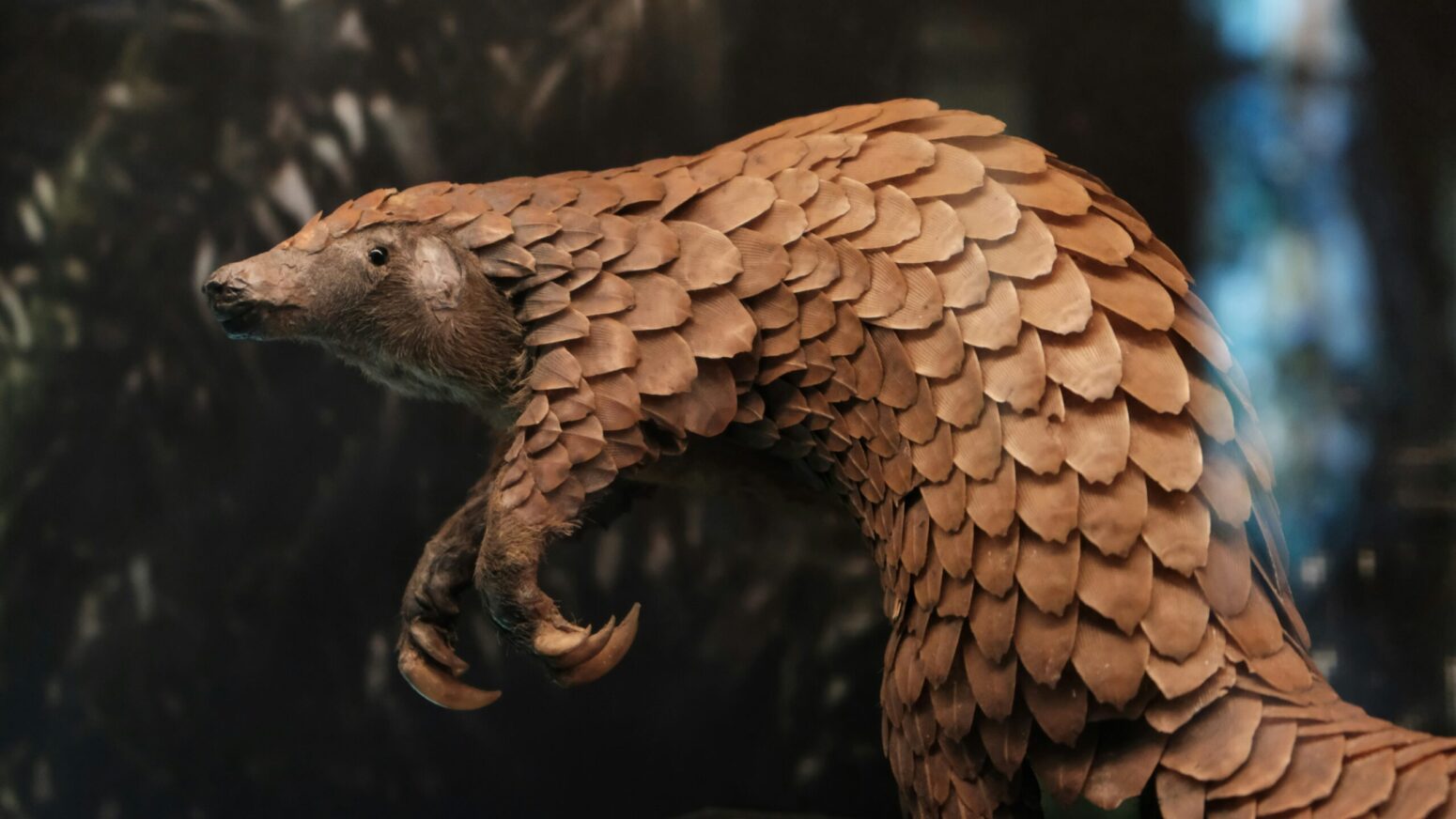
You can’t blame the hounded pangolin
for coiling into herself. Stubborn artichoke
crossed with a stout shop-vac, the animal
seems engineered for battles epic, wretched.
Instead, she defaults to pure defense—no
teeth, just a spiral of bronze scales, as if roofers
shingled a dreamy cat with scallop shells.

The pangolin asks only solitary midnight suckling,
a topsoil seething with ants, termites, enough fungal
dark to drag her sticky tongue along—unspooled
bubble tape, limp and pink as a possum’s tail.
She likes a hollow tree, its soundtrack of growl
and click. The slow rise in pitch as an oak considers
its breaking point, a roller coaster ticking up the lift.

Low notes of her nocturne: The poacher riles his dogs.
A nearby restaurant heats oil on a stove, turns gas
to equatorial blue. On the menu, cobra, porcupine,
civet, and—grilled, sautéed, or fried to a crispy scab—
you can guess who. This was supposed to be a poem
about loneliness. About generations of women absorbed
into the stomata of the same gray rag. Whose hands

have grown raw from wringing out what’s waterlogged.
But how many of us grind the pangolin’s armor to paste,
make of her poultice, for our aches? We turn our heads
as the hunter clubs the narrow stairwell of her skull, but
our own hungers grow brutal too—too heavy, we say, to
carry out of this forest, to babies whose mouths gape like
coin purses. In our mouths, meat tenses, ropes, gives way.
Read more from Issue 20.1.