American Museum of the House Cat
2 Minutes Read Time
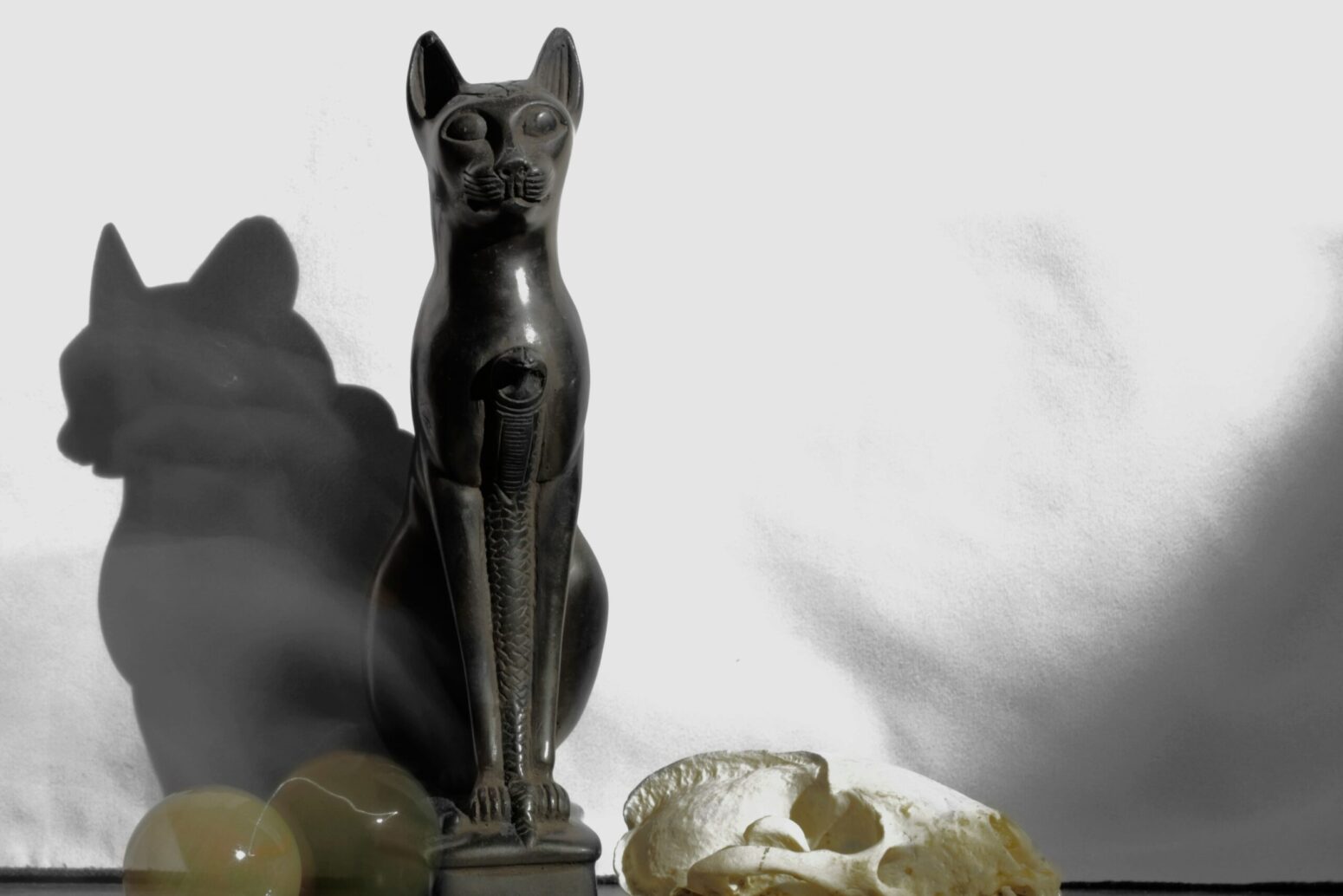
Cats in hieroglyphics had jewelry, and women of Bast wore cats—
bronze amulets in the shape of mothers nursing as many kittens
as children the family wished for. Here, how many civilizations and

litters later, stray cats, swaybacked from the number of babies borne,
are hung with the pendants of their own teats. And the American
Museum of the House Cat, a room along a rural road where I grew up,

holds 10,000 images of cats: an Egyptian relic circa 1000 BC,
a petrified body with whiskers preserved in an English chimney
since the 16th century, plush dolls, dancing puppets, art printed

on cigarette packs and pet food, plastic clocks shaped like cartoons
manufactured last year. The collector displays it all, indiscriminately.
Collections, usually, are culled. When there were too many kittens

in ancient temples, they were mummified and sold to pilgrims. But
proceeds from this museum, realm of exception, go to a no-kill shelter.
What better place to bring a loved one. To buy a souvenir, for cupboards

already crowded by objects kept by an earlier generation, and so by each
following—a keeping more successful than the care of children who
become adults, parents who go on getting old. To turn our thoughts

back toward. Wheeled Victorian creatures wait with keys in, ever
ready to be wound into action, there. The carousel of felines, glass eyes’
repetitions aglow, spins and, surely, plays its calliope recording again.
Read more from Issue 19.1.