Archive for the ‘What We're Reading’ Category

What We’re Reading

Wednesday, March 28th, 2012

Lisa Ampleman: It’s hard to describe The Riots (University of Georgia Press, 2011), by Danielle Deulen (a new professor at UC this year), in terms that haven’t already been used. I want to say that the essays are beautifully lyrical, but the Great Lakes Colleges Association emphasized that quality when they awarded the collection the New Writers Award for Creative Nonfiction. I’d also say that the book has brutally honest depictions of family life, though Melanie Rae Thon accentuates its candor in her blurb on the back cover. After hearing endorsements like these, I was excited to pick up The Riots at the AWP Bookfair—and I started reading it on the bus ride home. Although it isn’t organized chronologically, I found myself returning to the book whenever I could, devouring it almost like a novel, wanting to know what would happen to the people Deulen describes so well. The pieces sometimes read like prose poems, sometimes like the best sort of memoir: non-self-serving, illuminating scene and personality with verbal vigor.

Becky Adnot-Haynes: I’m doing an exam area in British fiction, which means I’ve been reveling in all things English: I listen to a lot of Ricky Gervais podcasts, and when my husband comes home from work I ask if he wants a spot of tea (he prefers coffee) or some crisps (like a philistine, he insists on referring to them as “chips”).

Anyhow, I currently have the pleasure of reading Lucky Jim, Kingsley Amis’s classic academic satire. Jim Dixon has fallen into a university job as a lowly instructor of medieval history, where he is uncertain not only of his job security but of his choice of career, in which the Head of Department gives public performances on the recorder and repeatedly attempts to enter revolving doors from the wrong direction. In the rising action, Jim is unlucky enough to be assigned to give a lecture whose subject he is entirely unqualified to speak on. It’s a smart cultural comedy with a good dose of acerbic wit. Throw in a sprinkling of farce—bedsheet burning, an inconveniently-timed pants-ripping, and a “superficial wound” accidentally inflicted on the Professor of English—and the outcome is, as The Guardian called it, a “preposterously funny book.”

What We’re Reading

Friday, November 4th, 2011

Becky Adnot-Haynes: As a third-year doctoral student here at UC, I’m currently studying for exams, which means that my days are divided evenly between my work as an assistant editor at CR and reading lots and lots and lots of books. And then reading some more books.

One of the books I’m enjoying right now is Jincy Willett’s excellent novel The Writing Class. It belongs to one of those genres rarely attempted by contemporary writers: the literary murder mystery, or—as I like to think of it—the workshop whodunit. Protagonist Amy Gallup, who hasn’t published a novel in decades, teaches a community writing class to keep herself financially afloat and to combat her reclusive tendencies. As in real-life workshops, the fiction in the class runs the gamut from lackluster to predictably competent to shockingly outstanding. The difference is that the actions of a class prankster, identity unknown, quickly go from annoying to menacing. For anyone who has ever taught (or taken) a workshop, the characters will ring true, and it’s laugh-out-loud-and-slap-your-knee funny. The novel’s hero, Gallup, shines most brightly in a sparkling lineup of characters.

The best thing about the book is the way that Willett manages to intertwine the workshop satire with the murder mystery, making the two narrative elements lean on one another for necessary support, the mystery affecting the class’s writing and vice versa: When a student calls Amy to tell her that he has received a threatening note, she interrupts him to ask about the placement of a comma. It’s a mystery solved through syntax: What more could an editor want?

Lisa Ampleman: Like Becky, I’m compelled to devote most of my reading these days to my comprehensive exam lists. Up this week: Anne Sexton, Elizabeth Bishop, Simone de Beauvoir, Jean-Paul Sartre, and some medieval troubadour poems.

However, I’ve made an exception for Rosanna Warren’s new collection, Ghost in a Red Hat. What I’ve long loved in Warren—her vigorous diction and meticulous evocation of image—are amply displayed in these new poems. For example, “At the Lake” begins with a familiar trope—description of landscape—re-envisioned: “We sat at a picnic table at the edge of your lake in honeyed September/ as wavelets fractured sky-bits, sun-bits, distant/ russet hill-shapes into hill-shards.” The rest of the poem moves with similar energy, describing the scene with as attentive (and as carefully emotional) an eye as Elizabeth Bishop’s. Those fractured images and hyphen-split words echo a terminally ill character’s revelation late in the poem that “I may not come through this,”  and this poem, part of a powerful series remembering Warren’s friend Deborah Tall, is not atypical, as the elegiac lyric underlies much of the collection.

So, too, does careful reading of world literatures and cultures. The title poem describes a girl growing up in Italy, enigmatically reciting Petrarch in order to become “picturesque,” and the rest of the collection references The Odyssey and the Koran, and describes French, Italian, German, and Iraqian landscapes. The poems do not exoticize; instead, they apply that careful eye to what remains in these places despite the erosions of time. In “Mistral II,” Warren writes, “It was I who prayed/ yesterday to make this refuge cry with a different breath,/ hoping some new word would be snatched up out of my throat.” I found many such new words in Ghost in a Red Hat.

What We’re Reading

Tuesday, June 7th, 2011

by Nicola Mason

Suddenly, I am a beekeeper. This is entirely due to the poet Liz Tilton, who some time back completed a brilliant stint as CR’s associate editor. She was an amazing officemate back then (We laughed; we cried; we swapped beet recipes), and she continues to amaze me, only at a slightly greater remove (she’s still on campus, just not in my building). As a beekeeper going on three years now, she is an arthropod enthusiast of the highest order, and she cleverly drew me into her tiny-winged world with the promise of adventure: “I’m going to capture wild swarms,” said Liz. “Do you want to capture wild swarms with me?” My response was something along the lines of, “Um, YEAH.” Five swarm adventures and four stings later, I have two bustling hives in my backyard (one of which Liz helped me build: Nicola, meet table saw; table saw, Nicola), and friends far and wide are recommending bee books, which I thought would be fun to share. Here goes:

Matt McBride: Sylvia Plath has a series of five poems in Ariel about beekeeping, a hobby she took up shortly after the birth of her son Nicholas. In the sequence, Plath both disavows and takes ownership of her domestic role as a mother while also dealing with the dissolution of her marriage. My favorite of these is “Stings,” which has some not so subtle digs (Plath’s sense of humor is always overlooked) at her soon-to-be-ex-husband Ted Hughes.

Jamie Poissant: Check out Natural Order, Jonathan Penner’s novel. It’s the best novel about beekeeping I’ve ever read.

Jennifer Wright-Thomas: Another good bee book that is more about mystery is The Bee Keeper’s Apprentice by Laurie King. The first book in a whole series, it’s Sherlock Holmes but with a feminist twist. I love them! She also writes about a lesbian detective in San Francisco named Kate Martinelli—also wonderful!

Trent Stewart mailed me a copy of Sue Hubbell’s A Country Year, a book of nonfiction. The author lived on a ninety-nine-acre farm at the end of a dirt road in Southern Missouri for twenty-five years—many of them alone after her marriage ended. She learned beekeeping and eventually became the largest honey producer in the region.

What We’re Reading

Wednesday, April 20th, 2011

Fiction Editor Michael Griffith: What I’m reading now? I realize I’m late to the party—Elmore Leonard calls it “the best crime novel ever written” and says it “makes The Maltese Falcon read like Nancy Drew,” and my fortieth-anniversary edition features an introduction by Dennis Lehane, who tabs it “the game-changing crime novel of the last fifty years”—but this week I’ve read for the first time, and with steadily mounting amazement, George V. Higgins’s The Friends of Eddie Coyle. A tale told almost exclusively in dialogue, and content to have the plot emerge from and be subordinate to the conversation, it seems an obvious precursor both of The Wire and of everything that’s most interesting in Quentin Tarantino movies. If the sentence “Jesus, I forgot how bad a thing a cheese sandwich is to eat” thrills you as much as it does me—and thrills you far more than a car chase would—this is the crime book for you.

What We’re Reading

Friday, March 11th, 2011

Heather Hamilton: I’m currently rereading Paula Bohince’s Incident at the Edge of Bayonet Woods, a poetry collection that doubles as a murder mystery, though to file it under any one term would be reductive. In fact, Incident is a complex and breathtaking book, pulling double duty on multiple fronts: at once rooted in a specific terror and speaking eloquently to the larger human condition, gleaning the best qualities from both narrative and lyric and melding them into a graceful whole, and forever tossing that strange coin whose faces are violence on the one side and beauty on the other. This is a book that not only withstands but deserves multiple readings.
(more…)

What We’re Reading

Monday, February 28th, 2011

Welcome to the CR blog’s new series, What We’re Reading. Since our staff is composed of such wonderfully erudite—yes, we said erudite—individuals, we decided to create a feature where members of our small yet mighty work force jot a few lines about what they they’re currently reading as a kind of “employees’ picks” of the literary world.
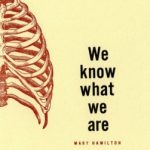
Don Peteroy: Mary Hamilton’s short-short chapbook, We Know What We Are, was the winner of the fourth annual Rose Metal Press chapbook contest, judged by Dinty W. Moore. I enjoyed the collection because Hamilton has clearly mastered the short-short form: every sentence is infused with urgency and insight. Given the restrictions of this genre, short-short writers might feel compelled to produce vignettes, which are often susceptible to being uninteresting. Hamilton, however, manages to offer a narrative arc within each short-short, full of conflict, character development, and a distinct voice.
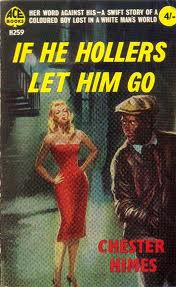
Ian Wissman: Recently, I’ve been reading through noir. Sticking out right now is Chester Himes’s If He Hollers Let Him Go. I particularly enjoyed the ways in which it is a noir working within those conventions, while, simultaneously, it’s a race novel that inverts them.

Matt McBride: In Money Shot, the follow up to her Pulitzer Prize–winning Versed, Rae Armantrout is interested in mediums of exchange. Money Shot looks at where the mediums of language and money intersect to create the architecture of our collective fantasies by juxtaposing snippets taken from advertisements and cable news with her own laconic commentary. What I enjoy most about Armantrout is her unique ability to make readers conscious of language as a medium while simultaneously addressing the political. Money Shot is yet another demonstration of her inestimable contribution to contemporary poetry.